
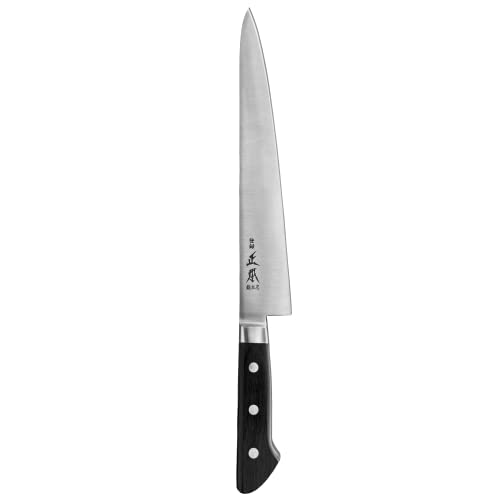
A sujihiki is a long, narrow Japanese slicing knife made for clean cuts through meat, fish, and roasts. Home cooks, sushi fans, and barbecue cooks value its reach and fine edge. The best sujihiki knife can make each slice feel smooth and controlled.
A slicer that looks good online can still disappoint at the cutting board. A short blade may force you to saw through a roast, while a dull edge can tear delicate fish and waste your effort. Some buyers choose a blade that feels too long or heavy for their grip. Others forget that thin Japanese knives need careful handling and proper care. These mistakes matter when you are carving brisket or serving sashimi. The right sujihiki helps you cut in one steady draw, so food looks neat and your work feels easier.
I focus on Japanese kitchen knives, blade shape, and the small details that affect daily use. For this guide, I compared the listed blade lengths, steel details, handle styles, and intended tasks, while avoiding claims not confirmed by the product descriptions. My goal is to help you find the best sujihiki knife for your food, skill level, and care routine.
What you’ll learn
- How blade length affects slicing and control
- Which listed knives suit meat, fish, and sashimi
- What to check about steel, handle, and care
- How to match a sujihiki to your budget and skill
In This Article
How To Choose The Best best sujihiki knife
Choosing a sujihiki is about more than finding the longest blade or the lowest price. A poor fit can make slicing feel awkward, and a weak edge can drag through meat instead of making clean cuts. Before buying, check the blade length, steel details, handle, and care needs. Think about what you slice most and how much room you have to work. The best sujihiki knife should suit your board, hand, and skill, not just look impressive in a photo.
Choose a Blade Length That Fits Your Food
Blade length affects reach, control, and the size of each slice. A 270 mm blade gives you room for large roasts and long cuts of fish, but it can feel bulky on a small board. A 240 mm blade is a useful middle ground for many home cooks. Think about the food you slice most often and the space you have. Do not buy the longest knife just because it seems more capable. For the best sujihiki knife fit, choose a blade that can pass through your usual cuts in one smooth stroke.
Check the Steel and Edge Details
Steel affects how a knife holds its edge and how you care for it. The listed options include stainless steel, AUS-8, and VG10; those names alone do not tell the full story of sharpening or edge geometry. Check the maker’s care guidance and use a suitable sharpener. A sharp sujihiki should slice with a steady pull, not a hard push. Avoid assuming that a higher layer count means better cutting. The best sujihiki knife is one whose edge you can keep sharp and whose upkeep fits your routine.
Find a Handle and Care Routine You Like
A handle should feel secure and balanced in your hand, especially during long slicing jobs. The listed knives include Pakkawood and ebony styles, while some product details do not specify a handle material. If possible, check the seller’s full specifications before ordering. A long, thin blade also needs thoughtful care: wash it by hand, dry it soon, and store it so the edge cannot hit other tools. Do not put a fine knife in a dishwasher. A good match supports confident cuts and helps the best sujihiki knife last.
Quick Comparison
| Model | Category | Best For | Key Spec | Amazon |
|---|---|---|---|---|
| Masamoto AT 270mm Sujihiki | Best Overall | Large roasts and long fish cuts | 270mm stainless blade, Pakkawood handle | Amazon |
| Suisin Inox 240mm Sujihiki | Western Style | Cooks who prefer a Western-style knife | 240mm Inox steel | Amazon |
| Masamoto AT 240mm Sujihiki | Compact Pick | Home kitchens and smaller boards | 240mm stainless blade, Pakkawood handle | Amazon |
| Kanngou 27cm AUS-8 Sujihiki | Value Pick | Sashimi, fish, and meat slicing | 27cm AUS-8, double edge | Amazon |
| Yoshihiro VG10 Damascus Sujihiki | Premium Finish | Cooks seeking a layered Damascus look | 240mm VG10, 46-layer Damascus | Amazon |
In-Depth Reviews for best sujihiki knife
1. Masamoto AT 270mm Sujihiki Knife

The Masamoto AT Sujihiki has a 270mm stainless steel blade made for slicing meat, brisket, fish, and sashimi. Its long profile gives each cut room to travel in one smooth draw. A full tang and Pakkawood handle add practical appeal. For cooks seeking the best sujihiki knife for larger cuts, this model stands out.
The long blade can help you slice a roast or wide fish with fewer back-and-forth strokes. Its black Pakkawood handle gives the knife a simple, classic look. It is best suited to cooks with a roomy board and a steady slicing style. If you often cut large portions, the extra reach can make the work feel more direct.
Hand wash and dry the blade after use, then store it safely to protect its edge. The full-tang build and Pakkawood handle are useful design features. Its longer size may cost more and need more storage space, but it offers practical value for frequent slicing.
Why It’s Great
- 270mm blade gives long cuts room to pass through large roasts.
- Stainless steel suits cooks who want a practical slicing knife.
- Full tang supports a solid, integrated build.
- Pakkawood handle offers a comfortable-looking, classic design.
- Made in Japan, according to the product title.
Good to Know
- The long blade may feel unwieldy on a small cutting board.
- The product details do not state a specific steel grade.
- Hand washing and careful storage are best for protecting the edge.
2. Suisin Inox 240mm Sujihiki Knife

The Suisin Inox is a 240mm Western-style sujihiki from a Sakai-manufactured knife series, according to its product title. Its Inox steel blade is designed for neat slicing through meat and fish. The mid-length profile balances reach with control, making it a strong option for cooks who want a Japanese slicer in a familiar format.
A 240mm blade suits many home boards and can handle roasts, fillets, and other everyday slicing jobs. The Western-style design may appeal to cooks moving from a standard chef’s knife. It is best suited to users who value a practical middle length over the added reach of a longer blade. Check the full listing for handle details before ordering.
Clean the blade by hand, dry it well, and store it safely after use. The Inox steel and Sakai-made series are appealing details, though the product title gives limited handle information. It may offer good value to cooks seeking a Japanese-made slicer with a Western-style form.
Why It’s Great
- 240mm length suits many home cutting boards.
- Inox steel is clearly named in the product title.
- Western-style design may feel familiar to many cooks.
- Sakai manufacture is identified in the listing title.
- Useful for slicing both meat and fish.
Good to Know
- The supplied product details do not name the handle material.
- The listing does not specify a steel grade or edge hardness.
- The price and exact care needs should be checked on the current listing.
3. Masamoto AT 240mm Sujihiki Knife

This Masamoto AT Sujihiki pairs a 240mm stainless steel blade with a full-tang build and black Pakkawood handle. It is listed for slicing brisket, meat, sashimi, and sushi. The shorter reach than the 270mm version can make it easier to manage in a home kitchen while still offering a long, narrow cutting edge.
The 240mm size is a handy fit for cooks who want clean slices but have limited board space. Its Pakkawood handle and full tang give it a familiar, sturdy design. It is best suited to home cooks and sushi fans who want an all-purpose slicer without the reach of a longer blade.
Hand wash, dry, and store the knife with care to help protect its edge and handle. Its stainless blade and full-tang design support everyday use. For buyers who prefer a manageable length, this model may offer strong value, though the best price depends on the current listing.
Why It’s Great
- 240mm length is easier to store than a 270mm blade.
- Stainless steel is suited to regular kitchen use.
- Full-tang construction is listed as a key feature.
- Pakkawood handle gives it a clean, dark finish.
- Made in Japan, according to the product title.
Good to Know
- It offers less reach than a 270mm sujihiki for very large cuts.
- The product details do not state the stainless steel grade.
- A fine edge still needs careful washing, drying, and storage.
4. Kanngou 27cm AUS-8 Sujihiki Knife

The Kanngou sushi knife is listed with a 27cm AUS-8 steel blade and a double-edge design. Its product description names sashimi, fish filleting, and meat slicing as intended tasks. The long blade offers useful reach for larger portions, while the named steel gives buyers a clearer detail to compare when choosing a sujihiki.
At 27cm, this knife is aimed at users who want space for long slicing strokes. Its double-edge design may suit cooks who prefer a blade that is not described as single bevel. It is best suited to sushi fans and home cooks who want one long slicer for fish and meat. Review the listing for handle and care details.
Wash by hand, dry after use, and store the blade so its edge stays safe. The listed AUS-8 steel and gift box add useful details, but the listing information provided here is limited. It may suit budget-minded buyers, provided they confirm the current specifications and seller terms.
Why It’s Great
- AUS-8 steel is named in the product title.
- 27cm length offers room for long slicing strokes.
- Double-edge design is clearly stated.
- Listed for sashimi, fish filleting, and meat.
- Product title notes that a gift box is included.
Good to Know
- The supplied details do not state the handle material.
- The listing does not give blade thickness or hardness.
- Check seller details and care guidance before purchase.
5. Yoshihiro VG10 Damascus Sujihiki
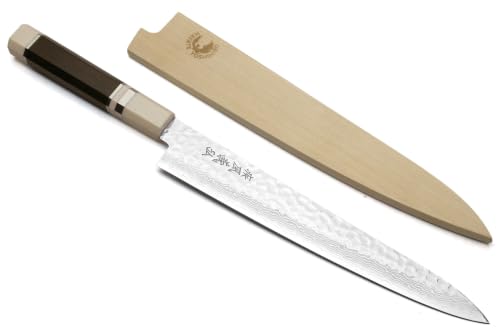
The Yoshihiro Sujihiki combines a 240mm VG10 blade with a 46-layer hammered Damascus finish. Its narrow profile is made for clean cuts through meat and fish, while the layered look gives it a distinctive style. The listed ebony handle and alternative ivory bolster add a refined touch for cooks who want both function and visual appeal.
The 240mm blade suits home cooks who want a slicer with enough reach for roasts, yet a more manageable size than a long carving knife. Its Damascus finish and ebony handle make it a striking choice for a gift or an upgraded kitchen. It is best suited to cooks who enjoy careful knife care and a polished design.
Wash by hand, dry right away, and store safely to protect the blade and handle. The VG10 steel and layered finish give this knife a premium feel, but appearance alone does not replace regular sharpening. It can be good value for cooks who want both a capable slicer and an elegant finish.
Why It’s Great
- VG10 steel is named in the product title.
- 46-layer hammered Damascus finish has a distinct look.
- 240mm blade balances reach with control.
- Ebony handle and alternative ivory bolster add visual appeal.
- Useful for cooks who want a gift-worthy slicer.
Good to Know
- The refined finish may cost more than a basic slicer.
- The product details do not state a specific hardness value.
- Hand washing and careful storage help protect its appearance.
Final Thoughts: The Verdict
My personal top pick is the Masamoto AT 270mm Sujihiki. Its long stainless blade, full tang, and Pakkawood handle make it a strong choice for cooks who often slice large roasts or fish. For many kitchens, it offers the reach and listed features I would want in the best sujihiki knife.
For a shorter blade, consider the Masamoto AT 240mm Sujihiki; it may suit smaller boards and everyday home use. The Yoshihiro is a stylish VG10 option, while the Suisin suits cooks drawn to a Western-style design. Choose by your usual food, board space, care habits, and budget.