
Solar panels turn sunlight into power for homes, vehicles, and off-grid gear. The best solar panels for hot climates suit people who need dependable energy under strong sun, from RV owners to homeowners. Buyers look for useful output, durable parts, and a panel that fits their space and system.
A panel can look powerful on paper yet disappoint when summer heat rises. Buyers may confuse peak wattage with daily output, overlook a panel’s temperature rating, or buy a size that does not fit their charge controller. Cheap fittings and poor wiring can add stress when the sun is already relentless. Heat also reduces the output of many photovoltaic panels, so a high wattage label alone is not enough. Choosing carefully can help avoid wasted money, a frustrating install, and less power when you need it most.
I review solar gear by comparing listed specifications, intended use, and practical installation needs, rather than treating every product as the same kind of panel. For this guide, I separated electric panels from a pool-heating panel and considered what each can realistically do in hot weather. I prioritize clear trade-offs, system fit, and useful buying advice for the best solar panels for hot climates.
What you’ll learn
- How heat, shade, and panel placement affect real-world solar output.
- Which listed products suit RVs, homes, small systems, or pool heating.
- What to check before matching a panel to a battery and controller.
- How to compare stated wattage without assuming it guarantees daily power.
In This Article
How To Choose The Best best solar panels for hot climates
The best solar panels for hot climates need to fit both the weather and your power system. A common mistake is to choose by peak watts alone, then discover the panel is too large, poorly matched, or less productive in heat than expected. Low-quality connectors and weak mounting can also cause trouble over time. Before you buy, check the panel type, temperature details, dimensions, voltage needs, and warranty terms. Think about shade, airflow, and where the panel will sit. These basics help you choose with confidence instead of guessing.
Check Heat Performance, Not Just Wattage
Solar cells get less efficient as they heat up, so a panel’s temperature coefficient matters in a hot climate. Check the product data sheet for that figure and compare panels on the same test basis. A high-efficiency label can help when roof space is tight, but it does not prove the panel will perform best in heat. Avoid treating advertised peak watts as a promise of everyday output. Leave room for airflow under roof-mounted panels when the mounting setup allows it. The best solar panels for hot climates balance efficiency, cooling, and usable power.
Match Panel Voltage and Power to Your System
Before buying, confirm your battery voltage, charge controller limits, wiring, and inverter needs. A panel listed for 12V systems may still need a compatible controller, and a large panel array can exceed a controller’s input limit. Check open-circuit voltage and current, not only the headline wattage. Small panels, such as a 50W model, can suit a modest battery or trickle-charge use, while larger panels need suitable wiring and mounting. The best solar panels for hot climates are only useful when the full system works together safely.
Choose the Right Panel Type and Installation Site
First decide whether you need photovoltaic panels that make electricity or a thermal panel that warms pool water. These products are not interchangeable. For electric panels, consider shade, roof strength, panel dimensions, and access for cleaning. Bifacial designs may gain power from light reflected onto the back, but only when the site and mounting allow it. Avoid placing panels where leaves, vents, or nearby walls cause regular shade. The best solar panels for hot climates need a clear, secure location and a setup suited to your actual daily use.
Quick Comparison
| Model | Category | Best For | Key Spec | Amazon |
|---|---|---|---|---|
| Renogy ShadowFlux 200W | Best Overall | RV or rooftop users with partial shade | 200W N-type; shade-focused design | Amazon |
| Renogy N-Type 50W | Small System | Small 12V battery setups | 50W N-type panel | Amazon |
| Universal Pool Heater Panel | Pool Heating | Replacing a pool-heating panel | 4 x 10 ft; 2-inch I.D. header | Amazon |
| STAR 990W Bifacial Panels | High Output | Larger RV or off-grid arrays | Two 495W N-type panels | Amazon |
| JJN 425W Bifacial Panel | Single Large Panel | Home, farm, or storage systems | 425W N-type bifacial panel | Amazon |
In-Depth Reviews for best solar panels for hot climates
1.
Renogy ShadowFlux 200W Solar Panel
 Check Price on Amazon
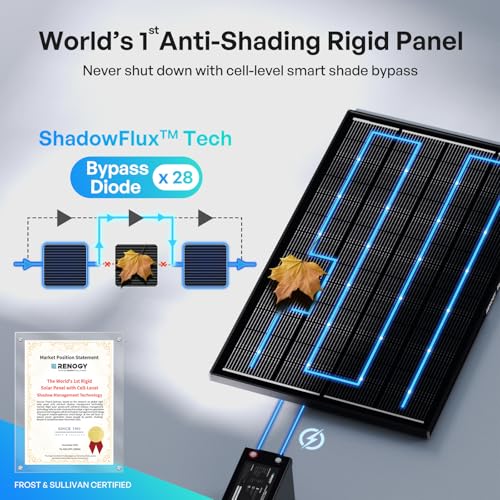
This 200W Renogy panel uses N-type cells and lists 25% efficiency. Its ShadowFlux design is made to help manage partial shade from trees, roofs, buildings, leaves, and snow. That feature may help on sites where shade moves across the panel. For hot climates, compare the temperature coefficient in the full product data before choosing it.
The panel is aimed at RV, marine, rooftop, and home use. Its 200W rating gives buyers more capacity than a small maintenance panel, while the shade-focused design may suit real trips with changing light. Check the dimensions, mounting points, controller limits, and wiring before installation. It is best for users who need a single mid-size panel.
A rigid panel needs secure mounts and periodic checks for dust, leaves, and loose fittings. Cleaning is usually simple with water and a soft cloth, once the panel is cool. The stated features offer useful flexibility, but final value depends on price, warranty, and verified heat data.
Why It’s Great
- 200W rating offers more capacity than compact trickle-charge panels.
- N-type cell design and stated 25% efficiency may help where roof space is limited.
- Shade-focused design targets common partial-shade sources.
- Listed for RV, marine, rooftop, and home applications.
- A practical option for comparing the best solar panels for hot climates with mixed sun and shade.
Good to Know
- The provided product details do not state a temperature coefficient; check the data sheet for hot-weather performance.
- Partial-shade features do not mean the panel can ignore shade or guarantee steady output.
- You must confirm dimensions, mounting hardware, and controller compatibility before purchase.
2.
Renogy N-Type 50W Solar Panel
 Check Price on Amazon
This Renogy panel is rated at 50W and is described as an N-type model with 25% efficiency. Its small output makes it a different choice from large home arrays. It is listed for 12V battery systems and can suit modest energy needs. Check its electrical ratings and temperature data before planning hot-weather use.
Its compact size may be easier to place on an RV, trailer, cabin, or small off-grid setup than a large panel. It is best suited to users with low power needs or a small battery system, not households seeking major energy production. Match it with a compatible controller and battery, and plan for lower output in heat.
A small panel is generally easier to handle and keep clear of dust than a large array. Use safe mounts, inspect the wiring, and follow the maker’s care advice. Its value depends on the modest power it can provide, rather than the needs of a full-size home.
Why It’s Great
- 50W output suits smaller charging needs and limited installation space.
- Listed for 12V battery systems and several off-grid uses.
- N-type construction and stated efficiency are useful comparison points.
- May be easier to position than a large rigid panel.
- A practical small-scale choice among the best solar panels for hot climates.
Good to Know
- 50W is too little for many household loads or high daily energy use.
- The provided listing details do not give a temperature coefficient or full electrical specifications.
- A suitable charge controller, battery, and wiring may be needed.
3.
Universal Solar Pool Heater Panel
 Check Price on Amazon
This product is a solar pool-heater replacement panel, not a photovoltaic panel for making electricity. It measures 4 by 10 feet and lists a 2-inch inner-diameter header. Sun warms water as it moves through the panel. That makes it relevant to sunny, warm locations, but it should not be compared by electrical wattage with the best solar panels for hot climates.
The panel is intended for pool heating systems that use a matching header and plumbing setup. It may suit a pool owner replacing a compatible panel, rather than someone building a home power system. Check the existing system’s fittings, layout, and flow needs before ordering. Correct sizing matters for reliable installation and water circulation.
Pool panels face sun, water, and outdoor exposure, so inspect the installation and plumbing as part of regular upkeep. The listing states a 15-to-20-year life expectancy, but actual life can vary with use and care. Confirm fit and warranty details to judge value for your pool.
Why It’s Great
- Provides solar heat for pool water rather than electrical power.
- The listed 4 x 10 ft size helps buyers check replacement fit.
- A 2-inch I.D. header is specified for plumbing comparison.
- Designed for sunny settings where pool heating is useful.
- Offers a distinct solar option for readers whose goal is warmer pool water.
Good to Know
- This is a thermal pool panel, not one of the electric best solar panels for hot climates.
- The 2-inch header and panel dimensions may not fit every pool system.
- The stated life expectancy is not a guarantee; check warranty and installation requirements.
4.
STAR 990W Bifacial Solar Panel Set
 Check Price on Amazon
This set lists two 495W panels for 990W total rated power. The product details describe bifacial N-type monocrystalline cells, 16BB construction, 25.6% efficiency, and an IP68 rating. Bifacial panels may capture reflected light from the rear when installed above a suitable surface. Check the temperature coefficient and full electrical data for hot-climate planning.
The pair is listed for RV, marine, and roof use, though its size and combined output need careful planning. It may suit users building a larger array with enough room and a compatible controller. A pale, reflective surface and open rear space can help a bifacial design, but results depend on site conditions and mounting.
Large panels need strong, well-spaced mounts and safe handling. Keep the glass clear of dust and inspect wiring and seals as the maker advises. The high stated output may offer value for a larger system, but compare total cost, warranty, and electrical compatibility first.
Why It’s Great
- Two panels provide a stated combined rating of 990W.
- Bifacial design can make use of reflected light when site conditions allow.
- Product details list N-type cells and 16BB construction.
- IP68 is listed as a protection rating in the product name.
- A high-output option to consider among the best solar panels for hot climates.
Good to Know
- The pair needs adequate space, secure mounting, and compatible electrical equipment.
- Bifacial gains depend on rear-side light and the installation surface.
- The provided details do not state the temperature coefficient or warranty terms.
5.
JJN 425W Bifacial Solar Panel
 Check Price on Amazon
This JJN rigid panel is listed at 425W, with bifacial N-type cells, 16BB monocrystalline construction, and 25% efficiency. Its stated use covers 12V, 24V, and 48V on-grid or off-grid systems. The broad voltage range does not replace a proper system design. For hot locations, check the temperature coefficient and electrical limits before buying.
The panel is aimed at rooftops, homes, farms, storage, and charging stations. It may suit users who want one high-output panel and have space for a rigid installation. Confirm its dimensions, mounting plan, inverter or controller limits, and wiring. Bifacial performance depends on reflected light reaching the back of the panel.
A rigid panel can be a lasting part of an outdoor system when installed securely and kept clean. Remove dust and debris using safe care methods, and inspect mounts over time. Its value depends on verified product support, warranty terms, and how well its output matches your daily needs.
Why It’s Great
- 425W rating offers substantial output from a single listed panel.
- Product details list bifacial N-type cells and 16BB construction.
- Listed for several battery-system voltages and varied use cases.
- May suit home, farm, storage, and charging installations.
- A flexible candidate when comparing the best solar panels for hot climates.
Good to Know
- A 425W rating does not guarantee that output in real weather or high heat.
- The panel’s dimensions and electrical ratings must match the system design.
- The provided product details do not state temperature coefficient or warranty terms.
Final Thoughts: The Verdict
My personal top pick is Renogy ShadowFlux 200W Solar Panel for its useful mid-size rating and design aimed at partial shade. It looks like a versatile fit for RVs and rooftops, but check its temperature data and system match before buying. For higher listed output, the STAR pair may suit a larger array. The best solar panels for hot climates still need good airflow, sound mounting, and correct wiring.
For smaller battery needs, the Renogy N-Type 50W Solar Panel is a more compact option. The pool heater panel serves a different purpose: warming pool water, not making electricity. Compare dimensions, heat data, controller limits, and warranty terms. Choose the product that fits your system, space, and budget.
1 thought on “Best Solar Panels For Hot Climates: Choose Heat-Ready”
Comments are closed.