
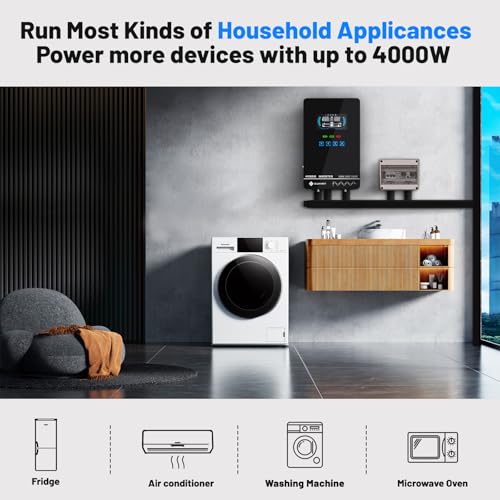
A home solar inverter turns power from solar panels or batteries into the AC electricity your household uses. The best home solar inverter depends on your setup, budget, and backup needs. Homeowners, off-grid users, and RV owners buy these units to run everyday devices or keep key circuits powered during an outage.
A low-cost inverter can look like a bargain until it trips under load, lacks the right battery support, or cannot run the appliances you planned to use. Buyers also mix up watts and watt-hours, overlook surge needs, or assume every inverter works with every panel and battery. Those mistakes can mean wasted money, frustrating downtime, and an unsafe setup. Choosing the right unit matters in real life: it should match your system voltage, load, and wiring plan, not just have an appealing number on the box.
I focus on practical solar and backup power choices, including the details that matter after installation. I compared the listed power ratings, system voltage, built-in charging features, and intended use for each option. I also noted where the product details leave questions to confirm before purchase. This guide prioritizes clear fit, useful features, and sensible expectations to help you find the best home solar inverter for your needs.
What you’ll learn
- How to match inverter power and battery voltage to your home or backup plan
- Which models include MPPT solar charging and which are inverter-only
- What to check before buying a whole-house off-grid kit
- How to compare features, limits, and intended uses
In This Article
How To Choose The Best best home solar inverter
The best home solar inverter is not simply the one with the biggest watt rating. It needs to suit your battery voltage, solar array, and the appliances you plan to run. A common mistake is buying by peak watts alone, then finding that the inverter cannot handle a steady load or startup surge. Others expect an inverter-only model to charge batteries from solar. Check the included features, wiring needs, and system limits before you buy. A careful match can save money and help your backup plan work when you need it.
Match Power to Your Real Loads
List the devices you want to run at the same time, then add their running watts. Check startup needs too, since pumps and fridges may draw more power when they start. Do not treat a short surge rating as the inverter’s steady output. A 2,000-watt unit may fit a few smaller loads, while a 5,000-watt or larger model may suit broader backup needs. The best home solar inverter is sized for your actual use, with some room to spare. If you plan to power a whole home, ask an electrician to review the load plan.
Check Battery Voltage and Solar Charging
Choose an inverter that matches your battery bank voltage. A 12-volt inverter, for example, is not a direct fit for a 48-volt battery bank. If you want solar charging built in, look for an MPPT controller and confirm its input limits work with your panel array. Some models also include AC charging, which can help when solar output is low. Do not assume every hybrid unit supports every battery type or setting. Check the maker’s current battery compatibility details before purchase. A good match helps the system run well and avoids costly rewiring.
Plan for Installation and Safety
A large inverter is only one part of a safe solar system. You may also need correctly sized cables, breakers, fuses, grounding, and a suitable battery bank. Check whether the product is an inverter alone or a kit with panels and storage. Review the installation guide, warranty, and local electrical rules before you order. An inverter listed as UL1741 is not a reason to skip a full system review. For home wiring or whole-house backup, use a qualified installer. That step can prevent overloads and help the best home solar inverter work as intended.
Quick Comparison
| Model | Category | Best For | Key Spec | Amazon |
|---|---|---|---|---|
| SUMRY 4000W Hybrid Inverter | Hybrid Inverter | 24V home or cabin systems | 4000W, 24V DC to 120V AC | Amazon |
| ECO-WORTHY 10kW Off-Grid Kit | Whole-Home Kit | Off-grid users seeking a bundled system | 10kW output, 48V 16.1kWh storage | Amazon |
| ECO-WORTHY 5000W Inverter Charger | Inverter Charger | 48V backup systems | 100A MPPT, 40A AC charger | Amazon |
| BELTTT 2000W Pure Sine Inverter | Standalone Inverter | Smaller 12V backup or RV loads | 2000W, 4000W surge | Amazon |
| DATOUBOSS 5000W Hybrid Inverter | Hybrid Inverter | 48V off-grid systems | 100A MPPT, up to 8500W PV input | Amazon |
In-Depth Reviews for best home solar inverter
1. SUMRY 4000W Hybrid Solar Inverter

The SUMRY hybrid solar inverter is rated for 4,000 watts and converts 24V DC power to 120V AC. Its pure sine wave output is designed for common household electronics and appliances. The hybrid format can suit a solar and battery setup, though buyers should confirm its charging modes and limits. Its power rating makes it a flexible choice for planned backup loads.
This model may suit a small home, cabin, or workshop with a compatible 24V battery bank. Before buying, map the devices you want to run and check both their steady draw and startup surge. The output rating gives useful headroom for several loads, but it does not mean every appliance can run at once. It is best for owners who want a compact inverter rather than a full solar kit.
The unit can keep a system layout simple, but installation still calls for suitable cables, fuses, and ventilation. Confirm the manual, battery support, and warranty before wiring it. For its stated output and pure sine wave design, it offers useful value when matched to a 24V system.
Why It’s Great
- Provides a stated 4,000W output for a range of planned loads.
- Pure sine wave output is suitable for many common electronics.
- Uses a 24V battery system, which can fit a compact solar setup.
- Hybrid format can work as part of a solar and battery plan.
- Offers a simpler option than buying a complete system kit.
Good to Know
- It is a 24V model, so it will not directly suit a 12V or 48V bank.
- Confirm solar input, charging modes, and battery compatibility before purchase.
- It does not replace the panels, batteries, protective gear, or installation work.
2. ECO-WORTHY 10kW Off-Grid Solar Kit

This ECO-WORTHY package is presented as a complete off-grid solar system with a 10kW, 120V/240V split-phase inverter. The listing also specifies a 48V battery rated at 314Ah, or 16.1kWh, plus 2,950W of solar panels. Bundled components can reduce guesswork when planning a new system. Check the included parts and their limits to see whether the package fits your needs.
The kit is aimed at off-grid users who want inverter, storage, and panels in one purchase. Split-phase output may suit compatible 120V and 240V loads, but it does not mean every home circuit can be connected without planning. Review daily energy use, panel placement, and local rules first. This option is best for buyers ready to design a larger system with professional installation support.
A bundled kit can simplify shopping, yet setup still involves substantial equipment and careful wiring. Confirm delivery contents, warranty terms, and installation requirements before ordering. Its value depends on how well the listed battery and panel capacity match your daily power needs.
Why It’s Great
- Combines an inverter, battery storage, and solar panels in one package.
- Lists 10kW split-phase 120V/240V output.
- Includes a stated 48V, 16.1kWh battery.
- Provides a clear starting point for an off-grid system plan.
- May reduce the effort of sourcing core components separately.
Good to Know
- The listed 2,950W of panels may not meet every household’s daily energy needs.
- Whole-house use requires careful load planning and proper installation.
- Verify exact kit contents, compatibility, warranty, and shipping details before ordering.
3. ECO-WORTHY 5000W 48V Inverter Charger
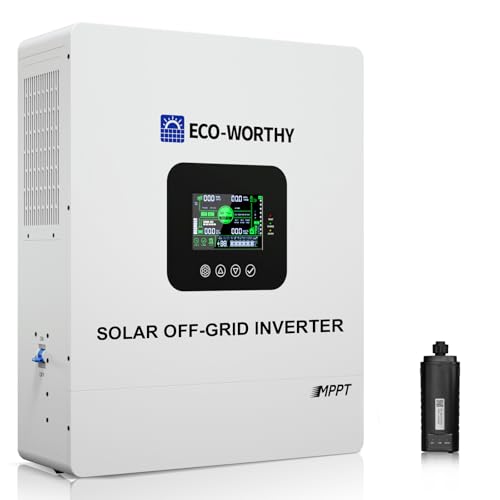
The ECO-WORTHY inverter charger is rated at 5,000 watts and converts 48V DC to 120V AC. It includes a 100A MPPT solar charge controller and a 40A AC charger, bringing key charging functions into one unit. The listing says it works with lead-acid and LiFePO4 batteries. These built-in features make it a strong option for a 48V home backup or off-grid setup.
This model is suited to users who want solar charging and AC charging in one device. The 48V design can support a larger system, but buyers must match the battery bank, panel array, and loads to the product limits. Review the setup instructions and battery settings before installation. It may fit a cabin or backup system better than a small 12V RV setup.
The combined inverter and charging features can save space compared with separate devices. Still, a 5,000W unit needs suitable wiring, protection, airflow, and a secure mounting spot. Check the manual and current support terms to judge long-term value for your system.
Why It’s Great
- Combines a 5,000W inverter with solar and AC charging.
- Includes a stated 100A MPPT solar charge controller.
- Offers a 40A AC charger for an additional charging source.
- Lists support for lead-acid and LiFePO4 batteries.
- Uses a 48V design suited to larger battery systems.
Good to Know
- Its 48V input requires a matching battery bank.
- Check panel voltage and current limits against the manual.
- Battery settings and safe installation need careful attention.
4. BELTTT 2000W Pure Sine Wave Inverter

The BELTTT inverter converts 12V DC power to 120V AC and is rated for 2,000 watts, with a listed 4,000W surge rating. It has pure sine wave output, an LCD display, dual AC outlets, and USB ports. A hardwire port and remote add setup options. This is an inverter, not a complete solar charging system, so it needs a suitable battery and charging source.
This model may suit an RV, truck, or small backup setup with a 12V battery bank. The LCD can help users check system status, while the remote offers control from a more convenient spot. Keep the total load within the steady rating and check appliance startup needs. It is best for modest loads, not whole-home backup or large 240V appliances.
The listed outlets and remote give the unit useful flexibility for mobile or backup use. Make room for safe airflow and use cables sized for the load. Its value is strongest when you need a 12V inverter and already have a compatible battery and charging plan.
Why It’s Great
- Pure sine wave output suits many everyday electronic devices.
- The 2,000W rating can handle a range of smaller loads.
- LCD display helps users monitor basic operating information.
- Includes a remote, hardwire port, AC outlets, and USB ports.
- Useful for compatible RV, truck, and backup applications.
Good to Know
- It does not include a solar charge controller or solar panels.
- A 12V battery system must supply high current at larger loads.
- The 2,000W steady rating is not intended for whole-house power.
5. DATOUBOSS 5000W 48V Hybrid Inverter

The DATOUBOSS hybrid inverter is listed at 5,000 watts, with 48V battery input and 110/120V AC output. Its built-in 100A MPPT controller and stated maximum 8,500W PV input give solar users useful system-planning options. The LCD is programmable, according to the listing. Check the manual for exact PV voltage and current limits before pairing it with panels.
This inverter may suit a 48V off-grid home, RV, or backup system that needs solar charging in one unit. The display and programmable settings can help users tailor operation, but setup still calls for careful battery and array matching. It is best for buyers comfortable planning a system or working with an installer. Do not read maximum PV input as guaranteed daily output.
A built-in controller can reduce the need for separate charging equipment and help keep the installation more compact. Use suitable protection, wiring, and airflow, and confirm the warranty and battery settings before purchase. It can offer good value when its limits match the planned 48V system.
Why It’s Great
- Pairs a 5,000W inverter with a stated 100A MPPT controller.
- Lists up to 8,500W of PV input for array planning.
- Uses 48V battery input for a larger system design.
- Programmable LCD offers access to system settings.
- Hybrid format combines inverter and solar charging functions.
Good to Know
- Confirm maximum PV voltage and current in the manual before wiring panels.
- The 48V input is not compatible with a 12V battery bank.
- The product listing alone does not confirm every battery or grid feature.
Final Thoughts: The Verdict
My personal top pick is the SUMRY 4000W Hybrid Solar Inverter for buyers with a compatible 24V system. Its pure sine wave output and stated power make it a flexible choice for planned backup loads. It is not a full kit, so check the battery and charging details before you buy. For a bundled off-grid setup, the ECO-WORTHY 10kW Solar Kit is the runner-up, with panels and storage listed together. The ECO-WORTHY 5000W inverter charger suits 48V users, while BELTTT fits smaller 12V loads. Choose the best home solar inverter for your system, power needs, and budget.