
Rooftop solar panels turn sunlight into power for a home or an off-grid setup. They suit homeowners, RV users, and cabin owners who want to make their own energy. The best rooftop solar panels balance output, roof space, durability, and system fit, so buyers can choose a setup that meets real daily needs.
A panel that looks strong on a listing can still disappoint if it does not fit the roof, controller, or inverter. Shading, poor mounting, and mismatched voltage can cut useful output or add costs. Some buyers focus only on the watt number, then find the panel is too large, the wiring is not compatible, or the roof cannot support the added load. Those problems are frustrating because solar is a long-term choice. Picking panels that match your space and system helps avoid costly surprises.
I reviewed the listed panel specs and compared power ratings, cell type, shade features, stated dimensions, and intended uses. I also considered what buyers need to check before installation, since a panel is only one part of a safe solar system. This guide focuses on practical fit, clear trade-offs, and the best rooftop solar panels for different needs.
What you’ll learn
- How panel wattage and roof space affect your system plan
- Why shade handling and panel placement matter
- Which listed models suit homes, RVs, and off-grid use
- What to check before buying or installing a solar panel
In This Article
How To Choose The Best Rooftop Solar Panels
Choosing rooftop solar panels is about more than finding the highest watt number. A panel that is too large, poorly matched to your charge controller, or shaded for much of the day may not serve you well. Check your roof area, mounting plan, and full system limits before you buy. Also review the product details and safety documents rather than relying on broad claims. The best rooftop solar panels are the ones that fit your space, wiring plan, and energy goals without costly surprises.
Match Wattage to Roof Space and Energy Needs
Start by measuring the clear roof area and checking how much power your system needs. A pair of 200W panels offers 400W of rated output, while two 450W panels offer 900W, but real output changes with sun, heat, angle, and shade. Do not plan from the watt figure alone. Check panel size, mounting clearance, and the roof’s load limits. Smaller panels may suit an RV or a tight roof; larger panels may suit a home with open space. The best rooftop solar panels fit the site as well as the budget.
Check Compatibility and Installation Needs
A solar panel does not directly power every device. Check its voltage and current against your charge controller, inverter, battery, and wiring plan. A 12V or 24V system still needs suitable equipment; the panel label does not make it plug-and-play. Confirm connector type, cable length, mounting needs, and local electrical rules before ordering. Avoid joining panels in series or parallel without checking the system limits. An RV owner may value a compact pair, while a home project may need a licensed installer and a full system design.
Plan for Shade, Weather, and Proof of Claims
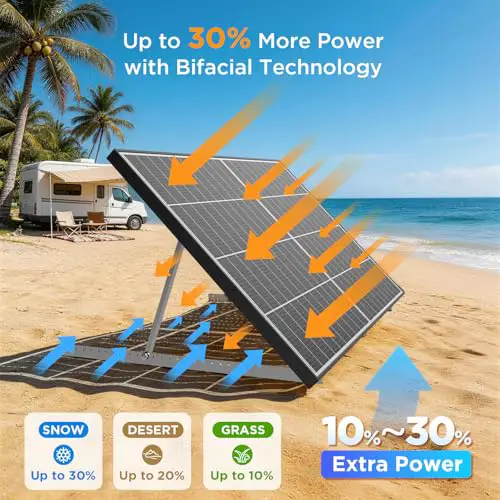
Roof shade can lower solar output, so note nearby trees, vents, chimneys, and snow exposure through the day. A model designed for partial shade may help, but it cannot replace good placement. Bifacial panels can collect light from the rear only when the mounting setup lets light reach that side and the surface below reflects some light. Check stated weather ratings, warranty terms, and safety documents. Do not assume a lifespan or certification from a short product title alone. Compare these details when choosing the best rooftop solar panels for your site.
Quick Comparison
| Model | Category | Best For | Key Spec | Amazon |
|---|---|---|---|---|
| Callsun 400W Bifacial Solar Pair | Best Overall | Compact home and off-grid setups | 2 x 200W; N-type bifacial | Amazon |
| Callsun 900W Bifacial Solar Pair | High Output | Buyers with ample roof area | 2 x 450W; double glass | Amazon |
| HQST 400W N-Type Solar Pair | Compact Pair | RVs, trailers, and smaller roofs | 2 x 200W; stated 25.4% efficiency | Amazon |
| Renogy ShadowFlux 200W Panel | Shade Focus | Sites with some partial shade | 200W; N-type; shade-focused design | Amazon |
| JJN 850W Bifacial Solar Pair | Large Output | Large roofs and open mounting | 2 x 425W; bifacial N-type | Amazon |
In-Depth Reviews for the Best Rooftop Solar Panels
1.
Callsun 400W Bifacial Solar Pair
 Check Price on Amazon
This Callsun set includes two 200W N-type bifacial panels, for 400W of rated power. The listing states up to 25.6% efficiency and describes a 16BB cell design. Its dual-module parallel anti-shade feature sets it apart from a basic panel pair. These details make it a flexible choice for buyers comparing the best rooftop solar panels for compact systems.
The two-panel format can suit a roof, van, boat, or off-grid project with room for both modules. Its listed 12V and 24V system uses still need a compatible charge controller and proper wiring. The parallel design may help limit some shade effects, but placement remains important. It is best for buyers who want a modest panel set and can plan the rest of the system.
Bifacial panels need light at the rear to gain any rear-side benefit, so mounting height and surface matter. Check the frame, connectors, and warranty details before installation. For buyers who can use both modules, this pair offers a practical rated output without requiring a single large panel.
Why It’s Great
- Two 200W modules offer flexibility in placement.
- N-type bifacial design can use reflected rear-side light when conditions allow.
- The listing states up to 25.6% efficiency.
- Dual-module parallel design is intended to help with partial shade.
- Listed for rooftop, RV, marine, and off-grid applications.
Good to Know
- The 25.6% figure is a stated maximum, not a promise of daily output.
- A charge controller, inverter, mounting hardware, and suitable wiring may be needed.
- The rear side needs access to light for bifacial gains, which many roof mounts limit.
2.
Callsun 900W Bifacial Solar Pair
 Check Price on Amazon
This Callsun set pairs two 450W panels for 900W of rated power. The listing names N-type monocrystalline cells, 16BB construction, double glass, and bifacial design. It also states up to 25.6% efficiency and a dual-module parallel anti-shade feature. For buyers seeking the best rooftop solar panels with high rated output, this pair deserves a close look.
Two large panels can suit a home roof, RV, or off-grid system with enough clear space and compatible electrical gear. Measure each panel and check roof load limits before buying, as the listing excerpt does not give dimensions. The shade feature may be useful in some layouts, but it cannot erase heavy shade. This set best suits buyers who need more rated capacity.
Double glass is a construction detail, not a substitute for checking the warranty and safety documents. Plan for secure mounts, wiring, and professional help if required by local rules. Its value depends on usable roof area and system compatibility, so compare the full installed cost before choosing.
Why It’s Great
- Two panels provide 900W of combined rated power.
- N-type monocrystalline cells are specified in the listing.
- Double-glass construction is clearly named.
- Bifacial design may collect rear-side light in a suitable mount.
- Dual-module parallel design is intended to address partial shade.
Good to Know
- The two panels need substantial clear roof or mounting space.
- Panel dimensions and exact electrical values should be confirmed before purchase.
- Rated output is not the same as power delivered throughout the day.
3.
HQST 400W N-Type Solar Pair
 Check Price on Amazon
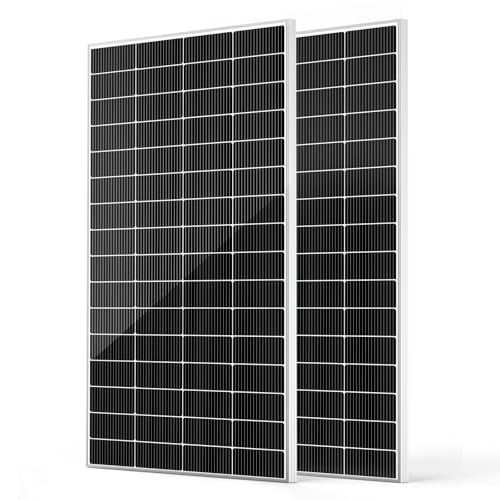
HQST lists this pair as two 200W N-type panels with 16BB cells and up to 25.4% efficiency. The listing also states IP65 and gives a size of 46.3 by 30.1 inches for each panel. Grade A+ cells and low-light performance are among the product claims. This 400W pair is a practical option to compare among the best rooftop solar panels.
The listed dimensions may help RV, trailer, marine, and smaller roof buyers plan a layout, but measure the usable space yourself. Check that the panel’s electrical values match your controller and battery system. The listing mentions low-light performance, though actual output still depends on light and conditions. This pair best suits shoppers who want two moderate-size modules rather than one large panel.
An IP65 claim describes a stated protection rating; confirm its scope in the product documents before exposure to weather. Review the warranty and mounting details, too. If the dimensions and system fit your project, the two-panel set may offer useful flexibility at a manageable scale.
Why It’s Great
- Two 200W modules provide 400W of rated power.
- The listing states up to 25.4% efficiency.
- Listed panel dimensions support early space planning.
- IP65 protection is stated in the product title.
- The intended uses include RV, trailer, marine, and rooftop systems.
Good to Know
- Confirm the listed dimensions and electrical specifications on the product page.
- The stated 30-year life is a claim to review alongside written warranty terms.
- Low-light output still varies with shade, weather, panel angle, and season.
4.
Renogy ShadowFlux 200W Solar Panel
 Check Price on Amazon
Renogy’s ShadowFlux is a single 200W N-type panel. The listing states up to 25% efficiency and describes a design for partial shade from trees, roof features, buildings, leaves, and snow. That focus may help buyers whose sites cannot stay fully clear all day. It is a useful single-panel option when comparing the best rooftop solar panels for shade-prone locations.
A single module can be easier to fit on some RVs, boats, and smaller roof areas than a larger pair. It can also suit a system that needs one panel at a time, provided the controller and wiring match. Shade-focused design does not mean shade has no effect, so check the roof through the day. This panel best suits buyers with limited space or occasional shade.
The listing provides a power rating and intended uses, but buyers should confirm dimensions, connector details, warranty terms, and mounting needs. Keep the surface clear of leaves and snow where safe to do so. Its value comes from a useful size and shade-aware design, not a guarantee of full output in poor light.
Why It’s Great
- Single 200W panel may fit smaller roof layouts.
- N-type cell design is stated in the listing.
- Shade-focused feature targets common roof obstructions.
- Listed for RV, marine, rooftop, and home use.
- A single module can be simpler to add to some existing plans.
Good to Know
- Partial-shade design cannot prevent all output loss from shade.
- The product listing excerpt does not provide panel dimensions.
- A controller and compatible system components are still required.
5.
JJN 850W Bifacial Solar Pair
 Check Price on Amazon
The JJN set contains two 425W rigid panels for 850W of combined rated power. Its title lists bifacial N-type cells, 16BB construction, and UL61730. Buyers should verify the certification and documents for the exact model before purchase. The high rated output can appeal to those comparing the best rooftop solar panels for a roomy roof or open mounting site.
Two rigid panels suit projects that can support their size, weight, and wiring needs. A bifacial panel may gain some power from rear light if the mount leaves room and the surface below reflects light. The pair is best for home or off-grid users who have space and can check system limits. Confirm dimensions and voltage details before planning the layout.
Rigid construction is suited to fixed mounting, but safe rails and correct fasteners matter. Check the product documents for weather use, warranty coverage, and certification details. This pair may offer strong rated capacity for a compatible system, though actual value depends on the installed cost and conditions at your site.
Why It’s Great
- Two 425W modules provide 850W of combined rated power.
- The title specifies bifacial N-type cells.
- 16BB construction is listed.
- Rigid panels suit fixed installations with proper mounts.
- The product title states UL61730, which buyers can verify in the documents.
Good to Know
- Confirm the exact panel size, weight, and electrical values before ordering.
- Bifacial output depends on rear-side light and the mounting surface.
- Verify certification and warranty documents for the exact model.
Final Thoughts: The Verdict
My personal top pick is Callsun 400W Bifacial Solar Pair. Its two-panel format, stated N-type cells, and shade-aware design make it a flexible choice for many compact home and off-grid plans. It is a strong place to start when comparing the best rooftop solar panels, as long as the system and roof fit.
For buyers with more clear roof space, Callsun 900W Bifacial Solar Pair offers higher rated output. The Renogy panel is a useful option for a smaller, shade-prone spot, while HQST suits buyers who want two 200W modules. Check dimensions, wiring, warranty, and local installation rules, then choose based on your needs and budget.
2 thoughts on “Best Rooftop Solar Panels: Choose The Right System”
Comments are closed.