
A 100 plastic free coffee maker should have clear materials, good brewing, easy cleaning, repair support, and proven safety.
The phrase “100 plastic free coffee maker” can mean 100 models or a 100% plastic-free design. Both ideas need careful research. This guide to 100 plastic free coffee maker choices explains how to check each one without trusting vague labels. I have not tested all 100 models, so I will not invent scores. Instead, I use a practical product check that covers materials, coffee quality, cleaning, safety, and spare parts.
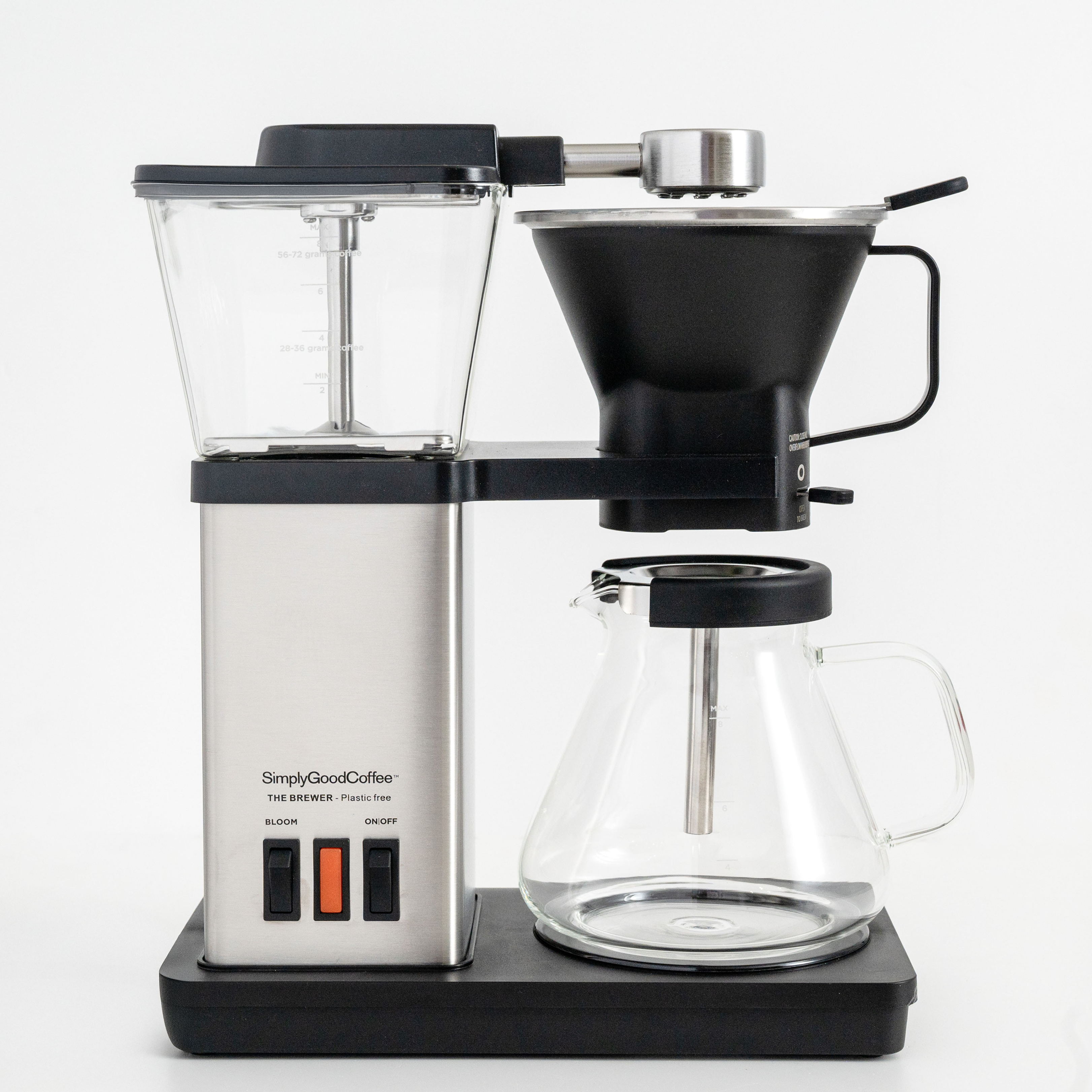
What “100 Plastic Free” Actually Means
“Plastic free” has no single U.S. product standard for coffee makers. ISO 14021 provides rules for self-declared environmental claims, including plastic-free claims. It does not certify a whole appliance or guarantee that every hidden part is plastic free.
You may also see three different types of claims:
• A whole-product claim means the maker and its listed parts contain no plastic.
• A food-contact claim covers only surfaces that touch water or coffee.
• A packaging claim may cover the box or protective wrapping, but not the appliance.
For a 100 plastic free coffee maker, ask the seller which parts the claim includes. A glass carafe, metal filter, and paper pads do not prove that the switch, cord, handle, seals, or plug are plastic free.
Be especially careful with terms such as “nontoxic,” “eco-friendly,” and “chemical free.” They do not mean the same thing as a complete plastic-free design.

Why Consider a Plastic Free Coffee Maker?
The main appeal is a useful coffee maker that can last for years. Glass, ceramic, and stainless steel can serve this goal when you choose sound construction and care for them well. A longer service life may reduce replacement waste, although no material guarantees durability.
Reusable filters can also cut down on disposable purchases. A metal mesh filter may replace many paper filters, while a glass or stainless carafe removes the need for disposable coffee cups. These choices only help if you use them as intended.
Plastic free does not automatically mean safer, healthier, cheaper, or better for the planet. Food safety also depends on clean parts, suitable materials, and correct use. A plastic-free label cannot repair poor engineering or a complicated cleanup routine.
My rule is simple: check the coffee path first, then check every other part. The design should serve your coffee habit before it serves a marketing claim.

Compare 100 Plastic Free Coffee Makers by Type
When you sort 100 plastic free coffee makers, these ten groups offer a useful shopping map. They are product families, not ten current models that I have tested. Always confirm the exact model number before buying.
| Type | Best Fit | What to Check |
|---|---|---|
| Glass pour-over | Slow mornings and a small kitchen | Look for a glass dripper and carafe, then check the handle, collar, and filter supports |
| Ceramic pour-over | Quiet, simple brewing | Confirm the ceramic parts, glaze safety, warming plate, and handle material |
| Stainless steel dripper | Fast cleanup and fewer fragile parts | Check the dripper, carafe, lid, feet, and any plastic supports |
| Immersion brewer | Coffee steeping in a single vessel | Look for an all-metal body and all-metal filter assembly |
| Stovetop moka pot | Small-batch espresso-style coffee | Choose a fully metal construction and check the cool-touch handle |
| Electric drip brewer | Larger cups and scheduled mornings | Inspect the reservoir, filter basket, carafe, lid, pump area, cord, and switch |
| Electric espresso machine | Cappuccinos and espresso drinks | Check the brew unit, portafilter, steam wand, housing, seals, and tubing |
| Cold brew maker | Coffee steeped in the refrigerator | Check the glass or steel vessel, lid, filter, handle, and storage cover |
| Insulated carafe brewer | Coffee held warm for a group | Verify the carafe, heating plate, control panel, cord, and replaceable components |
| Reusable capsule brewer | Single-cup coffee with less pod waste | Check the capsule, piercing mechanism, housing, seals, and removable parts |
Brands such as Hario and Chemex offer familiar pour-over options, but not every version has the same materials. Electric models from many well-known brands also vary widely. Never assume that one color, size, or production run matches another.
Start with your real routine. Someone who drinks one mug at a time does not need a large insulated carafe. A small immersion brewer may also fit better than a full espresso setup.

How to Compare 100 Plastic Free Coffee Makers
I use the same basic checks for an inexpensive hand brewer and a costly electric machine. A higher price does not prove better materials, and a low price does not prove poor quality.
-
Record the exact model number. A series name may cover several designs with different lids, cords, handles, or carafes.
-
Request a full material list. Include the reservoir, filter basket, switch, plug, cord insulation, handle, feet, seals, fasteners, adhesives, and printed labels.
-
Identify every coffee-contact surface. Check the carafe, shower screen, filter basket, portafilter, and water path. Do not assume an unlisted part is safe for hot water.
-
Match capacity to your routine. Measure how much coffee you usually drink and how many people you serve. A large tank can create stale coffee if you only use a few cups.
-
Learn the cleaning method before checkout. Check the carafe, basket, lid, filter, removable seals, and base separately. “Dishwasher safe” should apply to the exact part, not the whole machine.
-
Check safety information. For U.S. electric models, look for a recognized electrical safety mark on the exact model, such as UL or ETL. These marks do not prove a plastic-free claim.
-
Look for replacement support. Find replacement baskets, lids, glass carafes, handles, and seals. A maker with no available parts may be hard to keep in service.
-
Calculate the full ownership cost. Include filters, cleaning supplies, replacement parts, and energy use when the seller provides reliable figures. Compare those costs with how often you expect to brew.
For food-contact materials, the FDA regulates substances used in contact with food. It does not issue a general “FDA-approved coffee maker” certificate. Food-contact suitability, electrical safety, and plastic-free status are separate checks.

Materials: Strengths and Tradeoffs
The best material depends on where it sits and what you do with it. A glass carafe has different needs from a wooden handle or a sealed electrical switch.
| Material | Common Uses | Advantages | Tradeoffs |
|---|---|---|---|
| Borosilicate glass | Carafes, drippers, cold brew vessels | Clear, nonporous, and easy to inspect | Can break; care must follow maker instructions |
| Stainless steel | Brewers, baskets, carafes, filters | Strong, heat resistant, and widely available | Coffee oils need attention; grade labels do not prove sustainability |
| Ceramic | Pour-over cones and mugs | Attractive, familiar, and usually easy to clean | Can crack; the glaze and adhesives still matter |
| Wood or bamboo | Handles and exterior collars | Adds warmth and a natural look | Requires drying; adhesives may contain plastics |
| Metal mesh | Reusable coffee filters | Reduces paper-filter purchases | Can trap fine grounds and needs careful rinsing |
A material grade is not an environmental certification. A stainless steel body marked “304” or “18/8” tells you about alloy composition, not the maker’s full carbon footprint or plastic content.
Ceramic also deserves care. Buy from a maker that clearly addresses food-contact safety. Decorative clay, unknown glazes, and handmade pieces may involve risks that a “plastic free” label does not answer.
For a 100 plastic free coffee maker, check each component against its job. A glass brew path does not compensate for a poorly sealed lid, while a strong filter basket does not fix an uncomfortable handle.
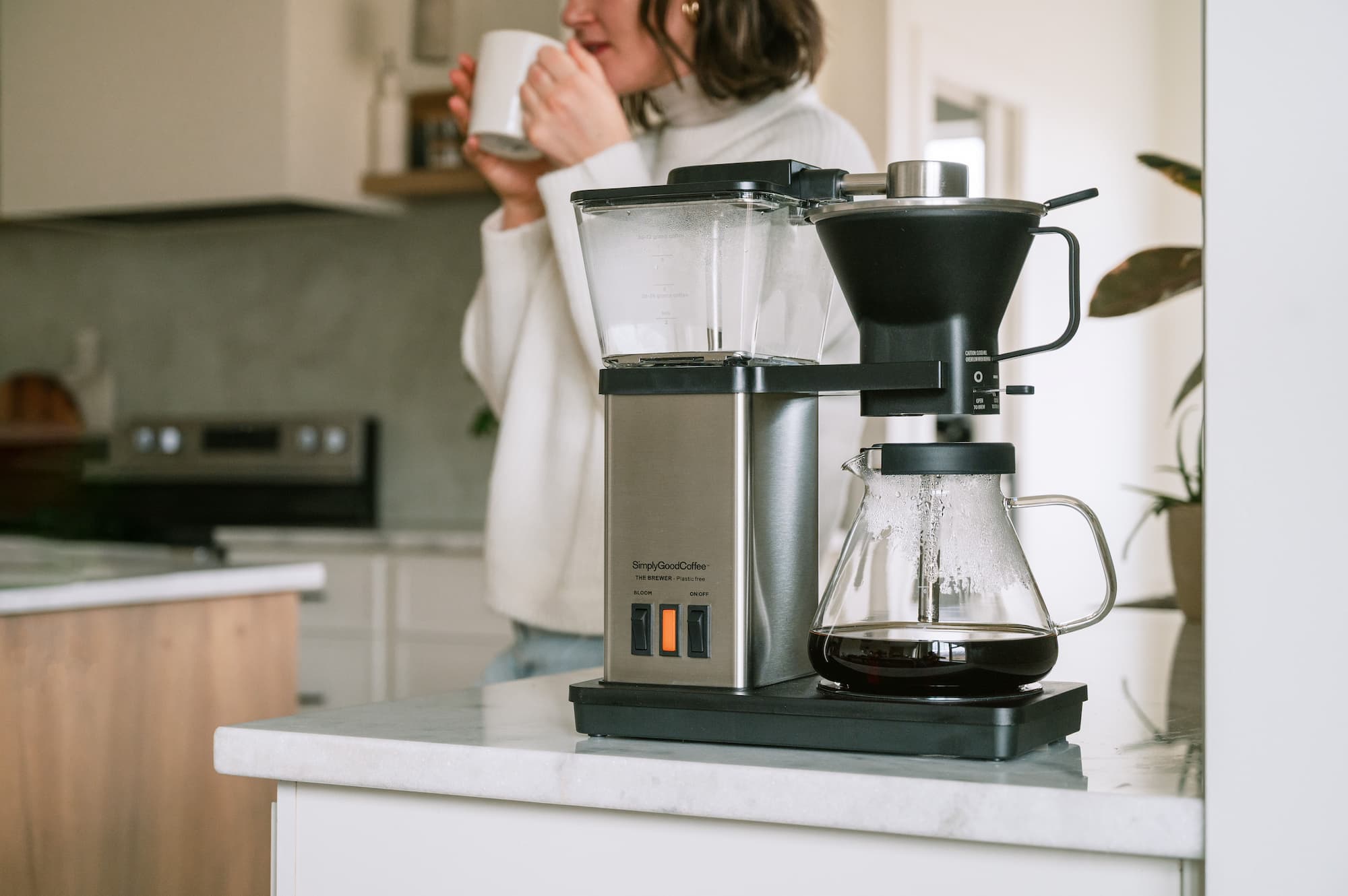
Pods, Paper Filters, and Electric Parts
Single-cup coffee creates a common source of confusion. A reusable metal capsule may reduce disposable pod waste, but it does not make the entire brewer plastic free. The piercing parts, valves, housing, and electrical cord still count.
Electric drip machines make the same point. A glass water tank and glass carafe may leave plastic elsewhere. Look at the pump area, control panel, cord, plug, internal tubing, and filter supports. Ask for the full design rather than checking only the visible pot.
Paper filters are separate from the maker itself. A plastic-free brewer can use paper filters, but that choice still creates filter waste. A reusable metal filter reduces those purchases while changing the cup’s clarity and body. Neither option is automatically best for every coffee drinker.
Silicone, synthetic rubber, and similar polymer parts also need clear disclosure. A food-safe seal can still be a polymer. Do not treat a “BPA-free” or food-contact claim as proof that the product contains no plastic.
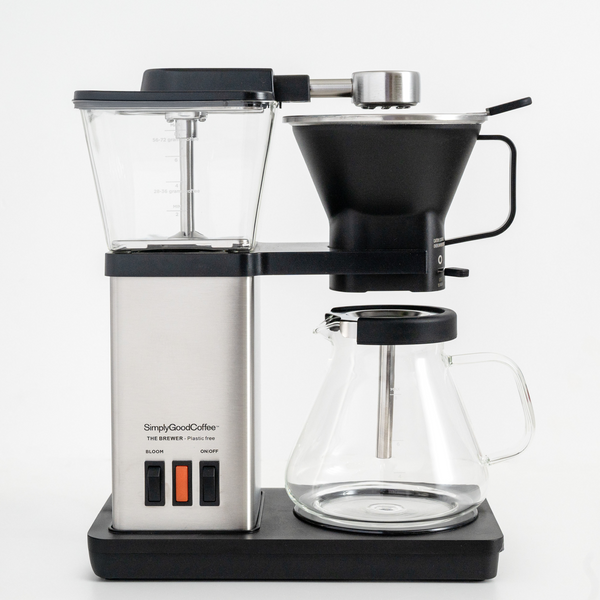
What to Confirm Before You Order
A reliable listing should answer more than a single “100% plastic free” badge. My practical rule is to compare the written specifications with the product photos, manual, and available parts.
Before buying, look for:
-
An exact model number and revision.
-
A material breakdown for the full appliance.
-
Clear information about the brew path and coffee-contact surfaces.
-
Separate care instructions for glass, metal, wood, and electronic parts.
-
A meaningful warranty and a clear return policy.
-
Electrical safety information for the exact powered model.
-
Food-contact information for relevant materials.
-
Availability and cost of replacement parts.
-
A realistic capacity based on the maker’s test conditions.
-
Clear packaging details if the claim includes the box.
A polished photograph can hide a plastic cord, a bonded handle, or a mixed-material lid. This is why a full specification matters more than a close-up of the coffee cup.
A seller who cannot identify the cord, cap, filter, or handle should not expect you to assume those parts meet the claim. Ask for written details and keep a copy for comparison.

Use It Well and Avoid Waste
Good care helps any coffee maker last longer. It also makes a plastic-free design more useful than a fragile model that needs frequent replacement.
-
Follow the manual. Use the stated water temperature, coffee dose, cleaning method, and compatible accessories.
-
Clean coffee oils promptly. Rinse the brew path after use according to the maker’s guidance. Do not let grounds sit in a basket or carafe for long periods.
-
Descale only as directed. Use a product approved for that model. Do not assume boiling water, bleach, or vinegar is safe for every finish, seal, or electrical part.
-
Dry removable parts fully. Pay attention to handles, lids, wooden collars, and gaskets. Do not place a whole appliance in water unless the maker explicitly allows it.
-
Store the maker with care. Keep electrical parts dry and follow storage instructions for any sensitive materials.
-
Replace parts when possible. A lost lid or damaged basket does not always mean replacing the whole machine.
-
Follow local waste rules. A coffee maker is not a normal curbside recycling item in most programs. Look for an electronics take-back or e-waste option where available.
A reusable filter only reduces waste when you use it correctly. Rinse trapped grounds away and allow the filter to dry. Poor upkeep can affect both taste and cleaning.
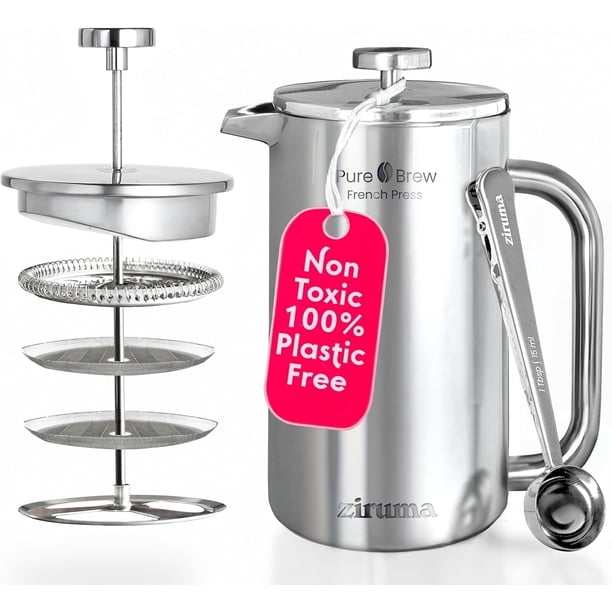
Limits and Red Flags to Know
Even a well-built 100 plastic free coffee maker has tradeoffs. Glass can break. Metal can become hot. Electric models can use more energy than stovetop options. None of these facts makes plastic free a bad choice; they help you buy with open eyes.
Watch for these warning signs:
• A claim appears only in a product title, with no detailed material list.
• The seller uses “eco-friendly” without explaining what the term covers.
• Only the carafe is described as plastic free, while the rest of the machine is ignored.
• A dishwasher-safe label applies to one glass part but is presented as permission for the entire appliance.
• A bamboo handle is called plastic free without any information about its adhesive.
• A reusable capsule is presented as proof that the whole brewer is plastic free.
• A low price depends on disposable pods, filters, or replacement parts that are not included.
• A carbon-friendly claim appears without energy, shipping, service-life, or recycling evidence.
A 100 plastic free coffee maker is not automatically a low-impact product. Materials, energy use, shipping, durability, repairability, and end-of-life handling all affect its wider environmental story. Ask for evidence when a seller makes a broad claim.
Match the Maker to Your Routine
For a small kitchen, a glass or ceramic pour-over cone may be enough. You can brew one or two mugs without operating a large water tank or warming plate. Choose a size that fits your cabinet and your usual coffee dose.
For stronger coffee, an all-metal immersion brewer or a stovetop moka pot may suit you. A fully metal moka pot is easy to inspect, but its handle can become hot. Follow the instructions and keep the handle away from children and pets.
For a family or office group, an electric filter brewer with a glass carafe can offer useful capacity. A glass reservoir makes the remaining water visible, while a warmer plate can be convenient. Look for removable, washable parts and a lid that fits well.
For simple cleanup, a manual brewer with few connected parts may be the better choice. Every connection can be another place for coffee oils to collect. The best model is often the one you will maintain, not the one with the longest feature list.
A 100 plastic free coffee maker earns its place when its materials, coffee results, and upkeep fit your life. Compare at least two or three models using the same checklist. Do not let a roundup’s ranking replace your own judgment.
Frequently Asked Questions About Plastic Free Coffee Makers
What is a 100 plastic free coffee maker?
The phrase may mean a shortlist of 100 models or a maker designed to be 100% plastic free. Only a clear, model-specific material statement can confirm the second meaning. It should include parts beyond the coffee-contact surfaces.
Is a 100% plastic free coffee maker always better?
No. It may offer useful material benefits, but brewing, cleaning, safety, and durability still matter. The best choice depends on your coffee routine and the quality of the design.
Are glass or stainless steel coffee makers better?
Glass makes coffee residue easy to see, but it can break. Stainless steel is tough and versatile, though coffee oils can affect flavor over time. Choose based on handling, care, and replacement-part support.
Do reusable coffee pods make a brewer plastic free?
No. A metal pod can reduce disposable pod waste while the machine still contains plastic switches, seals, housings, or cords. Check the entire appliance separately from the accessory.
Can every part of a plastic free coffee maker go in the dishwasher?
No. Even a fully metal or glass model may have electronics, adhesives, seals, or wooden handles. Follow the care instructions for each part, and never submerge the powered base unless its manual allows it.
Does plastic free mean safer for my health?
Not by itself. Food-contact safety, cleanliness, and correct use remain important. A plastic-free claim does not replace a full material list or reliable food-contact information.
Conclusion
A 100 plastic free coffee maker should offer more than a green label. Look for clear materials, useful brewing, simple cleaning, safe construction, and replacement parts you can actually find.
Start with the coffee path, then check the cord, switch, lid, handle, seals, and packaging. Compare the exact model, not just the brand or product family. Most importantly, choose a maker that fits how you drink coffee and how much care you enjoy.
Save this checklist, compare a few strong options, and make your decision from evidence. If you found the guide useful, share it with someone who wants a durable coffee maker without the guesswork.
1 thought on “100 Plastic Free Coffee Maker: Sustainable Brewing Ideas”
Comments are closed.