
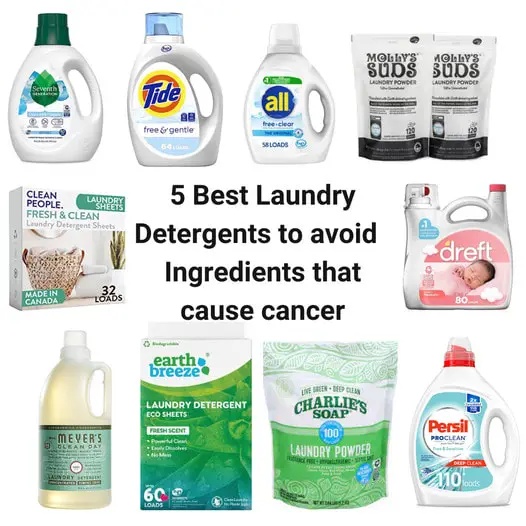
A trustworthy 1,4-dioxane-free laundry detergent list pairs exact formula checks with supplier tests and clear detection limits.
If you want products to screen, keep reading. I’ll show you what a label can prove, what it cannot, and which questions to ask a maker. A clear supply chain matters more than a long list of familiar names.
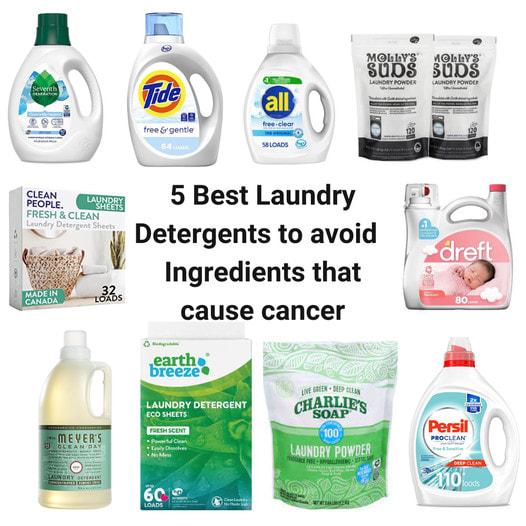
What a 1,4-dioxane-free laundry detergent list should show
1,4-dioxane is a small, organic solvent that mixes readily with water. Animal studies have linked it to cancer. The International Agency for Research on Cancer places it in Group 2B, which means it is possibly carcinogenic to people.
That does not mean studies have proved that 1,4-dioxane causes cancer in humans. It also does not mean every trace found in a diluted wash will cause harm. Risk depends on the amount, the route into the body, and the length of exposure.
California’s Proposition 65 also lists 1,4-dioxane as a chemical known to cause cancer. This helps guide warning requirements, but it does not tell you how much is in a bottle or your rinse water.
A useful claim should give you four facts:
- The exact product covered by the claim.
- Whether the test covers the finished detergent.
- The result, such as “not detected.”
- The test’s detection limit.
When “free” is too vague
A “not listed” statement and a “not detected” statement serve different functions. Reading the distinction can prevent a false sense of safety.
| Words on a product page | What the words can mean | What you should still ask |
|---|---|---|
| 1,4-dioxane not listed | The ingredient list does not name it | Does the maker test the finished product for it? |
| Made without 1,4-dioxane | It was not deliberately added | Could it enter as a raw-material by-product? |
| 1,4-dioxane-free | The maker rejects the chemical | Which products, batches, and test limits does the claim cover? |
| Not detected | The lab did not find it above its limit | What was the limit, and was the method fit for purpose? |
“Not detected” does not mean an absolute zero. It means the test did not find the chemical at the level its method could measure. Without that limit, a broad claim may say very little.
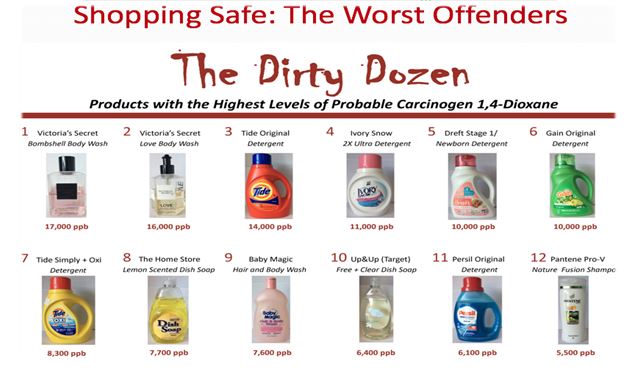
Why some detergents can contain 1,4-dioxane
1,4-dioxane is usually discussed as an unwanted by-product, not as a main cleaning agent. Its presence can begin with the making of an ingredient rather than the final blending of detergent.
Some surfactants are made through a process called ethoxylation. This process adds ethylene oxide groups to a base chemical. It can also create 1,4-dioxane as a side product.
A related solvent, 1,4-dioxolane, may also contain 1,4-dioxane. Some formulas use a small amount of 1,4-dioxane to stabilize this solvent. A detergent can therefore have two separate routes to the same unwanted chemical.
The amount may vary by factory, recipe, supplier, and batch. Heat and storage can also affect a raw material. This helps explain why two products with similar package names may not have the same ingredient story.
An ingredient list is not a full chemical analysis. Small by-products may not appear on the package. A clean front label therefore cannot stand in for sourcing and test information.

A practical 1,4-dioxane-free laundry detergent list to check
A verified list should link every product to clear evidence. The names below offer a practical US starting point, but they serve different levels of proof. Confirm the exact formula before you buy.
Dropps laundry detergent. The maker says its laundry detergents are made without 1
1 thought on “1 4-Dioxane Free Laundry Detergent List: Safer Choices”
Comments are closed.