
A residential air exchanger can mean a ventilation unit or a water-to-air coil that moves heat into a home’s forced-air system. These picks are water-to-air heat exchangers for outdoor wood furnaces and compatible ductwork. Homeowners buy them to transfer heat from hot water into indoor air.
A common buying mistake is to shop by price or outside dimensions alone. A coil with the wrong port size may not connect to your plumbing, and a unit that does not fit your duct can turn installation into an expensive headache. These products are not HRV or ERV ventilation systems, so they will not bring in fresh outdoor air or control humidity. Choosing the right exchanger matters: a poor fit can waste time, add flow limits, or leave a room colder than expected. Check your system before you order.
I reviewed the listed sizes, port details, and stated uses to compare fit and likely use cases. I also checked an important point for shoppers: these are water-to-air coils, not whole-home ventilation exchangers. This guide puts compatibility, clear product details, and practical value first, so you can narrow down the best residential air exchanger for a forced-air heating setup.
What you’ll learn
- How to tell a water-to-air coil from an HRV or ERV ventilation unit.
- Why coil dimensions and copper port size matter for installation.
- Which listed exchanger may suit a larger or smaller duct setup.
- What to confirm with a heating professional before you buy.
In This Article
How To Choose The Best best residential air exchanger
The right residential air exchanger must match both your heating system and the space where it will sit. These products transfer heat from hot water to forced air; they do not replace an HRV or ERV that brings fresh air into a home. A common mistake is to choose by size alone, then find that the ports or duct opening do not fit. Before you buy, check your furnace setup, coil dimensions, water connections, and the maker’s installation guidance. A quick check can prevent costly rework.
Match the Coil Size to Your Duct
Start with the space available in your duct or plenum, then compare it with the exchanger’s listed dimensions. The 12-by-12, 16-by-18, 18-by-20, 20-by-20, and 30-by-30 options suit different installation spaces, but a larger coil is not automatically better. Airflow, heat demand, duct layout, and system design all matter. Measure carefully and ask a qualified heating professional to confirm fit before ordering. Avoid assuming that a product’s outside size equals the usable opening. Good sizing helps the best residential air exchanger work with your setup rather than become an awkward retrofit.
Check Copper Port Size and Plumbing
Port size affects how the coil connects to your hot-water loop. The listed products range from 3/8-inch ports to 1-inch and 1 1/4-inch ports, so check your pipe size and the system’s flow needs. Do not assume an adapter will solve every mismatch; added fittings can affect installation and may not suit your system. Also confirm that the coil is compatible with your water temperature, pressure, and fluid. The 30-by-30 model has larger 1 1/4-inch ports, while smaller listed models use 1-inch or 3/8-inch connections. Verify all details with your installer.
Know Whether You Need Heating or Ventilation
The phrase best residential air exchanger often refers to a ventilation unit that brings in fresh air and may recover heat. The products in this guide are water-to-air heat exchangers. They transfer heat from hot water into moving air and are listed for outdoor wood furnaces and forced-air heating. They do not provide fresh-air ventilation or moisture control. If you want better indoor air exchange, look for an HRV or ERV instead. If you already have a compatible hot-water heat source and need a coil for ducted air, these models may fit the job. Confirm your goal before buying.
Quick Comparison
| Model | Category | Best For | Key Spec | Amazon |
|---|---|---|---|---|
| VEVOR 18 x 20 Water-to-Air Heat Exchanger | Best Overall | Compatible residential duct systems | 18 x 20 in; 3 rows; 3/8-in ports | Amazon |
| 30 x 30 Water-to-Air Heat Exchanger | Large Format | Larger compatible installations | 30 x 30 in; 1 1/4-in ports | Amazon |
| VEVOR 20 x 20 Water-to-Air Heat Exchanger | Mid-Size Pick | Duct setups needing a 20-in coil | 20 x 20 in; 3 rows; 3/8-in ports | Amazon |
| HTL 16 x 18 Water-to-Air Heat Exchanger | Compact Fit | Smaller available duct spaces | 16 x 18 in; 1-in ports | Amazon |
| 12 x 12 Water-to-Air Heat Exchanger | Small Format | Compact compatible installations | 12 x 12 in; 1-in ports | Amazon |
In-Depth Reviews for best residential air exchanger
1.
VEVOR 18 x 20 Water-to-Air Heat Exchanger
 Check Price on Amazon
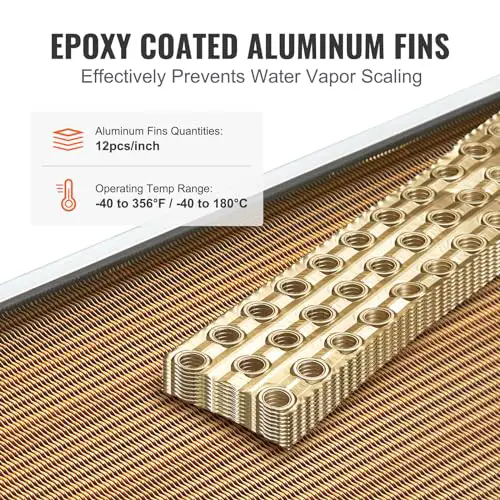
This VEVOR water-to-air heat exchanger measures 18 by 20 inches and has a three-row coil with 3/8-inch copper ports. Its listed aluminum fins and copper connections are made to transfer heat from a hot-water source to forced air. For the best residential air exchanger fit, check the opening and pipe size before purchase.
The rectangular coil is intended for outdoor wood furnaces, residential heating and cooling, and forced-air heating setups. Its 18-by-20-inch size may suit homeowners whose duct space matches those dimensions. Confirm airflow, water flow, and installation needs with a qualified professional. It is a heating coil, not a fresh-air ventilation unit, so it will not bring outdoor air inside.
The listed copper ports and aluminum fins give buyers useful material details, but installation quality still depends on proper support and connections. Keep the fins clear of dust during service and inspect for leaks as advised by your installer. Its value rests on a suitable fit; compare the port size and dimensions before ordering.
Why It’s Great
- Three-row coil offers a clear design spec for comparing options.
- 18-by-20-inch size may fit some residential duct spaces.
- Copper ports provide a stated connection material.
- Aluminum fins are listed as part of the heat-transfer design.
- Product description names outdoor wood furnace and forced-air uses.
Good to Know
- The 3/8-inch ports may not match larger existing water lines.
- It is not an HRV or ERV and does not provide fresh-air exchange.
- Heating output and system compatibility are not specified in the supplied listing details.
2.
30 x 30 Water-to-Air Heat Exchanger
 Check Price on Amazon
This 30-by-30-inch water-to-air heat exchanger is the largest listed option here and has 1 1/4-inch copper ports. The product is described for outdoor wood furnaces, residential heating and cooling, and forced-air heating. Its large form may suit a matching installation, but dimensions alone do not show heating output or guarantee system fit.
The larger frame needs more room than the compact coils in this guide. It may suit a homeowner or installer working with a duct opening and water loop designed for its size and ports. Measure the available space and confirm flow needs before purchase. Like the other picks, it transfers heat; it does not ventilate a home.
A large coil can be useful when the system is built to accept it, yet it may be poor value if it needs major duct changes. The listing states copper ports but gives limited performance data here. Confirm materials, operating limits, and installation details with the seller or a heating professional.
Why It’s Great
- 30-by-30-inch size serves installations that need a larger coil.
- 1 1/4-inch copper ports are clearly stated.
- Listed for outdoor wood furnace and forced-air heating uses.
- Provides an option distinct from the smaller coil sizes.
- May suit a custom or larger compatible duct setup.
Good to Know
- Its large size needs careful space and duct checks.
- The larger ports may not match smaller existing plumbing.
- The supplied product details do not state capacity or operating limits.
3.
VEVOR 20 x 20 Water-to-Air Heat Exchanger
 Check Price on Amazon
The VEVOR 20-by-20-inch water-to-air heat exchanger uses a three-row coil, 3/8-inch copper ports, and 242 aluminum fins, as stated in its product title. It is listed for outdoor wood furnaces and forced-air heating. This size is a useful comparison point for shoppers who need a square coil and have checked their duct opening.
Its square shape may suit a compatible plenum or duct layout, while its smaller ports call for a careful plumbing check. The best residential air exchanger is the one that fits the system, not simply the one with the biggest face. Ask an installer to confirm the connection, airflow, and water-loop requirements for your home.
The product title identifies copper ports and aluminum fins, which helps with a basic materials comparison. Keep the fin surface free of debris and follow the maker’s care instructions. Since the supplied details do not establish capacity or service life, judge its value by confirmed compatibility and the final installed cost.
Why It’s Great
- Square 20-by-20-inch face is easy to compare with duct measurements.
- Three-row coil is a useful stated construction detail.
- The title lists 242 aluminum fins.
- Copper port material is stated in the product details.
- Listed for outdoor wood furnace and forced-air applications.
Good to Know
- The 3/8-inch ports need to match the hot-water loop or approved fittings.
- A square coil may not suit every duct or plenum shape.
- The listing details provided do not confirm heat output or airflow limits.
4.
HTL 16 x 18 Water-to-Air Heat Exchanger
 Check Price on Amazon
The HTL 16-by-18-inch water-to-air heat exchanger has 1-inch copper ports and is described for outdoor wood furnaces, residential heating and cooling, and forced-air heating. Its smaller footprint may help where a larger coil will not fit. Check the actual opening and system needs; the listed dimensions alone do not promise a specific heat output.
This option may work for homeowners with a smaller duct space and a water loop that matches its 1-inch ports. Its rectangular footprint differs from the 20-by-20 model, so measure both sides rather than relying on a rough estimate. A heating professional can verify airflow, water flow, and safe installation before you choose it.
The listing gives a useful size and port specification, but buyers should confirm construction details and operating limits before installation. Keep the coil clean and inspect the plumbing as directed by the installer. It can offer good value when it fits without major changes; mismatched ductwork can add cost quickly.
Why It’s Great
- 16-by-18-inch dimensions may suit tighter spaces.
- 1-inch copper ports are a common detail to compare with existing lines.
- Rectangular shape offers an alternative to square coils.
- Listed for outdoor wood furnace and forced-air heating use.
- Smaller footprint may reduce space demands in a compatible setup.
Good to Know
- Its dimensions must match the duct opening and mounting space.
- The 1-inch ports still require a plumbing compatibility check.
- The product details provided do not state capacity or verified efficiency.
5.
12 x 12 Water-to-Air Heat Exchanger
Check Price on Amazon
This 12-by-12-inch water-to-air heat exchanger is the smallest listed option and has 1-inch copper ports. It is described for outdoor wood furnaces, residential heating and cooling, and forced-air heating. Its compact size may suit a limited opening, but a small coil is not automatically right for a home’s heating load.
The square footprint may be easier to place in a tight, compatible duct area than the larger models. It is best suited to buyers who have measured the opening and confirmed that the coil can meet their system needs. Check the water loop, airflow, and operating limits with an installer before treating it as the best residential air exchanger for your home.
The product title provides dimensions and port size, which helps buyers screen for fit. Keep the coil and its fins clear, and follow the maker’s care guidance. Value depends on matching the intended use; confirm performance data and installation costs before purchase to avoid choosing a coil that is too small.
Why It’s Great
- Compact 12-by-12-inch size may suit limited installation space.
- Square shape is simple to compare with a measured opening.
- 1-inch copper ports are specified in the product title.
- Listed for outdoor wood furnace and forced-air applications.
- Offers a smaller alternative to the other options in this guide.
Good to Know
- A compact coil may not meet the needs of a larger heating system.
- Measure the duct opening and mounting area before ordering.
- The supplied listing details do not confirm heating capacity or efficiency.
Final Thoughts: The Verdict
My personal top pick is the VEVOR 18 x 20 Water-to-Air Heat Exchanger for shoppers whose duct opening and 3/8-inch water connections match. Its stated size, three-row coil, copper ports, and aluminum fins make it an easy option to compare. Remember, it is a heating coil, not a ventilation unit, so it will not bring fresh air into your home.
For a larger setup, consider the 30 x 30 Water-to-Air Heat Exchanger, but only if its space and 1 1/4-inch ports suit your system. The 16 x 18 and 12 x 12 models may help when space is tight, while the 20 x 20 VEVOR offers another square size. The best residential air exchanger is the one that fits your heating system and goal. Confirm dimensions, plumbing, and performance needs with an installer before you buy.