
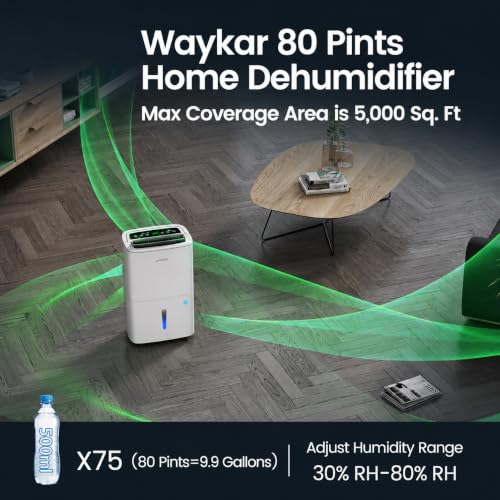
A portable whole-house dehumidifier pulls extra moisture from indoor air to help make a damp home feel more comfortable. It can suit homeowners with a humid basement, large open area, or several connected rooms. People buy one to reduce clammy air and help protect belongings from excess moisture.
A dehumidifier can look powerful on a box yet struggle in a cold basement or a space with poor airflow. Some buyers focus only on the advertised square footage, then find that a small tank fills too fast or that the unit needs constant attention. Others overlook noise, drain access, and the conditions used for pint ratings. That can turn a helpful appliance into one more chore. Choosing the right size, drainage setup, and use case matters because moisture control depends on more than a big number.
I compared the listed capacity, coverage claims, drainage features, and intended use of these models, with a close eye on where portable units differ from ducted whole-home systems. I also checked what buyers should confirm before purchase, since published ratings can depend on test conditions. This guide to the best portable whole house dehumidifier prioritizes clear fit, practical drainage, and honest trade-offs.
What you’ll learn
- How pint capacity and room size affect moisture removal
- When a gravity drain, pump, or tank makes sense
- Which models suit basements, large rooms, and crawl spaces
- What to check before treating a portable unit as whole-home coverage
In This Article
How To Choose The Best best portable whole house dehumidifier
The best portable whole house dehumidifier is not always the one with the largest number on its label. A unit may be rated under warm, very damp test conditions, so real output can be lower in a cool basement. Cheap models can also lack a useful drain setup or clear controls. Before you buy, match the unit to the dampest area, check how water will leave the machine, and remember that portable units may not dry closed rooms across a whole home.
Match Capacity to the Dampest Space
Look at the pint-per-day rating, but treat it as a comparison point rather than a promise for every home. Temperature, humidity, airflow, and room layout can all change real output. A small basement may work well with a standard residential model, while a large, wet area may call for higher capacity or commercial equipment. Avoid choosing by square footage alone; coverage claims vary by brand and conditions. For the best portable whole house dehumidifier fit, start with the dampest area and consider whether doors stay open between rooms.
Choose a Drain Setup You Can Live With
A water tank is simple, but it needs regular emptying and may stop the unit when full. A gravity drain can reduce that work if there is a floor drain nearby and the hose can slope down. A pump can move water to a higher drain, which helps in some basements and crawl spaces. Check whether the needed hose or pump is included, and read the setup instructions before buying. For continuous use, a reliable drain plan often matters more than a long list of modes.
Check Noise, Temperature, and Placement
Compressor dehumidifiers can make noticeable fan and motor noise, so placement matters near bedrooms or living areas. Many models work best in warmer conditions; cool spaces may need an auto-defrost feature to limit frost buildup. Leave room around the air intake and outlet, and keep the unit on a level surface. Do not assume a portable model will control every room through closed doors. A high-capacity unit may suit a basement, while a quieter residential model may be easier to live with in a shared space.
Quick Comparison
| Model | Category | Best For | Key Spec | Amazon |
|---|---|---|---|---|
| Waykar 80-Pint Dehumidifier | Best Overall | Large homes and basements | 80 pints; listed for up to 5,000 sq. ft. | Amazon |
| SEMKAP 32-Pint Dehumidifier | Residential | Smaller damp areas | 32 pints; listed for up to 2,500 sq. ft. | Amazon |
| Airzentti 155-Pint Commercial Dehumidifier | Commercial | Crawl spaces and very wet areas | 155-pint listing; pump and drain | Amazon |
| AEOCKY 80-Pint Dehumidifier | High Coverage | Large residential areas | Up to 80 pints daily; listed for 5,500 sq. ft. | Amazon |
| Marshal WD160 Whole-House Dehumidifier | Ducted Whole-Home | Crawl spaces and whole-home setups | 160-pint name; listing states DOE 65 PPD | Amazon |
In-Depth Reviews for best portable whole house dehumidifier
1.
Waykar 80-Pint Dehumidifier
 Check Price on Amazon
The Waykar 80-pint dehumidifier is listed for spaces up to 5,000 square feet, with use suggested for basements, bathrooms, and large rooms. Its drain hose supports continuous drainage, while auto defrost and self-drying features add convenience. For shoppers comparing the best portable whole house dehumidifier options, this model offers a strong mix of capacity and practical moisture control.
Its portable design can help users move the unit to the dampest room instead of treating it as a fixed whole-home system. Set the humidity target, allow room for airflow, and use the hose when a suitable drain is close by. It may suit homeowners with a large basement or connected living area who need regular moisture control.
A hose can reduce tank-emptying chores, and the self-drying feature is intended to help care for the unit after use. Confirm hose placement and the room conditions before relying on continuous drainage. Its listed features and capacity make it a versatile residential choice, though actual output depends on the space.
Why It’s Great
- High listed capacity suits large damp rooms.
- Drain hose can limit manual tank emptying.
- Auto defrost is useful in cooler spaces.
- Self-drying feature adds a care convenience.
- Portable format lets you target problem areas.
Good to Know
- The 5,000-square-foot claim is not a guarantee for every layout or climate.
- A gravity drain needs a lower drain point and proper hose slope.
- It is a portable room unit, not a ducted whole-home system.
2.
SEMKAP 32-Pint Dehumidifier
 Check Price on Amazon
The SEMKAP dehumidifier is listed at up to 32 pints and for areas up to 2,500 square feet. A drain hose, humidity control, compressor, and 24-hour timer make it a practical residential option. It may suit buyers who want the best portable whole house dehumidifier for a smaller damp zone rather than a high-output commercial machine.
Smart humidity control can help keep the room near a chosen target, while the timer offers a simple way to plan operation. Its listed use includes basements, bathrooms, bedrooms, and large rooms. Consider it for a modest moisture problem, and check the room temperature, airflow, and drain location before setting it up.
The hose may make routine water removal easier when the unit can drain by gravity. The listing does not provide every detail needed to judge long-term durability, so review current seller information before purchase. Its moderate capacity may offer good value for homes that do not need commercial-level moisture removal.
Why It’s Great
- Moderate listed capacity fits many residential damp areas.
- Humidity control helps maintain a chosen setting.
- A 24-hour timer supports planned operation.
- Drain hose can reduce tank-emptying frequency.
- The listed coverage suits users who need less than a large commercial unit.
Good to Know
- Its 32-pint rating may be too low for severe or widespread moisture.
- The coverage figure depends on room conditions and layout.
- Confirm included accessories and drainage instructions before ordering.
3.
Airzentti 155-Pint Commercial Dehumidifier
 Check Price on Amazon
The Airzentti is listed as a 155-pint commercial dehumidifier for large spaces, crawl spaces, basements, attics, garages, and water-damage use. Its pump and drain design can move collected water toward a drain, while auto defrost supports operation in cooler settings. It stands out among best portable whole house dehumidifier choices for demanding areas.
This commercial-style unit is aimed at users who need more moisture removal than a standard bedroom appliance can offer. A pump may help when the drain is not directly below the machine, but placement and hose routing still matter. It may suit large basements, crawl spaces, or recovery work where steady drainage is important.
The pump and drain setup can simplify ongoing water removal, but the buyer should check installation needs and the actual included hose parts. Commercial equipment may take more room and use more power than a small home unit. Its value is strongest when the moisture load truly calls for its higher listed capacity.
Why It’s Great
- High listed capacity targets large, damp spaces.
- Pump can support drainage where gravity flow is not practical.
- Auto defrost is listed for cooler operating conditions.
- Commercial use range includes crawl spaces and garages.
- Designed for ongoing moisture removal with a drain.
Good to Know
- Commercial capacity may be excessive for a bedroom or small room.
- Check power needs, clearances, and hose routing before setup.
- A dehumidifier does not repair leaks or replace water-damage remediation.
4.
AEOCKY 80-Pint Dehumidifier
 Check Price on Amazon
The AEOCKY dehumidifier is listed for up to 80 pints per day and spaces up to 5,500 square feet. It includes a drain hose and an intelligent humidistat, with an Energy Star Most Efficient 2025 claim in its product title. These features make it a strong residential contender for the best portable whole house dehumidifier shortlist.
A humidistat can help the unit respond to the moisture level instead of running without a target. The portable format is useful when one area needs more drying than another, though closed doors limit how much air it can treat. It may suit homeowners with a large basement, open-plan area, or several connected rooms.
The drain hose can reduce the need to empty a collection tank, provided the outlet is set up as directed. Check the exact efficiency certification and operating details on the current listing. Its broad coverage claim and control features offer useful value for homes that need substantial, but not industrial, capacity.
Why It’s Great
- High listed daily capacity fits large residential spaces.
- Humidistat supports more controlled moisture management.
- Drain hose can help with continuous use.
- Portable design allows targeted placement.
- Energy efficiency claim may appeal to frequent users; verify current certification.
Good to Know
- Actual performance may be lower than the maximum pint rating in cooler or drier air.
- A 5,500-square-foot claim depends on airflow and home layout.
- It does not connect to home ductwork as a whole-house system.
5.
Marshal WD160 Whole-House Dehumidifier
 Check Price on Amazon
The Marshal WD160 is presented as a whole-house dehumidifier for crawl spaces, with a fresh-air function, cycle timer, and remote controller. Its title says 160 pints, while the product description also states a DOE rating of 65 PPD. Check the current listing carefully, since rating differences matter when comparing the best portable whole house dehumidifier options.
Unlike a typical wheeled room unit, this model is aimed at a more fixed whole-home or crawl-space setup. The remote control may help when the unit is placed out of easy reach, and the timer can support planned operation. It may suit owners who want a dedicated installation rather than moving a portable appliance from room to room.
A whole-home unit can offer a more central moisture-control approach, but installation and duct or drain needs should be confirmed first. The rating difference deserves attention before purchase. Its value depends on the actual capacity, included controls, and whether the setup fits the home and intended use.
Why It’s Great
- Designed for whole-home and crawl-space applications.
- Remote controller can help manage an out-of-the-way unit.
- Cycle timer supports scheduled operation.
- Fresh-air function is included in the product title.
- May suit buyers seeking a fixed system rather than a movable room unit.
Good to Know
- The listing states both 160 pints and DOE 65 PPD; confirm the rated capacity before buying.
- This is not the same kind of portable appliance as a wheeled room dehumidifier.
- Check installation, drainage, and any duct requirements with the seller or a qualified installer.
Final Thoughts: The Verdict
My personal top pick is the Waykar 80-Pint Dehumidifier for its strong listed capacity, drain hose, and useful defrost features. It is a practical choice for a large damp room or basement, though it should not be mistaken for a ducted whole-home system. For many shoppers, it balances power and everyday use well.
For more demanding spaces, the Airzentti 155-Pint Commercial Dehumidifier offers a pump and a higher listed capacity. The SEMKAP may suit smaller moisture problems, while the Marshal WD160 targets a fixed whole-home setup; verify its listed capacity first. Choose the best portable whole house dehumidifier based on your dampest area, drainage, and budget.