

An inline bathroom exhaust fan sits in the duct, often away from the ceiling grille, to move damp air outdoors. It suits homeowners, landlords, and renovators who want quieter ventilation or need to clear steam from a bathroom with limited ceiling space. The best inline bathroom exhaust fan balances airflow, noise, and a practical duct setup.
A fan that looks powerful on a box can disappoint once bends, long ducts, or a clogged grille slow the airflow. Some models also sound louder than expected, while a poor fit can leave you with leaks, rattles, or costly extra work. Picking only by the highest CFM is a common mistake: too little airflow leaves mirrors foggy, but an unsuitable setup may waste energy and still miss damp spots. The right fan can make the room feel fresher and help manage moisture, so check your duct, room, and installation plan before buying.
I compared the listed models by their stated airflow, duct size, noise claims, and intended use, then considered which homes and projects each may suit. Product details here are based on the information provided, not hands-on sound or airflow tests. This guide prioritizes clear trade-offs, sensible sizing, and a best inline bathroom exhaust fan choice that fits your actual room and duct run.
What you’ll learn
- How to match fan airflow to your bathroom and duct layout.
- Why duct size, bends, and outlet routing matter.
- Which listed fan may suit one room or several spaces.
- What to verify before installation and purchase.
In This Article
How To Choose The Best Inline Bathroom Exhaust Fan
The best inline bathroom exhaust fan is not always the one with the biggest CFM number. Real airflow depends on the room, duct length, bends, and the path to an outdoor vent. A fan that is too small may leave steam behind, while a mismatched duct can add noise and reduce performance. Before you buy, check the fan’s duct diameter, stated airflow, installation needs, and whether it is rated for your planned use. Also confirm how the fan will be wired and vented; product listings do not replace local code or installation guidance.
Match Airflow to the Room and Duct
CFM tells you how much air a fan is designed to move, but duct resistance can lower real airflow. Measure the room and consider the duct route before choosing. A short, straight duct is easier for a fan to handle than a long run with many bends. Avoid selecting the highest CFM without checking the duct size and intended use. The listed 170 CFM models may fit modest rooms or general ventilation needs, while 200 to 300 CFM options may suit larger spaces or more demanding runs. For two bathrooms, confirm the fan and duct layout can serve both correctly.
Check Duct Size, Routing, and Fit
A fan must connect to a duct that fits its stated diameter. The four-inch models in this guide need compatible ducting, while the six-inch ALORAIR model calls for a larger duct. Reducing duct size can restrict flow and may add noise, so do not assume an adapter solves every fit issue. Plan a route that is as short and smooth as practical, and make sure the exhaust terminates outdoors rather than in an attic. Check dimensions and access before ordering. These steps help avoid last-minute changes and make the best inline bathroom exhaust fan easier to install.
Treat Noise and Installation Claims Carefully
Noise ratings can help compare models, but results depend on mounting, ductwork, and the room around the fan. A stated decibel figure is not a promise of the same sound in every home. Look for clear installation instructions, a suitable mounting point, and wiring that matches the product requirements. If the fan will sit above a ceiling or serve a rental, plan how you will reach it for service. Do not rely on a claimed quiet design to fix rattling ducts or loose mounts. A qualified installer can help with wiring, vent routing, and local code needs.
Quick Comparison
| Model | Category | Best For | Key Spec | Amazon |
|---|---|---|---|---|
| Aggrfine Dual Inlet 230 CFM | Best for two rooms | A planned two-bathroom duct setup | 4-inch; 230 CFM; claimed 25 dB | Amazon |
| ALORAIR 4-Inch 170 CFM | Balanced airflow | A bathroom or utility room | 4-inch; 170 CFM | Amazon |
| ALORAIR 6-Inch 300 CFM | High airflow | Larger spaces with six-inch ducting | 6-inch; 300 CFM | Amazon |
| LEOKV 4-Inch 200 CFM | Two-speed option | Users who want two speed settings | 4-inch; 200 CFM; two speeds | Amazon |
| ALORAIR 4-Inch 170 CFM Quiet | Simple ventilation | Buyers seeking a basic 4-inch option | 4-inch; 170 CFM | Amazon |
In-Depth Reviews for best inline bathroom exhaust fan
1. Aggrfine 230 CFM Dual-Inlet Inline Fan

The Aggrfine inline fan is listed at 230 CFM, with a four-inch dual-inlet design for planned ventilation from two spaces. Its 48-watt rating and claimed 25 dB noise level stand out on paper. This best inline bathroom exhaust fan candidate may appeal to owners who want one central fan for a carefully designed two-bathroom duct system.
A low-profile inline body can be placed away from the bathroom grille, which may help keep fan noise out of the room. The dual inlets offer flexibility, but each branch needs suitable duct sizing and a balanced layout. It may suit a home, rental, or small commercial project where a single fan is planned to serve two areas.
Keep the housing and ducts clear of dust to support airflow. The listing describes an energy-efficient design, but long-term durability and actual sound depend on installation. Check included parts, access, and duct compatibility before purchase to judge the value for your project.
Why It’s Great
- 230 CFM offers substantial stated airflow for a four-inch model.
- Dual inlets are designed for a planned two-space ventilation setup.
- The listed 48-watt rating gives buyers a power figure to compare.
- The claimed 25 dB level may appeal to noise-conscious households.
- An inline layout can keep the fan body away from the ceiling grille.
Good to Know
- The 25 dB figure is a product claim, not a guarantee of installed sound.
- A dual-inlet system needs carefully planned branches and balanced airflow.
- Confirm the duct path, fan access, and outdoor termination before installation.
2. ALORAIR 4-Inch 170 CFM Inline Fan

This ALORAIR inline fan is listed at 170 CFM with a four-inch connection. The maker describes it as quiet and suitable for bathrooms, attics, kitchens, garages, and laundry rooms. That range of uses makes it a flexible choice for basic ventilation. For shoppers comparing the best inline bathroom exhaust fan options, its stated airflow is a useful middle ground.
An inline design allows the motor to sit in the duct run instead of directly above the room grille. That layout may help reduce perceived bathroom noise, though duct length and mounting still matter. This model may suit a modest bathroom or utility space when its airflow and four-inch connection match the planned duct system.
Routine care mainly means checking the grille and duct for dust or blockage. The listing calls the fan durable and easy to install, but the exact build details and service access should be checked before purchase. Its appeal is straightforward ventilation without a larger duct size.
Why It’s Great
- A four-inch connection may fit common small duct layouts.
- The stated 170 CFM suits buyers who do not need the highest listed airflow.
- The product is marketed for several household and utility spaces.
- An inline position can place the fan body away from the room grille.
- A simple spec set makes it easier to compare with similar fans.
Good to Know
- The listing does not provide a verified installed noise result.
- 170 CFM may not suit a large room or a restrictive, long duct run.
- Check the included mounting and wiring details before planning installation.
3. ALORAIR 6-Inch 300 CFM Inline Fan

The ALORAIR six-inch inline fan is listed at 300 CFM, the highest stated airflow among these picks. Its larger duct size is important: this model is best considered when the whole route can support six-inch ducting. It may suit a larger bathroom or utility area that needs stronger ventilation. The best inline bathroom exhaust fan must still fit the duct plan.
This fan is marketed for bathrooms, kitchens, garages, and laundry rooms. Its higher airflow can be useful where a smaller model may fall short, but it is not an automatic upgrade for every home. Buyers should check room needs, duct length, bends, and available mounting space. It is best suited to users who can plan around a six-inch connection.
Check the duct and housing from time to time for dust, and keep access available for service. The product is described as easy to install, but larger ducting can affect the work involved. Its value is strongest when the room and duct layout can make use of the stated capacity.
Why It’s Great
- The listed 300 CFM is the highest airflow in this selection.
- A six-inch duct connection supports a larger planned duct route.
- It is marketed for bathrooms and several utility spaces.
- It may suit rooms that need more airflow than a 170 CFM fan offers.
- The stated capacity is clear and easy to compare.
Good to Know
- Six-inch ducting may not fit an existing four-inch installation.
- Higher stated airflow does not guarantee equivalent airflow after duct resistance.
- Check available space and mounting access before committing to this size.
4. LEOKV 4-Inch 200 CFM Two-Speed Fan
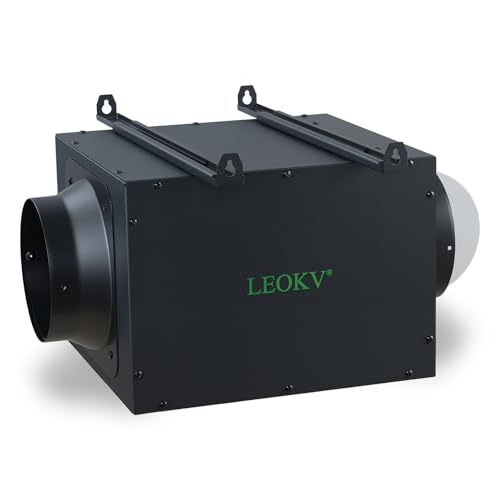
The LEOKV inline fan is listed at 200 CFM and uses a four-inch connection. Its two-speed design gives buyers a choice of settings, while the listing also calls out a black finish, rustproof galvanized steel, and an all-copper-wire motor. This best inline bathroom exhaust fan option may suit shoppers who value adjustable speed and a stated metal housing.
The two speed settings may help users choose a lower or higher operating level for changing ventilation needs. The fan is marketed for bathrooms, kitchens, and garages. Before buying, confirm how speed control works and whether the duct route suits its airflow. It may be a practical fit for buyers who want more than one operating setting.
A metal housing may be easier to wipe down than a dusty duct interior, but keep the full system clear for good airflow. The listing provides useful material claims, though long-term service life is not established here. Compare its controls and installation needs with the value of the added speed choice.
Why It’s Great
- The stated 200 CFM sits between the 170 and 230 CFM options.
- Two speed settings add operating flexibility.
- The listing specifies a four-inch connection.
- Galvanized steel and an all-copper-wire motor are stated features.
- Its listed uses include bathrooms, kitchens, and garages.
Good to Know
- The product details provided do not state its noise level.
- Confirm the speed-control method and included controls before purchase.
- Actual airflow depends on duct length, bends, and installation.
5. ALORAIR Quiet 4-Inch 170 CFM Fan
This ALORAIR listing describes a quiet four-inch inline bathroom exhaust fan rated at 170 CFM. Its stated size and airflow match the other ALORAIR 170 CFM listing in this guide, so buyers should compare the individual listing details before ordering. It may fit a basic bathroom ventilation plan where four-inch ducting and moderate airflow are suitable.
The inline format places the fan in the duct rather than at the ceiling grille. That can be useful when room space is tight, though noise still depends on duct routing and mounting. This option may suit a buyer who wants a straightforward 170 CFM fan for a small bathroom or similar space and has a compatible four-inch duct.
Keep the duct and any grille free of dust so air can move well. Product details provided for this listing are limited, so check the current page for parts, controls, and installation guidance. Its value depends on the final price and how its listing compares with the other 170 CFM option.
Why It’s Great
- The stated 170 CFM gives buyers a clear airflow point for comparison.
- A four-inch connection may suit an existing compatible duct.
- The listing describes the fan as quiet.
- An inline design keeps the fan body away from the room grille.
- It offers another listed option for buyers comparing ALORAIR models.
Good to Know
- The provided details do not establish how this listing differs from the other ALORAIR 170 CFM model.
- No measured noise result is supplied.
- Check current listing details, included parts, and duct compatibility before buying.
Final Thoughts: The Verdict
My personal top pick is Aggrfine 230 CFM Dual-Inlet Inline Fan for homes with a properly planned two-space duct system. Its stated airflow, dual inlets, and compact inline approach make it a versatile choice, but confirm the duct layout and noise claim before buying. For a higher-flow setup with six-inch ducting, consider the ALORAIR 6-Inch 300 CFM Inline Fan.
The ALORAIR 4-inch 170 CFM model may suit a simpler room, while LEOKV offers two speed settings. The best inline bathroom exhaust fan is the one that matches your room, duct size, and route—not simply the one with the biggest number. Check installation needs and your budget, then choose the model that fits your specific ventilation plan.