
A dehumidifier pulls extra moisture from indoor air to help make damp rooms feel more comfortable. A best dehumidifier without pump is a good fit for people who want a simpler setup, fewer pump parts, and the choice to empty a tank or use gravity drainage.
A damp basement can turn laundry, cardboard boxes, and stored keepsakes musty fast. Yet buying by the largest room-size claim alone can lead to a noisy machine that fills its tank too often or cannot drain where you need it. Some listings also mix up pump-free gravity drainage with powered upward drainage. That difference matters when the drain is above the unit. A poor fit means more bucket trips, more hassle, and less moisture control. Check the drainage method, tank size, and test conditions before you buy.
I compared the listed capacity, drainage details, room-size claims, and stated energy features for each model. I did not treat marketing claims as proof of real-world results, and I flag pump-equipped units because they are not true pump-free picks. This guide puts clear drainage choices, practical use, and honest trade-offs first, so you can find the best dehumidifier without pump for your room.
What you’ll learn
- How gravity drainage differs from a built-in pump.
- Which capacity claims may suit small, medium, or large spaces.
- What to check before relying on a room-size rating.
- Which listed models fit pump-free use and which do not.
In This Article
How To Choose The Best dehumidifier without pump
The right dehumidifier can cut damp air without adding a daily chore. A common mistake is choosing by a large square-foot claim while overlooking the tank or drain setup. Another is assuming every hose can send water uphill; gravity drains cannot. Low-quality or poorly matched units may need frequent emptying, run loudly, or struggle in cool rooms. Before buying the best dehumidifier without pump, check the stated moisture capacity, operating conditions, tank size, and whether the drain outlet sits below the unit.
Choose the Right Drainage Setup
A true pump-free dehumidifier collects water in a tank or sends it through a hose that slopes down to a lower drain. It cannot push water uphill. Check the manual for gravity-drain instructions, hose size, and drain position before you buy. If your floor drain is higher than the unit, a built-in pump may be useful, but that model does not meet a strict best dehumidifier without pump search. For simple rooms with a nearby floor drain, gravity drainage avoids pump parts. If no drain is close, choose a tank you can lift and empty with ease.
Match Capacity to Room Conditions
Pint-per-day ratings depend on temperature and humidity, so compare ratings under similar test conditions. A large number does not guarantee the same output in a cool basement or a less damp room. Check the maker’s room-size guidance, but treat it as a starting point rather than a promise. For a small room, a huge unit may cost more and take up space. A large, persistently damp basement may need higher capacity or more than one unit. The best dehumidifier without pump is the one that can keep up with your actual moisture load.
Check the Tank, Noise, and Energy Details
Tank size affects how often you need to stop and empty the machine. A small tank can fill quickly in a wet room, even when the dehumidifier has a high daily capacity. Look for an auto-shutoff feature to help prevent overflow, plus a clear tank design or an easy-to-access bucket. If the unit will run near a bedroom or living space, check its sound rating when available. Energy Star details can help with efficiency comparisons, but verify the exact model and certification. The best dehumidifier without pump should fit both your room and your routine.
Quick Comparison
| Model | Category | Best For | Key Spec | Amazon |
|---|---|---|---|---|
| AEOCKY 80-Pint Dehumidifier | Best Overall | Large damp areas; confirm drain setup | Up to 80 pints per day; 5,500 sq. ft. claim | Amazon |
| Yaufey 150-Pint Dehumidifier | High Capacity | Large basements needing upward drainage | 150-pint claim; 7,000 sq. ft. claim | Amazon |
| hOmeLabs 50-Pint Dehumidifier | Built-In Pump | Rooms where water must drain upward | 50-pint rating; pump included | Amazon |
| Amazon Basics 50-Pint Dehumidifier | Pump Equipped | Large rooms with a need for pumped drainage | 50-pint rating; pump included | Amazon |
| Waykar 34-Pint Dehumidifier | Smaller Spaces | Homes needing manual or gravity drainage | 34 pints; 2,000 sq. ft. claim | Amazon |
In-Depth Reviews for the Best dehumidifier without pump
1.
AEOCKY 80-Pint Energy Star Dehumidifier
 Check Price on Amazon
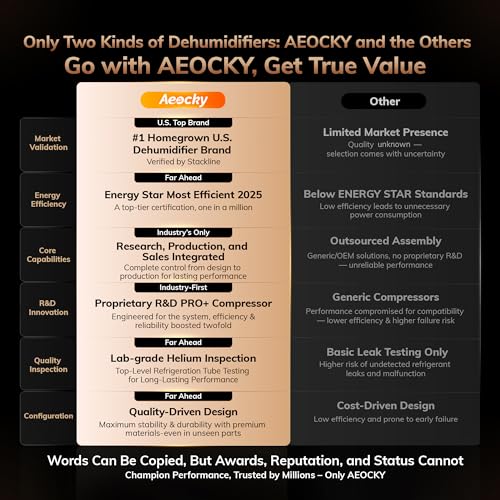
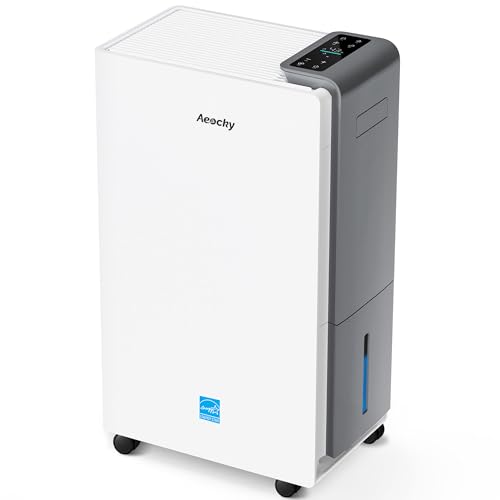
The AEOCKY is listed as an 80-pint-per-day dehumidifier for areas up to 5,500 square feet. Its Energy Star Most Efficient 2025 claim may appeal to buyers who want strong moisture removal with attention to energy use. Check the exact model details and test conditions before comparing its rating with other machines.
This model is aimed at larger homes, basements, and other spaces where damp air is a steady concern. Its listed capacity gives it room to handle a heavier moisture load than a small-room unit. Before choosing it as the best dehumidifier without pump, confirm whether its drainage method suits your setup and whether a gravity hose can reach a lower drain.
A tank-based setup means you may need to empty collected water by hand unless the unit supports a suitable gravity drain. Review the manual for bucket access, hose use, and upkeep. Its stated efficiency and capacity may offer value for large spaces, but the right deal depends on your needs and current price.
Why It’s Great
- High stated capacity suits larger damp areas.
- Listed coverage reaches up to 5,500 square feet.
- The 2025 Energy Star Most Efficient claim is a useful efficiency point to verify.
- Can be considered for a pump-free setup if gravity drainage is supported.
- A strong option for buyers who want one unit for a broad area.
Good to Know
- Square-foot and pint claims depend on room conditions and test methods.
- Confirm the drainage setup; a gravity hose cannot move water uphill.
- A high-capacity unit may be larger and cost more than a small-room model.
2.
Yaufey 150-Pint Dehumidifier for Basements
 Check Price on Amazon
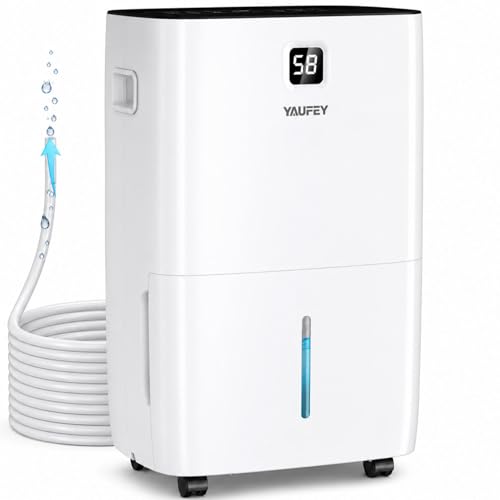
Yaufey lists this basement dehumidifier at 150 pints and up to 7,000 square feet. The unusually high figures make it worth a close look for large, very damp spaces, but capacity claims can use specific test conditions. Its upward-drainage feature is a key distinction, so check whether it uses a pump before treating it as a best dehumidifier without pump.
The unit is presented for basement use, where a drain may sit above the machine or be far from the wettest area. Upward drainage can help in that layout, but it may rely on a powered pump. This model best suits buyers who need that feature and can confirm the exact installation steps, rather than shoppers who require strictly pump-free operation.
Before buying, check the manual for hose placement, tank handling, and routine cleaning. High output can be useful in a large space, but does not remove the need to plan drainage. Its value depends on verified capacity, the drain arrangement, and the price compared with a simpler gravity-drain model.
Why It’s Great
- The listing targets very large basement spaces.
- Upward drainage may help when the outlet is above the unit.
- High listed capacity may suit severe moisture loads.
- A useful comparison for buyers weighing pumped drainage against gravity drainage.
- Basement-focused design may fit dedicated utility areas.
Good to Know
- Upward drainage may require a pump, so this may not fit a pump-free requirement.
- The 150-pint claim depends on test conditions and should be checked against the manual.
- Large-capacity units can need more space and careful drain planning.
3.
hOmeLabs 50-Pint Dehumidifier with Pump
 Check Price on Amazon
The hOmeLabs listing gives this model a 50-pint rating, a 7,500-square-foot coverage claim, and a built-in pump. The pump can move collected water toward a higher drain, which is a practical feature in some basements. Since it is pump-equipped, it is not a strict best dehumidifier without pump pick, but it offers a useful alternative.
A built-in pump can reduce bucket lifting when the drain is not at floor level. This model may suit people who want continuous drainage and can route the hose to a sink or other approved outlet. Check the manual for hose limits, placement, and operating conditions, especially if the unit will run for long periods.
Pump drainage adds convenience but also adds a part that needs power and care. Keep the tank, filter, and drain path clean as the maker directs. Its overall value depends on whether upward drainage solves a real problem in your room; if not, a gravity-drain unit may be simpler.
Why It’s Great
- Built-in pump can send water toward an elevated drain.
- The 50-pint rating suits some larger damp rooms.
- Listed coverage gives buyers a broad-area option to compare.
- May reduce manual tank emptying when installed as directed.
- A practical choice when gravity drainage will not reach the drain.
Good to Know
- It has a pump, so it does not meet a strict pump-free requirement.
- Pump operation depends on power and correct hose placement.
- Check the stated room coverage against your conditions and the manual.
4.
Amazon Basics 50-Pint Dehumidifier with Pump
 Check Price on Amazon
This Amazon Basics model is listed as a 50-pint dehumidifier with a pump, humidity control, auto-defrost, and overflow protection. The listing states coverage for rooms up to 4,000 square feet and says it is Energy Star certified. Confirm the exact certification and model details, as this pump-equipped unit is not a strict best dehumidifier without pump choice.
The pump may be useful when a basement drain sits above the unit, while humidity controls can help set a target for indoor comfort. It is listed for larger rooms, but actual performance will vary with heat and moisture levels. This model best suits buyers who value pumped drainage and want to compare its controls and protections.
A pump can ease daily water handling, though the unit still needs a clear hose path and routine care. Check tank access, filter cleaning, warranty terms, and the manual before setup. The listed safety features and coverage may offer convenience, but compare current price and confirmed certification before deciding.
Why It’s Great
- The built-in pump supports drainage toward a higher outlet.
- Humidity control is listed for setting a desired level.
- Auto-defrost is a helpful stated feature for some operating conditions.
- Overflow protection is listed to help limit spills.
- The 4,000-square-foot claim may suit larger rooms when conditions align.
Good to Know
- A built-in pump means this is not pump-free.
- Verify current model details and Energy Star certification before purchase.
- Drainage still depends on correct hose routing and regular care.
5.
Waykar 34-Pint Dehumidifier for Home
 Check Price on Amazon
Waykar lists this home and basement dehumidifier at 34 pints for spaces up to 2,000 square feet. The listing highlights 2025 Energy Star Most Efficient status, a 0.62-gallon tank, and auto or manual drainage. Its lower capacity may suit moderate moisture better than a very wet basement, and it is the clearest pump-free candidate here if drainage is gravity-fed.
The smaller stated coverage may fit bedrooms, living areas, or modest basements better than a large commercial-style unit. A 0.62-gallon tank is compact, so owners may need to empty it often in humid conditions. This model suits buyers who want a smaller footprint and can use manual emptying or a hose that slopes down to a drain.
Manual drainage keeps the setup simple, while the tank calls for regular checks. Confirm how the auto-drain option works and whether it needs a pump before purchase. For a moderate space, its stated efficiency and lower capacity may offer good value, but heavy moisture can call for a larger unit.
Why It’s Great
- Lower stated capacity may fit smaller rooms and moderate dampness.
- Manual drainage offers a simple option without relying on a pump.
- The listing includes a 0.62-gallon tank.
- Listed coverage reaches up to 2,000 square feet.
- The 2025 Energy Star Most Efficient claim is worth verifying for this model.
Good to Know
- A 0.62-gallon tank may need frequent emptying in a wet space.
- Confirm that auto drainage is gravity-fed if you need a pump-free unit.
- Its stated capacity may not keep up with severe basement dampness.
Final Thoughts: The Verdict
My personal top pick is the AEOCKY 80-Pint Dehumidifier for buyers with a large, damp area who want high stated capacity and can confirm that its drainage works without a pump. Its Energy Star Most Efficient claim is another point to verify for the exact model. It is my leading best dehumidifier without pump candidate in this group, but check the manual before ordering.
For smaller spaces, the Waykar 34-Pint Dehumidifier offers a more modest capacity and manual drainage. Choose the hOmeLabs or Amazon Basics option if you need pumped upward drainage, and consider Yaufey only after confirming its pump setup. Match capacity and drain position to your room and budget.
2 thoughts on “Best Dehumidifier Without Pump: Easy Drainage Guide”
Comments are closed.