
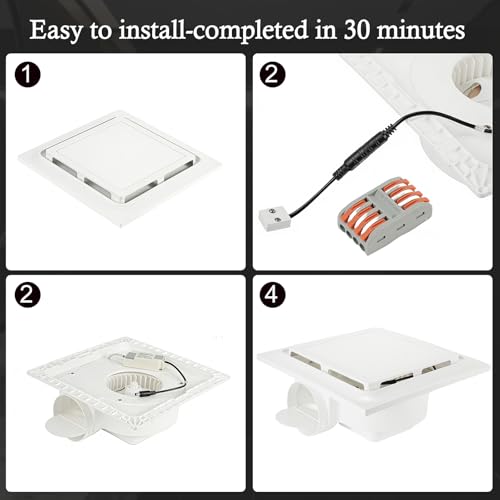
A bathroom exhaust fan sends damp air outdoors, while a dehumidifier pulls moisture from indoor air. This guide to the best bathroom extractor fan with dehumidifier is for homeowners managing steam, foggy mirrors, or lingering dampness. People buy these products to improve comfort and help protect bathrooms from excess moisture.
A weak fan can leave mirrors fogged and towels damp long after a shower. A noisy model may get switched off, while a poor fit can make installation costly or leave airflow below what the room needs. Another common mistake is expecting a portable dehumidifier to replace a properly vented exhaust fan. These tools solve related, but different, problems. Choosing the right setup can make daily showers feel more comfortable and help control moisture, without paying for features that do not suit your room.
I compared the listed products by their stated airflow, noise, lighting, coverage, and moisture-control design. The selection includes ceiling exhaust fans and standalone dehumidifiers, so I explain what each can and cannot do rather than treating them as the same product. This guide to the best bathroom extractor fan with dehumidifier prioritizes clear specs, practical fit, and honest buying advice.
What you’ll learn
- How exhaust fans and dehumidifiers handle bathroom moisture in different ways
- Which listed fan may fit your room, lighting, and noise needs
- What to check before choosing a compact or large-room dehumidifier
- How to avoid sizing, ducting, and feature mismatches
In This Article
How To Choose The Best best bathroom extractor fan with dehumidifier
The best bathroom extractor fan with dehumidifier depends on where the moisture goes and how much your room produces. An exhaust fan needs a suitable duct path to move damp air outdoors; a dehumidifier collects water indoors. Buyers can waste money on a fan that is too weak, a unit that will not fit the ceiling cutout, or a small dehumidifier for a large space. Check room size, installation needs, noise, and drainage before you buy. If dampness persists, look for the cause, too.
Match Fan Airflow to Room Size
Airflow is listed in cubic feet per minute, or CFM. A higher number can move more air, but the right choice depends on bathroom size, ceiling height, and the duct run. The listed fans range from 50 CFM to 145 CFM, so they do not suit the same room equally. Check the manufacturer’s room-size guidance and local code before buying. A long or bent duct can reduce real airflow. Do not choose by the biggest number alone; a correctly sized, well-vented fan is more useful than an oversized fan with poor ducting.
Check Fit, Noise, and Light Needs
Before ordering a ceiling fan, measure the existing opening and check the product’s cutout size, panel size, duct size, and wiring needs. The 145 CFM model lists a 10-by-10-inch cutout and a four-inch duct, while the Broan-NuTone listing gives 50 CFM and 2.0 sones. Sones describe perceived sound, so lower ratings generally mean quieter operation. If the room needs more light, a fan with an LED can save space. Do not assume a panel size equals the ceiling cutout size; confirm both measurements.
Know When You Need a Dehumidifier
A dehumidifier can help when indoor humidity stays high, but it does not vent bathroom air outdoors. A small portable unit may suit a compact room or nearby space, while a larger-capacity model may be better for broader moisture problems. Check coverage, water collection or drainage, controls, and the maker’s operating guidance. Do not compare square-foot claims as if they were guaranteed results in every home. For shower steam, a properly ducted exhaust fan is often the direct tool; a dehumidifier can support moisture control when ventilation alone is not enough.
Quick Comparison
| Model | Category | Best For | Key Spec | Amazon |
|---|---|---|---|---|
| 145 CFM Bathroom Fan with LED | Fan and light | Rooms needing stronger airflow and a built-in light | 145 CFM, 1.0 sone, 1200-lumen LED | Amazon |
| Broan-NuTone 50 CFM Fan | Exhaust fan | Smaller bathrooms and a known ventilation brand | 50 CFM, 2.0 sones, Energy Star | Amazon |
| Orsong 10-Inch Panel Exhaust Fan | Exhaust fan | Buyers who do not need an integrated light | 10-inch panel; other specs not provided | Amazon |
| Pro Breeze Mini Dehumidifier | Portable dehumidifier | Small rooms and supplemental moisture control | 215 sq. ft. listed coverage, 17 oz. capacity | Amazon |
| AEOCKY 2000 Sq. Ft. Desiccant Dehumidifier | Large-area dehumidifier | Broader indoor humidity control | Rotary desiccant design, humidistat, never-frost claim | Amazon |
In-Depth Reviews for best bathroom extractor fan with dehumidifier
1. 145 CFM Bathroom Fan with LED Light

This ceiling exhaust fan lists 145 CFM airflow and a 1.0-sone noise rating, plus a 1200-lumen, 6500K LED light. Its 11.8-inch panel, 10-by-10-inch cutout, and four-inch duct are key fit details. For shoppers seeking the best bathroom extractor fan with dehumidifier, it offers strong stated airflow, but it is an exhaust fan, not a dehumidifier.
The fan and light combine two ceiling fixtures in one, which can suit a bathroom that needs both ventilation and bright task lighting. Its low listed sound rating may appeal to people who dislike a loud fan. Check the ceiling opening, duct route, wiring, and room-size guidance first. It may suit a larger or frequently used bathroom if the specifications fit.
The smooth panel should be easy to wipe as part of routine care. Confirm the material and installation details with the seller, since the listing information here does not establish long-term durability. Its combined light and fan may offer good value when both features are needed.
Why It’s Great
- 145 CFM is the highest stated airflow among the listed exhaust fans.
- The 1.0-sone rating is a useful low-noise selling point.
- Built-in LED lighting can reduce the need for a separate ceiling fixture.
- The listing gives clear cutout and duct measurements for fit checks.
- The 1200-lumen output provides bright light for everyday bathroom tasks.
Good to Know
- It removes moist air only when installed with a suitable duct that vents outdoors.
- The 10-by-10-inch cutout may not match an existing opening.
- The listed 6500K light is a cool color tone that may not suit every bathroom.
- Confirm room-size guidance and local installation rules before purchase.
2. Broan-NuTone 50 CFM Bathroom Fan

This Broan-NuTone bathroom exhaust fan lists 50 CFM airflow, a modern grille, Energy Star status, and a 2.0-sone sound rating. It offers a simple ventilation-focused design without a listed integrated light or dehumidifier. For the best bathroom extractor fan with dehumidifier search, it is a fan option for moving damp bathroom air through a properly installed exhaust duct.
A modest airflow rating may suit a smaller bathroom when it matches the room and duct layout. The modern grille can blend into a range of ceiling styles, while its simpler feature set may appeal to buyers who already have adequate lighting. Check required opening dimensions, wiring, and installation details before choosing it for a replacement project.
The grille should need only routine dusting and wiping. Energy Star status is a useful efficiency marker, though actual value also depends on use and installation. Confirm the product’s full instructions and fit details before purchase, as they are not included in the supplied title.
Why It’s Great
- A straightforward choice from the Broan-NuTone brand.
- Energy Star status may appeal to efficiency-minded buyers.
- The modern grille offers a clean, simple ceiling look.
- Its 50 CFM rating may fit some smaller bathrooms when correctly sized.
- The fan-only design avoids paying for a light feature you may not need.
Good to Know
- The 50 CFM rating may be too low for a larger bathroom.
- At 2.0 sones, it is not the quietest fan listed here.
- The supplied product details do not state cutout or duct dimensions.
- It does not collect water or replace a standalone dehumidifier.
3. Orsong 10-Inch Panel Exhaust Fan
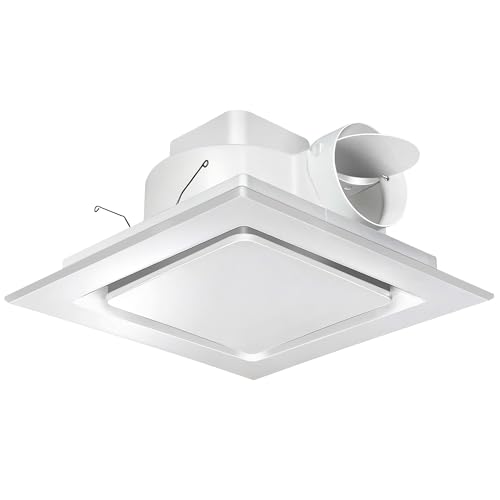
The Orsong listing identifies a bathroom exhaust fan without a light and gives a 10-inch panel size. It does not provide airflow, noise, duct, or cutout figures in the supplied product title, so buyers should verify those details before comparing performance. It may suit shoppers who want a fan-only fixture, but the available information cannot confirm room fit.
A no-light design can work well when the bathroom already has a ceiling fixture or when lighting is handled separately. Before installation, compare the panel and required ceiling opening with the space you have. Ask the seller to confirm CFM, duct size, noise level, and wiring needs. These details matter more than appearance when you need reliable moisture removal.
A flat panel can be easy to dust and wipe, but the supplied details do not confirm its material or build quality. Check warranty terms and replacement parts as well. Its value depends on verified airflow and a correct fit, so compare the full specifications before buying.
Why It’s Great
- Fan-only design keeps the product simple for bathrooms with existing lighting.
- The listed 10-inch panel gives a starting point for checking ceiling space.
- Could suit a replacement project if its verified dimensions match.
- Does not add an unwanted light feature to the ceiling.
- Its basic design may appeal to buyers seeking straightforward ventilation.
Good to Know
- The supplied details do not state airflow in CFM.
- Noise rating, duct size, and cutout size are not provided in the title.
- Confirm room suitability and installation requirements before ordering.
- It is an exhaust fan, not a built-in dehumidifier.
4. Pro Breeze Mini Dehumidifier

This Pro Breeze mini dehumidifier is listed for spaces up to 215 square feet and has a 17-ounce collection capacity. Its compact, portable design makes it an option for small rooms where supplemental moisture control is useful. It does not vent shower air outdoors, so it cannot replace an exhaust fan. Check the maker’s operating and coverage guidance before use.
The small footprint can make it easier to place in a bedroom, office, or suitable bathroom area with a safe power source. It may suit someone seeking extra humidity control in a compact space, rather than fast removal of heavy shower steam. Plan to empty the water tank as needed, and keep the unit away from splashes and wet areas.
A small tank is simple to remove and empty, but it may need frequent attention in damp conditions. Keep the unit and intake clear of dust, and follow the care guide. Its value rests on portable, supplemental use; it is not a substitute for proper bathroom ventilation.
Why It’s Great
- Compact form can fit where a full-size dehumidifier would be awkward.
- The listed 215-square-foot coverage helps set expectations for room size.
- A portable design can move between suitable rooms.
- The 17-ounce tank provides a visible place to collect moisture.
- It can complement an exhaust fan when indoor humidity remains a concern.
Good to Know
- Its small capacity may require regular emptying in humid conditions.
- It does not exhaust moist air outdoors or replace a bathroom fan.
- The stated coverage is not a guarantee for every room or climate.
- Keep the electrical unit clear of direct water and shower spray.
5. AEOCKY 2000 Sq. Ft. Desiccant Dehumidifier

The AEOCKY listing describes a rotary desiccant dehumidifier with a humidistat, a never-frost claim, and coverage listed at 2000 square feet. Those features suggest a larger-area moisture-control role than a compact tank unit. It is not a bathroom exhaust fan, so it does not send humid air outdoors. Check operating limits and full capacity details before purchase.
A humidistat can help manage a chosen humidity level, while the listed coverage may appeal to buyers treating a broad indoor space. Its best use depends on the manufacturer’s room and temperature guidance, plus where collected water goes. Compare noise, power needs, and drainage or tank details before placing it near a bathroom.
The unit will need regular care, including keeping air paths clear and following the supplied instructions for water handling. The product title does not specify tank size, extraction rate, or warranty, so verify those before buying. Its value depends on confirmed performance for your home.
Why It’s Great
- The listed 2000-square-foot coverage targets broader spaces than a mini unit.
- A humidistat can help regulate indoor humidity.
- The rotary desiccant design is clearly identified in the listing.
- The never-frost claim may interest buyers in cooler conditions; verify operating limits.
- It may complement bathroom ventilation when moisture affects nearby rooms.
Good to Know
- It does not replace a ducted bathroom exhaust fan.
- The supplied title does not state extraction rate or water tank size.
- Verify power use, noise, drainage, and operating range before purchase.
- The 2000-square-foot claim may not reflect results in every home.
Final Thoughts: The Verdict
My personal top pick is the 145 CFM Bathroom Fan with LED Light. It pairs the highest stated airflow among these fans with a quiet 1.0-sone rating and bright built-in light. It is an exhaust fan, not a dehumidifier, so confirm that the duct vents outdoors and the cutout fits. For this best bathroom extractor fan with dehumidifier roundup, it offers the most complete fan setup.
For a smaller room, consider the Broan-NuTone 50 CFM Fan; choose the Pro Breeze mini dehumidifier for supplemental control in a compact space. The AEOCKY may suit broader humidity needs, while Orsong needs spec checks first. Match room size, ducting, and moisture source to your needs and budget.
1 thought on “Best Bathroom Extractor Fan With Dehumidifier: Buyer Guide”
Comments are closed.