
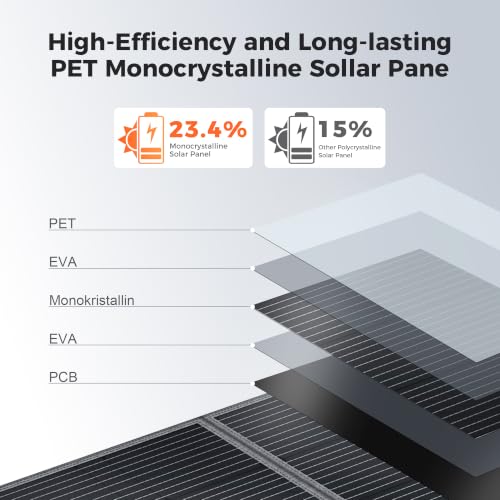
A 400-watt solar panel can turn sunlight into useful power for a battery station, RV, cabin, or off-grid setup. The best 400 watt solar panels suit campers, van owners, and homeowners who want more charging power without juggling many small panels.
A panel marked 400 watts will not deliver that output all day. Shade, clouds, panel angle, heat, and the connected charge controller all affect real results. Buyers can also get caught by the wrong connector, a mismatched voltage range, or a panel that is too bulky for their trip. Those small mistakes can turn a sunny afternoon into a slow charge and a frustrating setup. Check the power station’s input limits and the panel’s full dimensions before buying. A good match makes solar feel simple; a poor one can leave useful gear sitting idle.
I compared the listed output, cell design, connectors, portability, and weather ratings for these options. This guide is based on the supplied product specifications, not claims of hands-on testing or guaranteed field output. I focus on clear compatibility checks, practical use, and honest trade-offs so you can find the best 400 watt solar panels for your setup.
What you’ll learn
- How to match panel voltage and connectors to your power station.
- Why portable and fixed panels suit different trips and installations.
- Which listed features may help with shade, low light, or compact storage.
- What to check before buying a 400-watt solar panel.
In This Article
How To Choose The Best 400 Watt Solar Panels
Choosing among the best 400 watt solar panels means looking beyond the watt number. A panel’s rated output is a lab figure, not a promise for every hour outdoors. A wrong plug, voltage mismatch, or poor fit can slow charging or prevent a safe connection. Portable panels also need room to unfold, while rigid panels need a secure mounting plan. Check your power station or charge controller limits, the connector type, panel dimensions, and weather rating before you buy. These simple checks can save time, money, and a lot of campsite frustration.
Check Voltage, Connectors, and Power Limits
Start with the device that will receive the power. Check its maximum solar input voltage, current, and wattage, then compare those limits with the panel details. A 400-watt rating alone does not prove a panel will work with every power station. Look at the connector too: MC4, DC, XT60, and Anderson plugs are not the same, though adapters may help if the voltage is suitable. Avoid forcing a plug or guessing at compatibility. Buyers with a specific power station should choose a panel and cable set that match its manual; RV owners using a controller should check the controller’s limits as well.
Choose Portable or Rigid Panels for Your Use
Foldable panels pack away and can be aimed toward the sun, which helps campers and people who move often. Their trade-off is setup time and a larger folded case than a small panel. Rigid panels are made for a more permanent roof, trailer, or off-grid mount, but need a safe mounting plan and room for airflow. Compare both packed and open dimensions, not just the product photo. Buyers who travel between sites may prefer a portable solar suitcase. Those building a steady RV or home setup may find two rigid 200-watt panels easier to mount.
Read Efficiency and Weather Claims Carefully
Efficiency figures describe how well a panel converts light within its area; they do not guarantee a set amount of energy each day. Clouds, shade, heat, angle, and season all change output. N-type cells, multiple busbars, or a bifacial design may be useful features, but the benefit depends on conditions and installation. An IP65 rating signals resistance to dust and water spray, not permission to leave gear in every storm or submerge it. Compare the warranty and care instructions too. For the best 400 watt solar panels, choose features that fit your real location rather than paying extra for a number alone.
Quick Comparison
| Model | Category | Best For | Key Spec | Amazon |
|---|---|---|---|---|
| CTOLITY 400W Foldable Solar Panel | Portable | Power station campers | 36V; DC, XT60, Anderson | Amazon |
| HQST 400W N-Type Solar Panel Set | Rigid panels | RV and rooftop installs | 2 x 200W; 16BB | Amazon |
| 400W ETFE Foldable Solar Panel | Portable | Camping and emergency use | 24% efficiency; MC4 | Amazon |
| Callsun 400W Bifacial Solar Panel | Rigid panels | RV and off-grid systems | 2 x 200W; N-type 16BB | Amazon |
| 400W 40V MC4 Foldable Panel | Portable | Portable MC4 setups | 40V; adjustable kickstands | Amazon |
In-Depth Reviews for Best 400 Watt Solar Panels
1.
CTOLITY 400W Foldable Solar Panel
 Check Price on Amazon
The CTOLITY 400W foldable solar panel is built for charging compatible power stations away from home. Its listed 36V output and included DC, XT60, and Anderson cable options give buyers several connection paths. The brand lists 23% efficiency and an IP65 rating. Those features make it a flexible pick among the best 400 watt solar panels for outdoor trips.
This portable solar charger folds for storage and includes kickstands to help set its angle toward the sun. QC3.0 USB outputs add a way to charge some small devices, while cable choice helps with different power stations. Check your device’s solar input limits before connecting it. It suits campers, RV travelers, and people who want a movable panel for backup charging.
The foldable format should be easier to stow than a pair of full-size rigid panels, though the open panel still needs space. The listed IP65 rating means dust and water-spray resistance, not waterproof use in every condition. Its cable range and stand-out portability offer useful value when they match your equipment.
Why It’s Great
- Multiple cable types can simplify connection to compatible power stations.
- Foldable design is made for travel and storage.
- Kickstands help users adjust the panel’s position.
- QC3.0 USB outputs offer another charging option for supported devices.
- Listed IP65 rating suits outdoor use with sensible care.
Good to Know
- Confirm the 36V output works within your power station’s solar input range.
- The 400W rating is peak output; sunlight, angle, and shade affect actual charging.
- IP65 does not mean the panel can be submerged or left exposed to any storm.
2.
HQST 400W N-Type Solar Panel Set
 Check Price on Amazon
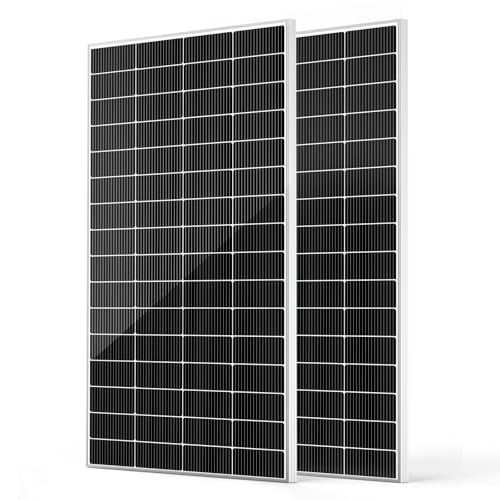
The HQST set pairs two 200-watt rigid panels for a listed total of 400 watts. Its product details call out N-type 16BB cells, Grade A+ cells, and efficiency up to 25.4%. The panels are listed at 46.3 by 30.1 inches each. This format suits buyers who want a fixed solar array rather than a foldable charger.
These panels are designed for uses such as RVs, trailers, marine setups, rooftops, and off-grid systems. Two units can make it easier to plan a layout than one very large panel, but each still needs a secure mount and correct wiring. Check the included parts and system voltage before purchase. It is best for owners with a clear installation plan and compatible charge controller.
Rigid panels need less day-to-day setup once safely installed, but they are not as easy to move as a portable solar blanket. The listed IP65 rating and long-life claim are useful details to review alongside the warranty terms. For a permanent 400-watt array, the two-panel format may offer good practical value.
Why It’s Great
- Two 200-watt panels can fit a planned array layout.
- N-type 16BB cell design is a notable listed feature.
- Product details state efficiency up to 25.4%.
- Rigid format suits roofs, RVs, trailers, and off-grid mounting.
- Listed compact dimensions help buyers plan installation space.
Good to Know
- The panels need secure mounting and are less portable than foldable options.
- Confirm wiring, controller limits, and system voltage before installation.
- Efficiency and lifespan claims are manufacturer specifications, not a promise of daily energy output.
3.
400W ETFE Foldable Solar Panel
 Check Price on Amazon
This 400W portable panel lists ETFE construction, 24% efficiency, MC4 output, and an IP65 rating. Its foldable design is aimed at power stations, camping, RV travel, and emergency use. MC4 connectors can suit systems built around that connection, but buyers should check voltage and polarity first. The stated features make it one of the best 400 watt solar panels for flexible setups.
A foldable panel can be placed where the sun is strongest, then packed away when the trip ends. That flexibility helps when a vehicle is parked in shade but an open sunny spot is nearby. The product is best for campers and emergency-prep users who can manage its size and cable routing. Confirm whether your power station needs an adapter before setting out.
The ETFE surface and IP65 rating are listed for outdoor use, but regular care still matters. Keep connectors clean and dry, and avoid sharp folds or heavy pressure. Its mix of foldable storage and MC4 output can be good value for buyers whose equipment already supports the connection.
Why It’s Great
- Listed 24% efficiency is a strong specification for this category.
- Foldable design lets users reposition the panel as sunlight changes.
- MC4 output can fit compatible solar setups.
- IP65 rating indicates resistance to dust and water spray.
- Portable format suits camping, RV use, and emergency charging.
Good to Know
- MC4 output may require an adapter for some power stations.
- Check input voltage and connector polarity before connecting.
- A portable panel needs clear ground space and time to position.
4.
Callsun 400W Bifacial Solar Panel
 Check Price on Amazon
Callsun’s 400W set includes two 200-watt bifacial panels with N-type 16BB cells. The product lists efficiency up to 25.6% and a dual-module parallel anti-shade design. Bifacial panels can collect light from the rear when the site and mounting allow it. This makes the set a feature-rich option among the best 400 watt solar panels for fixed RV or off-grid use.
The two-panel layout is intended for 12V or 24V systems, with listed uses including RVs, vans, marine setups, rooftops, and off-grid power. A suitable mount and controller remain essential. Buyers should verify the actual system wiring plan and the rear side’s access to reflected light. It suits people who can install panels in an open, secure location.
The rigid modules are better suited to a planned installation than quick campsite use. Keep the panel faces clear and allow room for safe mounting and wiring. The bifacial feature may add value in a suitable setup, but results depend on light reaching the rear surface.
Why It’s Great
- Two 200-watt modules offer a flexible layout for fixed installations.
- Bifacial design can use rear-side light in a suitable mount.
- N-type 16BB cells and up to 25.6% efficiency are listed features.
- Product details describe a parallel anti-shade design.
- Listed for several common RV and off-grid applications.
Good to Know
- Rear-side power depends on the mount and reflected light conditions.
- Confirm system voltage, controller capacity, and wiring before installation.
- Rigid panels take more effort to move and mount than foldable models.
5.
400W 40V MC4 Foldable Panel
 Check Price on Amazon
This foldable 400W solar charger lists a 40V MC4 output, 23.5% efficiency, and IP65 water resistance. It is designed for power stations, camping, RVs, and off-grid backup. Adjustable kickstands can help aim the panel toward direct sun. Its stated voltage and MC4 connection are key details to compare with your device before choosing this portable option.
The solar suitcase design is useful when you need to move the panel rather than mount it on a roof. Set it in a sunny spot, adjust the stands, and connect it to compatible equipment. It is best for travelers and blackout-prep users who have an MC4-ready setup or a suitable adapter. Check the open dimensions and storage needs before packing.
The foldable form is easier to store than a fixed array, but it still needs careful handling and a clear setup area. Wipe dust from the surface and protect the connectors when not in use. Its stands and MC4 output add practical value for buyers who need portable solar.
Why It’s Great
- Listed 40V output and MC4 connector suit compatible systems.
- Adjustable kickstands help with panel positioning.
- Foldable design supports portable use and storage.
- Listed 23.5% efficiency and IP65 rating offer useful reference points.
- A good fit for camping, RV trips, and backup power.
Good to Know
- Confirm your power station can accept the listed 40V output.
- MC4 connections may need an adapter for some devices.
- IP65 does not protect against submersion or every form of severe weather.
Final Thoughts: The Verdict
My personal top pick is the CTOLITY 400W Foldable Solar Panel for buyers who want a portable setup with several listed cable options, kickstands, and USB outputs. It stands out among the best 400 watt solar panels for flexible outdoor use, as long as its 36V output suits your power station. Check the device limits before ordering.
For a fixed RV or rooftop array, consider the HQST 400W N-Type Solar Panel Set; the two rigid modules suit planned installations. The CallSun bifacial set is another option for buyers who can use a rear-facing surface. Choose based on compatibility, available space, and budget.