
A batoning knife is a fixed blade used with a wooden baton to split small pieces of wood. Campers, bushcraft fans, and people who build fires buy one for controlled work in the field. The best batoning knife needs a sturdy build, a sound grip, and a blade suited to the task.
A knife can look tough online and still be a poor choice for batoning. Thin blades, weak tangs, slick handles, and unclear steel details can turn a simple camp task into a broken blade or an injured hand. It is also easy to mistake a kitchen knife or a short outdoor blade for a wood-splitting tool. That mistake wastes money and can make real trips less safe. Choosing carefully matters: check the blade shape, construction, grip, and intended use before you strike any knife with a baton.
I compare outdoor knife listings by their stated build, blade size, steel, handle, and intended use. I also flag gaps in the product details rather than treating marketing claims as proof of field performance. This guide does not claim hands-on testing. My goal is to help you find the best batoning knife candidate while showing which picks are better kept for food prep or light camp chores.
What you’ll learn
- Which listed knives are the most plausible choices for batoning wood
- Why full-tang construction and blade thickness matter
- Which products are designed for kitchen work instead of wood splitting
- What details to check before buying or striking a knife
In This Article
How To Choose The Best best batoning knife
The right batoning knife can split kindling with less fuss, while the wrong one may chip, bend, or slip. Do not choose by a bold name or a large overall length alone. Some listings leave out blade thickness, steel type, or tang details, and those gaps matter when a blade takes repeated impacts. Look for a sturdy fixed blade, a secure grip, and clear maker details. If a knife is made for slicing meat, keep it out of wood work. A safe choice starts with a clear match between the tool and the task.
Check Tang and Blade Strength
For the best batoning knife, start with construction. A full tang means the blade steel runs through the handle, which can help it withstand hard use. It does not prove that a knife can take repeated impact, so also look for blade thickness, steel details, and clear maker guidance. Avoid folding knives and thin kitchen blades for this job. A broad, sturdy fixed blade is often a better fit for splitting small kindling. If a listing does not say how thick the blade is, treat that as a reason to ask questions, not as a detail to guess.
Match Blade Shape and Size to the Job
A blade needs enough length and spine strength to work through the small wood you plan to split. A very short blade may not reach through larger pieces, while a long, thin blade can flex under impact. A simple drop-point or similar robust profile is often easier to control than a narrow slicing blade. Do not assume that a Bowie or machete label makes a knife suitable for batoning. Check the actual blade length, thickness, and maker’s intended use. For camp kindling, choose a manageable fixed blade and split small pieces rather than forcing a knife through a large log.
Choose a Secure Grip and Clear Use Case
A steady handle helps you keep control when you work with a baton. Look for a grip that is shaped for a firm hold and materials that suit wet or cold conditions. A sheath also helps protect the edge during storage, but it does not make a blade safe to strike. Be wary of listings that give few details about the handle, sheath, or care needs. The best batoning knife for a regular camper may differ from a light backup blade for a day hike. If the maker does not approve impact use, choose another tool for splitting wood.
Quick Comparison
| Model | Category | Best For | Key Spec | Amazon |
|---|---|---|---|---|
| Mossy Oak 14-inch Bowie Knife | Outdoor fixed blade | Campers wanting a full-tang Bowie candidate | 14-inch Bowie; full tang; wood handle | Amazon |
| Purple Dragon Hand Forged Fixed Blade | Outdoor fixed blade | Bushcraft users who value a full-tang build | Hand forged; full tang; rosewood handle | Amazon |
| Mercer Culinary Ultimate White Boning Knife | Kitchen knife | Meat prep, not batoning | 6-inch curved boning blade | Amazon |
| HUUSK 11-Inch Brisket Knife | Kitchen knife | Slicing brisket and roasts | 11-inch high-carbon steel slicer | Amazon |
| Purple Dragon 6-Inch D2 Outdoor Knife | Compact outdoor knife | Compact outdoor chores; verify batoning limits | 6-inch; D2 steel; full tang | Amazon |
In-Depth Reviews for best batoning knife
1.
Mossy Oak 14-Inch Bowie Knife
 Check Price on Amazon
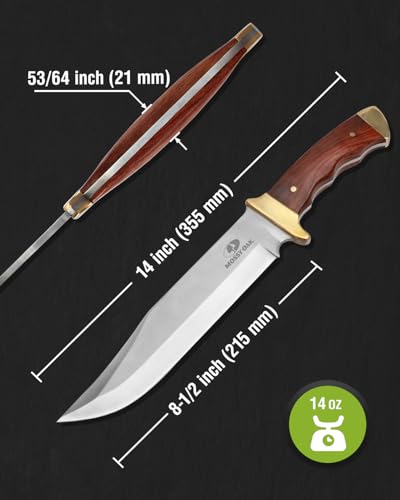
The Mossy Oak Bowie is listed as a 14-inch fixed blade with a full-tang build, wood handle, and leather sheath. Those features make it a more plausible batoning knife candidate than the kitchen picks here. The listing does not give blade thickness or steel details, so check those points with the seller before relying on it for repeated wood impacts.
Its Bowie shape and full-tang design may appeal to campers who want one outdoor knife for general camp tasks. The wood handle gives it a classic look, while the sheath supports carry and storage. I would limit any batoning to small kindling and only proceed if the maker confirms impact use. It is best suited to buyers who verify the missing specs first.
A leather sheath helps keep the blade covered between trips, but it needs care and should be kept dry. Full-tang construction is a useful listed feature, not a guarantee against damage. The value depends on the steel and thickness details, so confirm those before buying it for batoning.
Why It’s Great
- Full-tang construction is stated in the listing.
- Fixed-blade design avoids a folding joint.
- The included sheath supports safer storage.
- The Bowie profile suits general outdoor carry.
- It is a more relevant candidate than the kitchen knives in this group.
Good to Know
- The listing does not state blade thickness.
- Steel type and impact-use guidance are not clear from the supplied details.
- Do not assume the 14-inch overall size means it is suitable for heavy batoning.
2.
Purple Dragon Hand-Forged Fixed Blade
 Check Price on Amazon
This Purple Dragon fixed blade is described as hand forged, full tang, and fitted with a rosewood handle and leather sheath. Those listed traits can make it appealing for bushcraft and camp use. The supplied product details do not name the steel or blade thickness, though, so its ability to handle batoning is not established. Verify both before purchase.
The knife is aimed at outdoor use, and the full-tang design may suit people who want a solid fixed blade for camp chores. Its rosewood handle gives it a traditional look. For the best batoning knife, a sturdy build is only part of the answer; the blade must also suit impact. Choose this for bushcraft buyers willing to confirm its limits.
The included sheath is useful for carry, and the handle will need basic care to stay in good shape. Since steel and thickness are not stated in the provided details, value rests on checking those facts first. Treat it as a general outdoor knife until the maker confirms batoning use.
Why It’s Great
- The listing identifies it as a full-tang fixed blade.
- Hand-forged construction is part of its stated description.
- A rosewood handle offers a traditional grip style.
- A leather sheath is included for storage and carry.
- Its stated bushcraft use makes it more relevant than a kitchen slicer.
Good to Know
- The supplied details do not identify the steel.
- Blade thickness is not provided in the product information.
- Confirm that the maker approves batoning before using it for impact work.
3.
Mercer Ultimate White Boning Knife
 Check Price on Amazon
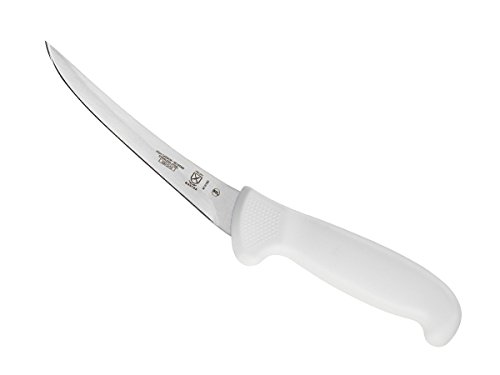
The Mercer Culinary Ultimate White is a 6-inch curved boning knife made for kitchen work. Its narrow blade shape helps with meat preparation, but it is not a batoning knife. Striking a kitchen blade with a baton can damage the edge or blade and may cause injury. Keep this tool for its stated purpose rather than treating it as an outdoor fixed blade.
The curved profile is suited to separating meat from bone, a task where control matters more than impact strength. Home cooks and food workers may find that design useful for prep. It is not a fit for splitting kindling or comparing as the best batoning knife. Choose a purpose-built outdoor blade for camp wood and use this one on food.
Kitchen knives need careful washing and prompt drying, especially after food prep. Its value should be judged by slicing and boning performance, not wood work. Keep the edge protected, use a proper cutting board, and do not strike or pry with the blade.
Why It’s Great
- The 6-inch curved blade is suited to boning tasks.
- Its clear kitchen purpose makes it easy to match with food prep.
- The compact size offers control for detailed meat work.
- It provides a distinct option for readers who need a kitchen tool.
- It helps clarify why a boning knife is not a batoning knife.
Good to Know
- It is not designed for batoning or wood splitting.
- A narrow kitchen blade can be damaged by impact.
- Use a cutting board and keep the edge away from hard surfaces.
4.
HUUSK 11-Inch Brisket Slicing Knife
 Check Price on Amazon
The HUUSK knife is listed as an 11-inch brisket slicer made from Japanese high-carbon steel, with a wood handle. Its long blade is meant to make smooth cuts through brisket, roast, and ham. That slicing role is very different from batoning. Do not use this knife to split wood; impact can harm a thin cutting edge and make handling unsafe.
This knife is best suited to barbecue cooks who want a long blade for carving cooked meat. A long slicer can help make even cuts when used with a stable board and a careful motion. It is not a candidate for the best batoning knife, despite its length. Keep it in the kitchen or at the carving station, away from camp wood tasks.
High-carbon steel needs prompt cleaning and drying to help prevent rust. A wood handle also benefits from gentle care and should not be left wet. Its value is in meat slicing, not outdoor impact use, so choose it only if that matches your needs.
Why It’s Great
- The 11-inch blade is intended for long carving cuts.
- The listing names brisket, roast, and ham as uses.
- A wood handle gives it a traditional kitchen style.
- It fills a clear role for barbecue and meal prep.
- Its intended use is distinct from outdoor wood splitting.
Good to Know
- It is a slicing knife, not a batoning knife.
- High-carbon steel needs prompt drying after cleaning.
- The long blade requires careful handling and safe storage.
5.
Purple Dragon 6-Inch D2 Outdoor Knife
 Check Price on Amazon
This Purple Dragon outdoor knife is listed with a 6-inch blade, D2 steel, and full-tang construction. Its compact size may suit general camp chores, and the full tang is a useful feature to see in an outdoor knife. The listing does not establish that it is designed for batoning. D2 steel can be hard, so confirm impact guidance before striking it.
A 6-inch blade can be easy to carry and handle for smaller outdoor jobs. The listing calls it a heavy-duty machete, but the stated blade length is compact, so do not assume it can split large wood. It may suit users seeking a portable camp knife. For the best batoning knife, look for clear maker guidance and enough blade thickness.
D2 steel needs care after wet use, and the sheath should be checked for secure fit before travel. Full tang is a positive listed feature, but it does not prove impact toughness. The value depends on your need for a compact outdoor blade and its confirmed use limits.
Why It’s Great
- The listing specifies D2 steel.
- Full-tang construction is stated.
- The 6-inch blade is compact for carry.
- The product is marketed for outdoor and bushcraft tasks.
- It may suit small camp chores when used within maker guidance.
Good to Know
- The listing details provided do not confirm batoning approval.
- A 6-inch blade may be limiting for larger pieces of wood.
- D2 steel care and impact limits should be checked with the seller.
Final Thoughts: The Verdict
My personal top pick is the Mossy Oak 14-inch Bowie Knife, because its listing states full-tang construction and a fixed blade. It is the strongest listed candidate here, not a verified batoning tool: check blade thickness, steel, and maker guidance first. The best batoning knife must be built for impact, not just look rugged.
For a bushcraft-style alternative, consider the Purple Dragon Hand-Forged Fixed Blade, but confirm its steel and impact limits. The compact D2 model suits smaller outdoor chores, while Mercer and HUUSK are for food prep only. Match your choice to the task, and buy within your budget.