
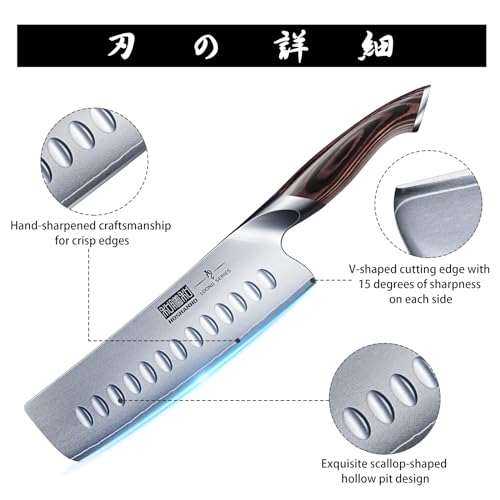
A nakiri is a Japanese-style knife made for chopping and slicing vegetables. Home cooks and meal-prep fans buy one for its tall, straight blade and easy, even cuts. This best nakiri knife guide compares options for different budgets, skill levels, and kitchen routines.
A knife that looks sharp online can still feel clumsy, dull quickly, or make prep more tiring. Some buyers focus on steel names and overlook grip comfort, care needs, or blade length. Others expect a vegetable knife to handle bones or frozen food, which can chip the edge. The wrong choice turns a quick dinner task into a chore, and a poor grip can feel unsafe when your hands are wet. Choosing the right nakiri means getting a blade that suits your food, habits, and upkeep routine.
I review kitchen knives by weighing stated materials, blade size, handle design, care needs, and value against the way people cook at home. For this guide, I compared product details and focused on practical differences rather than flashy claims. My aim is to help you find the best nakiri knife for your kitchen, with clear trade-offs and useful care advice.
What you’ll learn
- How a nakiri differs from a chef knife and what it cuts best
- Which blade and handle details matter for daily comfort
- How the five featured knives compare in materials and intended use
- What care habits help protect a sharp kitchen knife
In This Article
How To Choose The Best best nakiri knife
The best nakiri knife should make your usual prep work feel smooth, not add fuss to it. A low-cost blade may need frequent sharpening, while a costly steel may need more care than you want to give. Do not shop by layer count or sharpness claims alone. Check blade length, handle comfort, steel type, and care instructions before you buy. Think about what you chop most, how you hold a knife, and whether you will dry it by hand. Those simple checks help prevent a disappointing purchase.
Choose a Blade Length That Fits Your Prep
Most nakiri knives in this guide have blades near seven inches, while the Shun is a shorter 6.5-inch model. A longer blade gives more room for broad cabbage or squash cuts, but a shorter one can feel easier to guide on a small board. Match the blade to your counter space and the size of your hands. A common mistake is to assume bigger always means better. If you cook for one or work in a tight kitchen, a compact blade may be the best nakiri knife for you. For batch prep, a longer blade may feel more efficient.
Match Steel and Edge Claims to Your Care Habits
Steel affects edge life, sharpening, and rust care, but a steel name alone does not prove performance. The Shun lists a VG-MAX core, while another option claims a VG10 core and Damascus layers. Other knives list high-carbon stainless steel. Check the maker’s care advice and plan to hand-wash and dry the blade. Avoid claims such as razor sharp as your only buying test. A keen edge needs proper use and upkeep. If you are new to sharpening, choose a knife with clear care guidance and a profile you can maintain.
Prioritize a Secure, Comfortable Handle
A comfortable handle helps you guide each cut and reduces strain during a long prep session. The featured knives use different handle designs, including pakkawood and blue resin wood. Look for a grip that feels steady in your hand and suits your preferred pinch grip or handle hold. Do not assume a premium finish will fit every hand. If possible, compare handle shape and weight in person. For online shoppers, review dimensions and return terms. The best nakiri knife is one you can control with ease, not just one with a striking look.
Quick Comparison
| Model | Category | Best For | Key Spec | Amazon |
|---|---|---|---|---|
| HOSHANHO 7-Inch Nakiri | Best Overall | Everyday vegetable prep | High-carbon stainless steel, pakkawood handle | Amazon |
| 67-Layer Damascus VG10 Nakiri | Feature-Rich | Cooks drawn to Damascus styling | VG10 core claim, 12-degree edge claim | Amazon |
| Shun Classic 6.5-Inch Nakiri | Premium Pick | Premium compact vegetable knife | VG-MAX core, Damascus stainless cladding | Amazon |
| PAUDIN 7-Inch Nakiri | Budget Friendly | Value-minded home cooks | High-carbon stainless steel | Amazon |
| imarku 7-Inch Nakiri | Budget Contender | A multipurpose home kitchen knife | High-carbon stainless steel, pakkawood handle | Amazon |
In-Depth Reviews for best nakiri knife
1. HOSHANHO 7-Inch Nakiri Knife

The HOSHANHO nakiri has a seven-inch blade made from high-carbon stainless steel, with a pakkawood handle. Its broad, straight edge is suited to chopping and slicing vegetables. The mix of familiar materials and useful length makes it a strong choice for daily prep. It stands out as a practical best nakiri knife option without relying on elaborate feature claims.
The tall blade gives knuckles room above the cutting board and can help guide repeated cuts. Its multipurpose design may suit home cooks who want one knife for vegetables and general kitchen tasks. The pakkawood handle offers a classic look. This model is a fit for cooks who want a full-size nakiri and do not need a compact blade.
Hand-wash and dry the knife after use to help protect its edge and handle. Stainless steel is not care-free, and the maker’s instructions should guide upkeep. The listed materials offer useful everyday value. A sharpener and sound cutting board will help keep this knife ready for regular meal prep.
Why It’s Great
- Seven-inch blade suits broad, repeated vegetable cuts.
- High-carbon stainless steel offers a useful balance of sharpness and upkeep.
- Pakkawood handle gives the knife a familiar, warm feel.
- Multipurpose design fits a range of home cooking tasks.
- Straight edge supports a steady chopping motion.
Good to Know
- A seven-inch blade may feel large on a small cutting board.
- The product title does not state the steel grade or edge angle.
- Hand-washing and prompt drying are sensible care steps.
2. 67-Layer Damascus VG10 Nakiri

This seven-inch Japanese nakiri is advertised with 67-layer Damascus steel and a VG10 core. Its hand-sharpened edge is listed at 12 degrees, and the blue resin wood handle gives it a distinct look. These details make it an appealing best nakiri knife candidate for cooks who value a refined finish. Treat stated materials and edge details as seller specifications.
The full-size blade is designed for vegetable chopping and slicing, while the blue handle sets it apart from plain wood styles. It may suit experienced home cooks who enjoy caring for a sharp knife and want a striking gift. Check the grip and balance details before ordering, as those can be personal. Its slim edge calls for careful use.
Hand-wash, dry, and store it so the edge does not strike other tools. Damascus styling can look attractive, but it does not remove the need for careful care. The gift box may add presentation value. Compare its verified specifications and return terms before paying more for the finish or steel claims.
Why It’s Great
- Seven-inch blade offers room for larger vegetables.
- Listed VG10 core will interest cooks comparing steel types.
- Damascus pattern and blue handle create a distinctive appearance.
- Advertised 12-degree edge emphasizes a fine cutting profile.
- Gift box makes it suitable for a kitchen gift.
Good to Know
- The material and edge details are product listing claims to verify.
- A fine edge may need careful handling and regular honing.
- The handle color and style may not suit every kitchen.
3. Shun Classic 6.5-Inch Nakiri

The Shun Classic is a 6.5-inch Japanese nakiri with a VG-MAX core and Damascus stainless steel cladding. Its shorter blade offers a compact take on the vegetable knife shape. The pakkawood handle completes a familiar, refined design. For shoppers seeking the best nakiri knife from a recognized Japanese knife line, its stated materials and smaller size stand out.
A 6.5-inch blade can feel nimble when you work on a small board or prepare modest portions. The straight profile is made for controlled vegetable cuts, and the handle suits cooks who like a traditional look. This model is best for users willing to follow careful knife care and who prefer a compact blade over a full seven-inch size.
Hand-wash and dry the blade after each use, then store it safely to protect its edge. Damascus cladding and a pakkawood handle call for attentive care. The premium design may justify its cost for cooks who value brand, materials, and compact handling. Compare current pricing and service terms before buying.
Why It’s Great
- Compact 6.5-inch length is handy for smaller prep areas.
- VG-MAX core is a clearly stated steel feature.
- Damascus stainless cladding adds a distinctive finish.
- Pakkawood handle provides a classic design.
- A premium option from an established knife brand.
Good to Know
- The shorter blade may be less suited to large batch prep.
- Premium pricing may not fit every home cook’s budget.
- Careful hand-washing and drying are recommended.
4. PAUDIN 7-Inch Nakiri Knife

The PAUDIN nakiri pairs a seven-inch blade with high-carbon stainless steel and an ergonomic handle. Its listing presents it as a vegetable knife and a meat cleaver, but a nakiri is best used for boneless kitchen cuts, not bones. The useful length and accessible design make it a practical best nakiri knife choice for value-minded cooks.
A full-size blade can speed up chopping greens, onions, and other produce when you cook often. The ergonomic handle is intended to feel comfortable in the hand, though fit varies from person to person. This knife suits home cooks who want a straightforward prep tool. Use a proper cutting board and avoid twisting the blade through dense food.
Wash by hand and dry it after use to help limit stains and protect the handle. High-carbon stainless steel still benefits from sensible care. Its simple feature set may offer good value for a first nakiri or a busy home kitchen. Check current listing details and included items before purchase.
Why It’s Great
- Seven-inch blade works well for routine vegetable prep.
- High-carbon stainless steel is a practical listed material.
- Ergonomic handle is designed for a secure, comfortable hold.
- Multipurpose positioning suits a general home kitchen.
- A lower-cost way to try the nakiri shape.
Good to Know
- Do not use the blade on bones or frozen food.
- The listed steel grade and edge angle are not specified.
- Handle comfort depends on hand size and grip style.
5. imarku 7-Inch Nakiri Knife
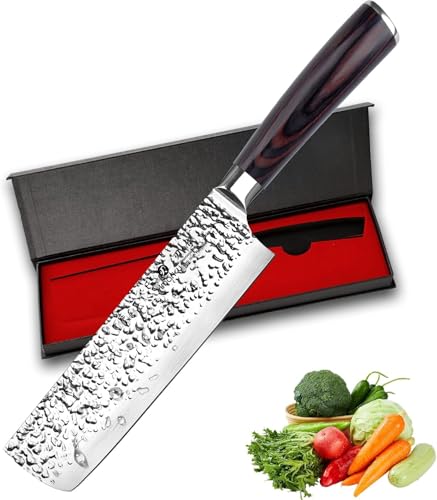
The imarku nakiri has a seven-inch blade, high-carbon stainless steel, and an ergonomic pakkawood handle. It is marketed as a multipurpose Japanese kitchen knife for meat and vegetables. The broad nakiri shape makes vegetable prep its clearest role. For shoppers seeking the best nakiri knife on a budget, it offers practical features without a long list of specialty claims.
The full-size blade is suited to everyday chopping and slicing on a standard cutting board. Its pakkawood handle gives it a classic look and may appeal to cooks who prefer a wood-style grip. This model is best for home users who want one accessible knife for regular prep. Handle comfort and balance are personal, so check the return policy.
Hand-wash and dry it promptly, then store it so the edge stays protected. The listed stainless steel and pakkawood handle offer useful features at a modest level of complexity. It may be a sensible entry point for a new nakiri owner. Confirm current product details and care guidance before ordering.
Why It’s Great
- Seven-inch blade gives room for everyday vegetable prep.
- High-carbon stainless steel is a practical listed material.
- Pakkawood handle adds a classic style.
- Multipurpose design may suit a home kitchen with limited tools.
- Accessible feature set for cooks new to nakiri knives.
Good to Know
- The listing does not specify a steel grade or edge angle.
- A seven-inch blade may feel large for compact work areas.
- Do not assume a vegetable knife is safe for bones.
Final Thoughts: The Verdict
My personal top pick is HOSHANHO 7-Inch Nakiri for its useful mix of a tall vegetable blade, high-carbon stainless steel, and pakkawood grip. It suits cooks who want a capable daily knife without paying for a premium name. For the best nakiri knife overall, consider sharpness, handling, and price together rather than trusting flashy claims. The full-size blade makes it a strong fit for regular home prep. Wash it by hand, dry it well, and use it on a suitable cutting board to help protect its edge.
For a compact premium option, Shun Classic 6.5-Inch Nakiri suits cooks who value its listed VG-MAX core and shorter blade. The PAUDIN is a budget-minded alternative for everyday vegetable work, while the Damascus VG10 model appeals to buyers drawn to its stated materials and look. Each knife has different care needs and costs. Choose the one that fits your hand, prep space, and budget, and check current product details before you buy.