
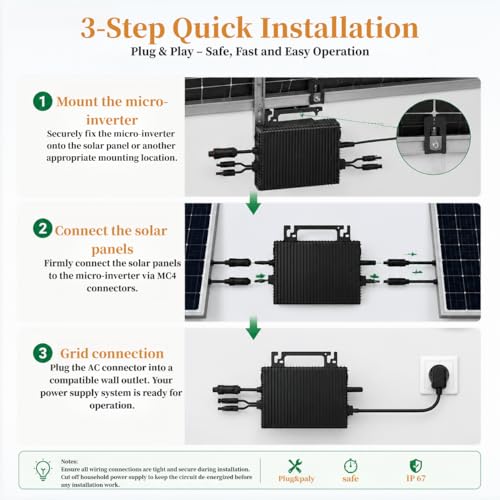
A grid-tie solar kit turns sunlight into power that can work alongside a home’s utility supply. It may suit homeowners, renters with approved balcony setups, and hands-on DIY fans. People shop for the best diy grid tie solar kit to lower grid use and make solar easier to start.
A kit can look simple online, yet a poor match can bring real headaches. Buyers may find that panels are missing, cables do not fit, or the inverter does not match their panel voltage. A plug-and-play label does not mean a system is approved for every home or outlet. Grid connection rules matter, too. Before spending money, check what is included, read the electrical limits, and confirm local rules with your utility and a qualified electrician. A careful choice can save time, money, and a stressful return.
I reviewed the listed features and compared the five options by included parts, stated power, monitoring, and likely setup needs. I have not treated seller claims as proof of real-world output or safety approval. This guide is for shoppers who want a clear starting point, not a substitute for electrical advice. It prioritizes fit, honest trade-offs, and safe steps toward the best diy grid tie solar kit.
What you’ll learn
- How to tell a full panel kit from an inverter-only listing.
- Which voltage and panel details to check before buying.
- Why utility approval and safe wiring matter for grid-tie solar.
- Which option may suit a small setup or a larger DIY project.
In This Article
How To Choose The Best best diy grid tie solar kit
The right grid-tie kit should fit your panels, home wiring, and local rules. A low price can hide missing panels, short cables, unclear instructions, or a power rating that does not match your needs. Also, do not assume that a plug-in inverter can safely connect to any wall outlet. Check the full parts list, electrical limits, and approval needs before you buy. These simple checks help you avoid costly surprises and find the best diy grid tie solar kit for your space.
Check What the Solar Kit Includes
Some listings include panels and an inverter, while others appear to offer only an inverter. That difference changes the real cost of your project. The AUECOOR listing names ten 100W panels and a 1000W inverter. The Cosmoxstar and eaizybuk listings describe inverters, so check the box contents for panels, mounts, cables, and connectors. Ask the seller about anything unclear. A complete kit may suit a first-time buyer, while an inverter-only option can work for someone who already owns compatible panels.
Match Panel Voltage and Inverter Limits
Panel voltage and current must stay within the inverter’s input range. A mismatch can stop the system from working as planned or damage equipment. Check each panel’s open-circuit voltage and current, then compare them with the inverter specifications and wiring plan. Do not rely on wattage alone. Two products with similar power labels may have different input needs. The best diy grid tie solar kit is one that matches your exact panels, roof or balcony space, and expected sun, with room for safe installation.
Plan for Approval and Safe Connection
A grid-tie inverter connects to utility power, so it needs the right protections and a permitted connection method. Before ordering, ask your utility and local building office what approvals apply. Have a qualified electrician review wiring, breakers, grounding, and the connection point. Do not treat a standard outlet or a plug-and-play claim as proof that an installation is safe or allowed. Look for clear documentation and any required certifications. These checks matter more than a high wattage claim when choosing a best diy grid tie solar kit.
Quick Comparison
| Model | Category | Best For | Key Spec | Amazon |
|---|---|---|---|---|
| Cosmoxstar 800W Micro Inverter | Best Overall | Small compatible panel setup | 800W, 2 MPPT, WiFi listed | Amazon |
| AUECOOR 1000W Solar Kit | Panels Included | Buyers starting with panels | Ten 100W panels, 1000W inverter | Amazon |
| Cosmoxstar 1200W Micro Inverter | Higher Rated | Larger compatible array | 1200W, 2 MPPT, WiFi listed | Amazon |
| eaizybuk 1200W Micro Inverter | LCD Display | Buyers who want local readout | 1200W, LCD, protection functions listed | Amazon |
| Smart MPPT Grid-Tie Micro Inverter | Basic Option | Experienced DIY shoppers | 18–50V DC, 110V/230V AC listed | Amazon |
In-Depth Reviews for best diy grid tie solar kit
1. Cosmoxstar 800W Grid-Tie Micro Inverter

The Cosmoxstar 800W micro inverter is listed with two MPPT inputs, WiFi app control, an IP67 rating, and a 16.4-foot AC cable. These features make it a compact choice for a small grid-tie project. Its stated 800W output is the key planning figure. Check the full input range and approval documents before pairing it with panels.
The listing presents this unit as a plug-and-play choice for balcony solar. App monitoring may help users track system status without standing by the inverter. It may suit a DIY owner who already has compatible panels and a safe, approved connection plan. Confirm the cable, connectors, and monitoring details before purchase, since listing details do not prove performance in your home.
The unit’s stated IP67 rating suggests a weather-resistant design, but it does not replace careful placement or setup. Check seals, cable condition, and included parts on arrival. Since panels are not named in the title, budget for them separately. It offers useful features if its limits and approvals match your project.
Why It’s Great
- Two listed MPPT inputs can help manage separate panel groups.
- WiFi app control offers a handy way to view system information.
- The stated IP67 rating may suit a properly placed outdoor unit.
- A 16.4-foot AC cable can allow more placement flexibility.
- The 800W rating gives buyers a clear starting point for sizing.
Good to Know
- The product title does not say that solar panels are included.
- Confirm the inverter’s input range and grid approval before use.
- Plug-and-play wording does not mean every outlet connection is legal or safe.
2. AUECOOR 1000W Solar Panel Kit
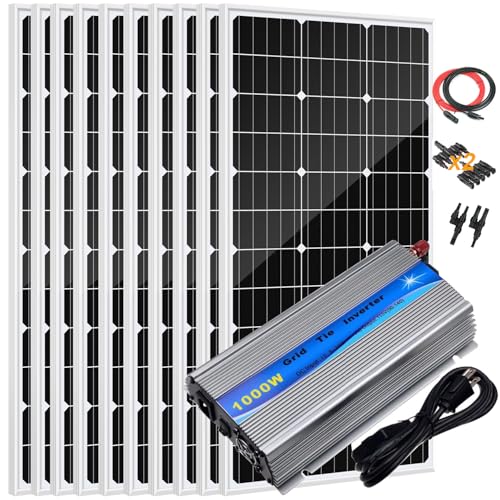
The AUECOOR listing names ten 100W monocrystalline solar panels and a 1000W grid-tie inverter for 110V AC. That makes it the clearest panel-and-inverter bundle in this group. A full kit may save the work of sourcing parts one by one. Still, verify the panel electrical details, inverter input limits, mounting parts, and current product documentation.
This bundle may suit a homeowner who wants to start with panels rather than shop for each component. Ten smaller panels can offer layout options, but they also need space, secure mounts, and compatible wiring. Plan where each panel will go before ordering. Check whether the kit includes the racking and cables needed for your site, since those are not clear from the title.
A bundle can make buying feel simpler, but it is only good value if its parts fit your setup. Review the build and connectors on arrival, and keep panels clean with gentle care. Factor in any missing mounts, wiring, or electrician work. Its value depends on what the seller actually includes.
Why It’s Great
- The listing names both solar panels and an inverter.
- Ten 100W panels give buyers a clear stated panel count.
- The 1000W inverter rating is easy to compare with project needs.
- A single bundle may reduce separate component shopping.
- The stated 110V output is aimed at a US-style setup.
Good to Know
- Confirm mounts, wiring, and connectors are included before buying.
- Check panel voltage and current against inverter input limits.
- Utility approval and qualified electrical review may still be required.
3. Cosmoxstar 1200W Grid-Tie Micro Inverter

The Cosmoxstar 1200W micro inverter is listed with two MPPT inputs, WiFi app control, an IP67 rating, and a 16.4-foot AC cable. Its higher stated power rating may fit a larger compatible panel setup than the 800W model. The rating alone does not show actual energy output. Check input limits, grid requirements, and approval papers before choosing it.
The listing describes this model as a plug-and-play balcony solar option. App control can make basic system checks easier, while the cable may help with placement. It may suit a DIY buyer with a larger panel array and the right electrical plan. Check that your panels fall within the inverter’s limits and confirm what monitoring features work before relying on them.
The stated IP67 rating points to a sealed design, but correct installation still matters. Inspect the housing, cable, and connectors when it arrives. The title does not name solar panels, so add their cost to your budget. This may be a useful higher-rated choice when its specs and approvals fit.
Why It’s Great
- The 1200W rating offers more stated capacity than the 800W model.
- Two listed MPPT inputs support planning for separate panel groups.
- WiFi app control is listed for remote system checks.
- A 16.4-foot AC cable may help with layout choices.
- The stated IP67 rating is useful to consider for outdoor placement.
Good to Know
- Panels are not listed as included in the product title.
- A higher wattage rating does not guarantee higher daily energy output.
- Check utility rules, certification, and electrician requirements before installation.
4. eaizybuk 1200W LCD Grid-Tie Inverter

The eaizybuk listing describes a 1200W grid-tie micro inverter with an LCD display and six protection functions. It also says that up to three single-phase units can be connected. Those details may interest buyers who want a local screen and room to expand. Verify the exact protections, permitted connection method, and electrical limits in the product documents before purchase.
An LCD can make it easier to check basic information at the unit, even without opening an app. The listing also mentions flexible installation, but that phrase does not replace a site plan or electrician review. This inverter may suit a technically confident DIY user who values a screen and has compatible panels. Confirm how the units are meant to connect.
The title does not list solar panels, mounts, or cables, so check the box contents closely. Keep the display and connections clear of water and debris, and follow the manual for care. The stated feature set may offer value, but only if the included parts, protections, and approvals fit your project.
Why It’s Great
- The LCD display may provide at-a-glance system information.
- The listing states a 1200W power rating.
- Six protection functions are named in the product description.
- The listing says up to three single-phase units can be used.
- Flexible installation may help with a suitable, well-planned layout.
Good to Know
- The title does not state that panels are included.
- Ask for details on the six protection functions and required certifications.
- Do not connect multiple units without following approved instructions.
5. Smart MPPT Grid-Tie Micro Inverter

This listing describes a smart MPPT grid-tie micro inverter with an 18–50V DC input range and 110V or 230V AC output at 50/60Hz. That broad voltage and frequency wording may appeal to buyers comparing system types. The title does not state a watt rating, panel count, or specific protection details. Confirm those key facts before treating it as a complete solar solution.
This may suit an experienced DIY shopper who can check electrical data and already knows the panel setup they need. The listed input range gives a starting point, but buyers still need to match panel voltage and current carefully. Ask the seller for a manual, grid connection details, and approved use. Do not assume that a low price means a simple or safe installation.
The product title does not say that panels, mounting gear, or connection cables are included. Review the unit and supplied instructions on arrival, and keep its connections clean and dry as directed. Its value depends on clear documentation and a match with your array, utility rules, and installation budget.
Why It’s Great
- The listed 18–50V DC range gives buyers a key matching detail.
- MPPT is named as a feature in the product title.
- The listing states 110V and 230V AC output options.
- The 50/60Hz wording may help shoppers compare frequency needs.
- Its simple feature list can be a starting point for experienced buyers.
Good to Know
- The product title does not state an output watt rating.
- The listing does not name solar panels or mounting parts as included.
- Confirm grid approval, protections, and safe connection requirements first.
Final Thoughts: The Verdict
My personal top pick is… the Cosmoxstar 800W Micro Inverter. Its two listed MPPT inputs, WiFi control, and stated weather rating make it a balanced choice for a small, compatible setup. It is not a full panel kit, so check your parts and local rules first. For buyers who want panels in the bundle, the AUECOOR 1000W Solar Kit is a useful runner-up to investigate. The 1200W Cosmoxstar may suit a larger array, while eaizybuk may appeal to LCD fans. To find the best diy grid tie solar kit, match the specs, approvals, and total cost to your needs.