
A best diy solar kit can turn sunlight into a fun lesson in motion, circuits, or space. These kits suit curious kids, families, teachers, and beginner makers. People buy them to build something with their hands and see science at work, not to power a home.
A kit can disappoint when parts are tiny, instructions are unclear, or the project needs more light than expected. Another common mistake is buying a solar system model and assuming it runs on solar power. That mismatch can turn an exciting gift into a dusty shelf project. Before you buy, check the age range, what the kit actually builds, and whether it needs direct sun, extra tools, or adult help. The right choice makes learning feel like play instead of a frustrating puzzle.
I compared these picks by their stated project, age range, learning value, and likely use at home or in class. I also separated solar-powered builds from solar system crafts, since the names can sound alike but the activities differ. This guide focuses on clear expectations, useful features, and helping you find the best diy solar kit for your learner.
What you’ll learn
- How solar-powered kits differ from solar system craft models
- Which projects suit young children, teens, classrooms, or adult beginners
- What to check before choosing a DIY solar kit
- Which options offer the best fit for your space, age range, and budget
In This Article
How To Choose The Best best diy solar kit
The best diy solar kit is one that matches the learner and the project you expect. Some kits use sunlight to run a motor; others teach astronomy with a model or craft. Buying the wrong type is an easy mistake, and weak instructions or small parts can spoil the fun. Read the project details, age guidance, and listed components before you order. Also think about where the kit will be used, how much help the builder may need, and whether the activity should work indoors or outdoors.
Match the Project to Your Goal
First, decide what you want the builder to make. A solar car or motor kit shows how light can create motion. A gear-driven solar system model teaches planet order and movement, while a foam craft focuses on art and space facts. These are not the same kind of solar project. Look for clear wording about whether a panel powers the build or the word solar refers to the solar system. A beginner who wants a working circuit should choose an electronic or motor kit. For a low-tech craft, a model or foam kit may be a better fit.
Check Age, Parts, and Support
Age ranges offer a useful guide, but the builder’s patience and fine-motor skills matter too. Younger kids may enjoy a simple craft or a project with adult help. Older learners may prefer sensors, circuits, or programming. Check the listing for the parts included and any tools or batteries that may be needed; do not assume every item is supplied. A best diy solar kit should have a project that feels challenging but not discouraging. For classrooms, sets with several builds can help, but confirm how many learners the package can serve.
Think About Light and Build Space
A solar-powered toy needs suitable light to run, and indoor lamps may not work like direct sunlight. Check the product details and plan where the project will be tested. A car needs clear floor or outdoor space, while a small sensor kit may suit a desk. Avoid promising a child that a solar motor will run on a cloudy day unless the listing supports that use. For the best diy solar kit experience, allow time to assemble, test, and adjust the build. A little planning can prevent a bright project from becoming a frustrating one.
Quick Comparison
| Model | Category | Best For | Key Spec | Amazon |
|---|---|---|---|---|
| Solar Power STEM Kits for Kids | Solar STEM | Kids and classroom projects | Sun-powered motor build | Amazon |
| Six-Set Solar Car Circuit Kits | Classroom Set | Groups and STEM activities | Six solar car kits | Amazon |
| KEYESTUDIO Solar Tracking Kit | Electronics | Teens and adult makers | Arduino and light sensor | Amazon |
| Create Your Own Solar System Foam Kit | Space Craft | Simple creative learning | Foam solar system project | Amazon |
| Smartivity DIY Solar System Kit | Planet Model | Kids who enjoy model building | Gear-driven rotating planets | Amazon |
In-Depth Reviews for best diy solar kit
1.
Solar Power STEM Kit for Kids
 Check Price on Amazon
This solar power STEM kit is designed to help kids explore circuits and motion through a hands-on build. Its solar panel and electric motor make sunlight part of the lesson. The project stands out from a simple craft because learners can see a motor respond to power. It is a strong best diy solar kit choice for early STEM exploration.
The listed age range is eight to twelve, making this a fit for curious grade-school learners with some patience for building. Kids can work through the activity with an adult nearby, then test how light affects the motor. The hands-on format can make basic science feel less abstract. It may also work well for a guided classroom activity.
Store small parts together after the build to make cleanup easier. The listing presents an educational project, but does not establish professional-grade durability. For a child who wants a simple introduction to solar power, the learning value may justify the cost.
Why It’s Great
- Uses a motor project to connect sunlight with movement.
- Offers a hands-on way to explore basic circuits.
- Targets an age range suited to many grade-school learners.
- Can support a parent-led or classroom science activity.
- Makes a practical gift for kids who like to build.
Good to Know
- Direct sunlight may be needed for a useful motor test.
- The project may need adult help for younger builders.
- Check the listing for included parts and any extra tools needed.
2.
Six-Set Solar Car STEM Kits
 Check Price on Amazon
This set is listed as six solar car circuit kits for STEM experiments and building activities. Multiple kits can help a group learn by making and testing at the same time. The solar motor theme gives the project a clear goal: assemble a car and explore how light may power motion. It can be a useful best diy solar kit for shared learning.
The listing suggests use for kids in the six-to-twelve age range, as well as classroom activities. A car build can make engineering feel active, since learners have a moving result to test. It is best suited to a small group, family activity, or teacher who wants more than one build. Allow room for assembly and testing.
Keep parts sorted by kit to avoid mixing pieces during cleanup. The listing does not confirm detailed material quality, so handle components with care. A six-piece set may offer good group value if you need several projects at once.
Why It’s Great
- Provides six builds for group or classroom use.
- Combines a car project with a solar motor theme.
- Can give several learners their own hands-on activity.
- Offers a moving project that can spark questions about power.
- May suit bulk activity planning better than a single kit.
Good to Know
- A sunny test area may be needed for solar-powered movement.
- Small parts can be easy to lose in a group setting.
- Confirm kit contents and age guidance before buying for a class.
3.
KEYESTUDIO Solar Tracker Arduino Kit
 Check Price on Amazon
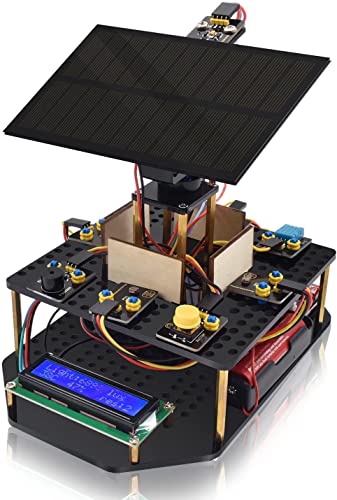
The KEYESTUDIO kit is a more advanced electronics project for teens and adults. Its listing names an Arduino solar tracker, phone charging, a temperature and humidity sensor, and a BH1750 light sensor. That mix offers several topics to explore in one build. For learners ready to move beyond a basic motor, it may be the most technical best diy solar kit here.
The stated age is fifteen and up, so this kit is better for patient builders who are comfortable learning electronics or programming. It may suit a teen project, adult hobbyist, or guided STEM lesson. The sensor features can encourage testing and code changes, though beginners may need extra time to understand each part.
Keep electronic parts dry and store them in a safe case after use. The listing describes a feature-rich learning kit, not a finished consumer charger. Its value is strongest for builders who want to study circuits and code rather than a quick toy.
Why It’s Great
- Offers a more challenging route into solar electronics.
- Includes several named sensors for guided experiments.
- Can support Arduino and programming practice.
- Suits older learners who want a deeper STEM project.
- Combines several learning topics in one kit.
Good to Know
- The listed age of fifteen and up reflects its more advanced focus.
- Programming or electronics experience may help with setup.
- Do not assume the phone-charging feature replaces a regular charger.
4.
Solar System Foam Craft Kit
 Check Price on Amazon
The Making the Grade foam kit is a creative solar system activity, rather than a solar-powered electronics build. It gives learners a way to make a space-themed project and talk about the planets. Its simple craft focus makes it distinct from the best diy solar kit options that use a panel and motor. It may suit a relaxed art or science session.
This kit may work for children who enjoy cutting, arranging, and creating more than wiring a circuit. It can be used at home or as part of a supervised learning activity. The craft format may feel approachable for beginners, though an adult should check the instructions and any age guidance before starting.
Foam pieces are generally easy to gather after crafting, but keep them away from pets and small children. The listing does not provide enough detail to judge long-term durability. It may be good value for a simple, creative space activity.
Why It’s Great
- Offers a hands-on way to make a solar system craft.
- Does not require learners to build an electronic circuit.
- Can pair art time with a conversation about planets.
- May be approachable for kids who prefer crafts to coding.
- Provides a different activity from motor-based solar kits.
Good to Know
- This is a solar system craft, not a solar-powered kit.
- Check age guidance and supervision needs before use.
- The listing does not confirm the exact number or size of pieces.
5.
Smartivity Gear-Driven Solar System Model
 Check Price on Amazon
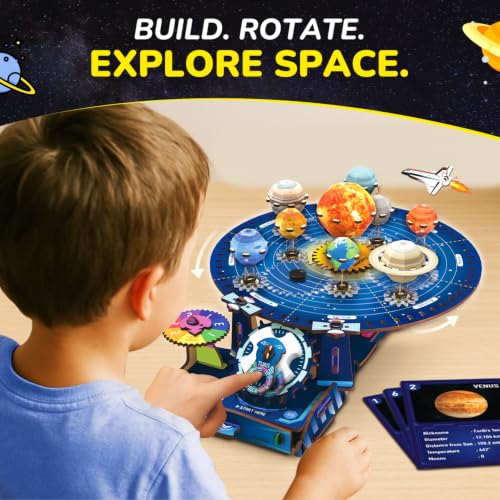
This Smartivity kit is a gear-driven solar system model for kids ages eight to fourteen. Its focus is building and rotating a planet display while exploring solar system facts. It offers a mechanical model project, not a solar-powered motor build. That distinction matters when choosing the best diy solar kit for a learner who expects to use sunlight.
The build may suit kids who enjoy models, moving parts, and space topics. The stated age range suggests it is aimed at school-age builders, though some may prefer adult help during assembly. Once built, the rotating display can make the lesson more visual than a flat chart or worksheet.
Keep the parts together during assembly and store the finished model where it will not be knocked over. The listing does not establish how sturdy the model is after repeated use. It can offer useful project value for a child interested in planets and gears.
Why It’s Great
- Combines model building with a solar system theme.
- Uses gears to create a moving planet display.
- Targets kids from eight to fourteen years old.
- Can make planet learning more visual and hands-on.
- Suits builders who enjoy mechanical projects.
Good to Know
- The model is not powered by sunlight.
- Assembly may take adult help for some children.
- Check the listing for project contents and setup details.
Final Thoughts: The Verdict
My personal top pick is the Solar Power STEM Kit for Kids. Its motor-based project makes it a clear fit for learners who want to explore sunlight, circuits, and motion. For group activities, the Six-Set Solar Car STEM Kits offers several builds to share.
Older teens and adults may prefer the KEYESTUDIO kit for sensors and Arduino learning, while the Smartivity model and foam kit suit kids who want a space-themed build or craft. These are educational kits, not home power systems. Choose the best diy solar kit by matching the project, age, light needs, and budget to the person who will use it.