
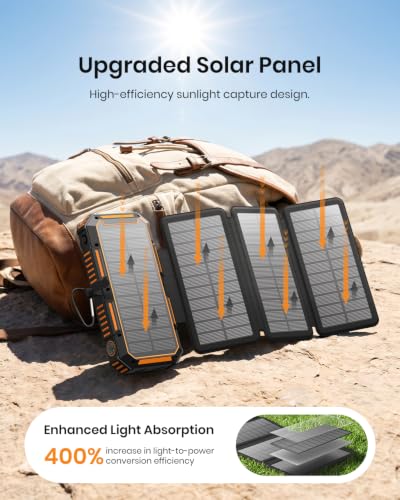
A solar-charging battery can keep a phone, light, or small device powered when an outlet is out of reach. Campers, hikers, and people building an emergency kit often want one for extra peace of mind. This guide to the best battery for solar charging compares portable power banks and rechargeable AA cells.
A big capacity number can look like a sure win, but it does not tell the whole story. Small panels on portable banks often charge slowly, especially in shade or cloudy weather. Some buyers also pick the wrong battery type for their solar lights, or expect a phone power bank to run home appliances. That can lead to a dead device when you need it most. The right match depends on what you need to charge, how often you can use an outlet, and how much weight you want to carry.
I compare the listed capacity, charging ports, useful extras, and limits of each option, while keeping real use in mind. I also separate phone power banks from AA cells, since they solve different problems. This guide to the best battery for solar charging puts clear specs, practical fit, and honest expectations first.
What you’ll learn
- How to match battery type and capacity to your devices
- Why a small solar panel may not recharge a power bank quickly
- Which models offer useful ports, cables, lights, or wireless charging
- How to choose between a phone power bank and AA cells for solar lights
In This Article
How To Choose The Best best battery for solar charging
Choosing the best battery for solar charging starts with the device you need to power. A phone bank is not a home backup battery, and AA cells will not charge a phone on their own. Do not choose by a large capacity claim alone. Check the battery type, output, input, and device fit. Also remember that a small built-in solar panel may add only a little charge over a long day. For steady use, plan to recharge by USB when possible and treat solar as backup.
Match the Battery to Your Device
First, check what your device uses. Phones and tablets need a USB power bank, while many garden lights take AA Ni-MH cells. These are not interchangeable. For a phone, look at USB-C output and the charging rate your device supports. For solar lights, confirm the cell size, voltage, and chemistry in the light’s manual. A common mistake is putting a different type of AA battery into a light that was not made for it. Choose a portable bank for travel and device charging; choose compatible AA cells for small solar fixtures.
Check Capacity and Charging Speed
Capacity helps estimate how much energy a bank can store, but it does not equal the exact number of phone charges. Energy is lost during conversion, and larger banks can be heavy. Check the output power and input rate as well as the stated capacity. Fast USB-C output can save time when your device supports it. Do not assume that a high-capacity bank will recharge quickly from its built-in panel. If you need dependable daily charging, choose a bank that can also recharge by USB and use solar as a backup.
Weigh Portability, Weather, and Extras
A compact bank is easier to carry on a day hike, while a larger model may suit a long camp trip with several devices. Check the weight, cable options, and whether the bank has a suitable water-resistance rating. Features like a flashlight, wireless charging, and built-in cables can help, but they add bulk and do not replace core power specs. Avoid treating a water-resistant rating as permission to submerge a device. The best battery for solar charging is the one you can carry, connect, and recharge for your actual trip.
Quick Comparison
| Model | Category | Best For | Key Spec | Amazon |
|---|---|---|---|---|
| BLAVOR Solar Power Bank 10,000mAh | Best overall | Hiking and everyday carry | 10,000mAh, 20W USB-C | Amazon |
| SOARAISE Solar Power Bank 48,000mAh | High capacity | Long trips and several devices | 48,000mAh, four solar panels | Amazon |
| FEELLE Solar Power Bank 50,000mAh | Emergency features | Users who want a hand crank | 50,000mAh, magnetic charging | Amazon |
| BLASOUL Solar Power Bank 49,800mAh | Cable ready | Travelers who want built-in cables | 22.5W, four built-in cables | Amazon |
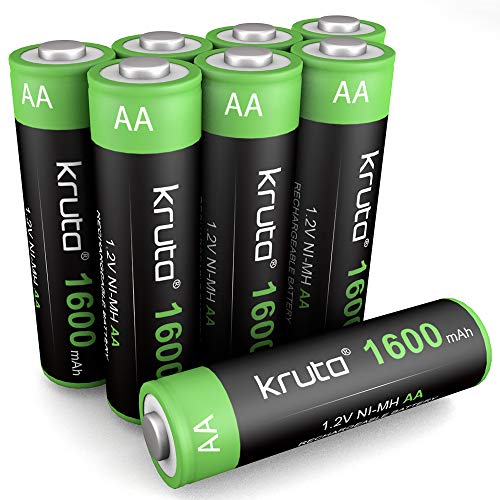
| Solar Lights AA 1,600mAh Ni-MH Cells | Solar light cells | Compatible outdoor solar lights | AA, 1.2V, 1,600mAh | Amazon |
In-Depth Reviews for best battery for solar charging
1.
BLAVOR 10,000mAh Solar Power Bank
 Check Price on Amazon
The BLAVOR solar power bank pairs a listed 10,000mAh capacity with 20W USB-C charging and wireless charging. Its compact size makes it easier to pack than many high-capacity banks. Two flashlights and an IPX5 water-resistance rating add useful outdoor features. It is a balanced pick for people seeking the best battery for solar charging on short trips.
This model suits hikers and everyday users who want one bank for a phone and small devices. The ports and wireless charging give you more than one way to connect, while the lights can help around camp. Its built-in solar feature is best treated as a backup, not a quick way to refill the bank. Carry a USB cable for reliable charging.
The compact design and stated water resistance make it handy for outdoor use, though the rating does not mean it can be submerged. Check the ports and care instructions before travel. For its mix of portability and features, it offers practical value to buyers who want a small backup bank.
Why It’s Great
- 20W USB-C output supports faster charging for compatible devices.
- Wireless charging adds a cable-free option for compatible phones.
- Compact 10,000mAh size is easier to carry than oversized banks.
- Two flashlights provide handy light at camp or during an outage.
- IPX5 water resistance offers added protection from water spray.
Good to Know
- The built-in solar panel is a slow backup charging option, not a fast refill method.
- Wireless charging works only with compatible devices and may be slower than a cable.
- The 10,000mAh rating does not translate directly into exact phone charge counts.
2.
SOARAISE 48,000mAh Solar Power Bank
 Check Price on Amazon
The SOARAISE bank lists a 48,000mAh capacity and four solar panels, along with wireless charging, built-in cables, and PD and QC 3.0 fast charging. Its high stated capacity may suit trips when several devices need a top-up. For the best battery for solar charging, its panel count stands out, though sunlight and panel size affect real recharge time.
Built-in cables can reduce the number of loose accessories you need to pack. This bank is best suited to campers or travelers carrying several compatible devices, rather than people who want a featherweight daily charger. Place its panels in direct sun when practical, and use a wall charger when you need a more predictable refill. Check device compatibility before relying on its ports.
The multiple panels and cables offer convenience, but a large capacity bank can take more room in a pack. Keep the unit clean and dry, and follow its charging guidance. It may offer good utility for group trips, as long as buyers understand that solar charging can be slow.
Why It’s Great
- Four solar panels provide more panel area than a single-panel bank.
- Built-in cables can reduce the need to pack separate charging leads.
- Wireless charging offers another option for compatible phones.
- PD and QC 3.0 support fast charging for compatible devices.
- The high listed capacity suits users carrying more than one device.
Good to Know
- A high capacity and several panels do not guarantee a fast solar recharge.
- Its large capacity may make it less comfortable for light day hikes.
- Confirm that the built-in cables and charging modes match your devices.
3.
FEELLE 50,000mAh Solar Power Bank
 Check Price on Amazon
The FEELLE power bank is listed at 50,000mAh and combines magnetic charging with a solar panel and hand crank. Those features give it an emergency-focused profile for people who want several ways to seek power away from an outlet. It may suit a preparedness kit, but its large capacity and alternate charging methods need realistic expectations.
This model is aimed at campers and emergency-kit owners who value backup features over a small, light pack. Magnetic charging may help compatible phones connect without a cable, while the hand crank offers a manual option. Treat both crank and solar charging as emergency aids, not quick ways to fill a large bank. Check your phone’s charging compatibility before a trip.
The feature-rich design may appeal to buyers who want a backup device in one unit. Keep its ports and moving parts clean, and follow the maker’s care instructions. Compare its size and included functions with your needs before paying more for features you may rarely use.
Why It’s Great
- Hand-crank charging gives users a manual emergency option.
- Magnetic charging can be convenient for compatible phones.
- The listed 50,000mAh capacity is aimed at extended backup use.
- Solar charging provides another possible power source outdoors.
- Several charging approaches make it appealing for preparedness kits.
Good to Know
- A hand crank is generally an emergency aid, not a practical way to fully charge a large bank.
- Solar charging can be slow and depends on strong, direct sunlight.
- Magnetic charging requires a compatible phone or accessory.
4.
BLASOUL 49,800mAh Solar Power Bank
 Check Price on Amazon
The BLASOUL bank lists 49,800mAh capacity and 22.5W fast charging, with four built-in cables and wireless charging. That combination aims to make charging several types of devices simpler. It may appeal to travelers who dislike packing loose leads. The solar feature can provide backup power, but it should not be mistaken for a fast way to refill a large bank.
This model suits campers and families who carry several devices and want cables close at hand. Built-in leads can save packing space, while wireless charging offers a cable-free option for compatible phones. Its high listed capacity may be useful on longer outings, though it can be bulky. Check connector types and charging needs before choosing it as your best battery for solar charging.
Built-in cables add convenience but should be handled with care to avoid wear. Keep the unit clean and store it safely between trips. It may be a useful all-in-one option for buyers who value cable access and capacity more than a compact, light design.
Why It’s Great
- Four built-in cables can reduce the need to pack separate leads.
- 22.5W output supports fast charging for compatible devices.
- Wireless charging adds convenience for compatible phones.
- The high listed capacity may suit longer trips or several devices.
- A solar feature offers an extra backup charging method.
Good to Know
- The solar panel may take a long time to add meaningful charge.
- The large capacity can make this bank bulky for everyday carry.
- Check the built-in cable connectors against the devices you plan to charge.
5.
Solar Lights AA 1,600mAh Ni-MH Batteries
 Check Price on Amazon
These rechargeable AA cells are listed as 1.2V Ni-MH batteries with 1,600mAh capacity. They are designed for compatible outdoor solar lights and other devices that accept this battery type. Unlike phone power banks, they store energy for small gear rather than charge a phone directly. For the best battery for solar charging in garden lights, checking the required size and chemistry matters most.
Use these cells in compatible solar lights, string lights, remotes, or other devices that call for AA Ni-MH batteries. They are a practical fit for people replacing worn cells in outdoor fixtures. Check the device manual first, since some products need a specific battery type or capacity. They are not a USB power source for phones or tablets.
The simple AA shape makes the cells easy to swap and store. Keep them dry and follow the device maker’s instructions for charging and use. Their value depends on compatibility, so confirm the size, chemistry, and voltage before replacing your current batteries.
Why It’s Great
- Standard AA size fits devices designed for compatible AA cells.
- Rechargeable Ni-MH chemistry suits many solar light applications.
- The listed 1,600mAh capacity offers a clear comparison point.
- Useful for replacing tired batteries in outdoor solar lights.
- Can also suit other devices that specify compatible AA Ni-MH cells.
Good to Know
- These cells do not charge phones or other USB devices directly.
- Check your light’s manual to confirm it accepts 1.2V Ni-MH batteries.
- Solar light charging results depend on sunlight, the fixture, and battery condition.
Final Thoughts: The Verdict
My personal top pick is the BLAVOR Solar Power Bank 10,000mAh. Its compact size, 20W USB-C output, wireless charging, and useful lights make it a balanced choice for hikes and daily backup. It is the best battery for solar charging here for people who want a carry-friendly phone bank, as long as they treat its solar panel as a backup.
For longer trips and more devices, consider the SOARAISE 48,000mAh Solar Power Bank with its listed high capacity and four panels. Choose the AA Ni-MH cells instead for compatible garden lights, not phones. Compare weight, device fit, and charging needs, then pick the option that suits your plans and budget.