
Bifacial solar panels can collect light from both the front and back, which may help them make more power when sunlight reflects onto the rear. The best bifacial solar panels suit homeowners, RV travelers, and off-grid users who want to make good use of available space.
A panel that looks powerful on a listing can disappoint if it does not fit your charge controller, roof, or power station. Buyers may also mistake a high watt rating for guaranteed daily output. Shade, panel angle, surface color, and wiring all affect real results. Cheap or poorly matched gear can mean wasted space, slow charging, and a frustrating setup. Choosing carefully matters: check the full system limits, mounting needs, and intended use before you buy. A little planning can save you from a costly mismatch.
I compared the listed power ratings, cell types, construction, and stated use cases for these options. I have not physically tested these specific panels, so I focus on details buyers can verify and avoid claims about measured output. This guide to the best bifacial solar panels puts fit, practical use, and clear trade-offs first, so you can choose with confidence.
What you’ll learn
- How bifacial panels use reflected light and what can limit the gain
- Which panel type fits a roof, RV, off-grid setup, or power station
- Why rated watts do not promise the same daily energy in every setting
- What to check before connecting panels to a controller or power station
In This Article
How To Choose The Best Bifacial Solar Panels
The best bifacial solar panels depend on your space, power gear, and daily needs. A large watt rating alone cannot tell you how much energy a panel will make. Buyers sometimes overlook voltage limits, shade, rear-side clearance, or the extra room a rigid panel needs. Portable panels also need a stable place to stand and a compatible connection. Check the full product details and your system manual before ordering. That simple step can prevent poor fit, weak output, and unsafe connections.
Match Panel Output to Your Power System
Start with the input limits on your charge controller or power station. Check its allowed voltage, current, and total solar input, then compare those figures with the panel specs. A two-panel pack may be wired in parallel, but the system still needs to support the combined current. Do not assume a panel advertised for 12V or 24V systems will connect directly to every battery. The 400W Callsun set is described for 12V and 24V systems, while the portable ZOUPW is aimed at power stations. Follow the equipment manuals and use suitable cables.
Consider Mounting, Shade, and Rear-Side Light
Bifacial panels can gain energy from light reaching the back, but the extra output depends on the setup. A raised panel over a bright surface may have more rear light than a panel mounted close to a dark roof. Trees, vents, and nearby objects can cast shade and reduce production. Before buying rigid panels, measure the roof or rack and check the mounting plan. For an RV or marine setup, make sure the panel can be secured for travel. A foldable model may be easier to move, but it still needs a sunny, stable spot.
Check Build, Use Case, and Product Details
Choose a design that suits the job, not just the headline watt number. Double-glass rigid panels are intended for fixed installations, while a foldable panel is easier to carry and reposition. Verify the listed dimensions, connector type, weight, warranty, and certifications before ordering; these details are not fully provided for every model here. Also check whether the panel includes mounting parts or cables. The best bifacial solar panels for a home roof may not be the best choice for a camper or a portable power station.
Quick Comparison
| Model | Category | Best For | Key Spec | Amazon |
|---|---|---|---|---|
| Callsun 450W Bifacial 2-Pack | Best Overall | Home, RV, and off-grid users | 900W total; N-type, double glass | Amazon |
| Callsun 400W Bifacial Set | Flexible System | 12V/24V RV and off-grid systems | Two 200W panels; N-type, 16BB | Amazon |
| Callsun 450W Bifacial 2-Pack | Rigid Panels | Rooftops, RVs, and off-grid use | 900W total; double-glass build | Amazon |
| ZOUPW 480W Portable Bifacial | Portable Pick | Power stations and mobile use | Foldable; N-type, 16BB | Amazon |
| JJN 850W Bifacial Panel Set | High Output | Fixed systems needing two panels | Two 425W N-type panels; 16BB | Amazon |
In-Depth Reviews for the Best Bifacial Solar Panels
1.
Callsun 900W Bifacial Solar Panel Set
 Check Price on Amazon
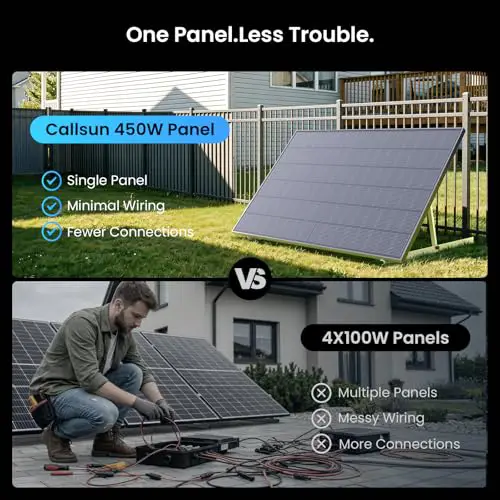
This Callsun set contains two 450W bifacial solar panels, for 900W total rated power. The listing names N-type 16BB cells, double-glass construction, and up to 25.6% efficiency. Its dual-module parallel anti-shade design is meant to help limit the effect of shade on a module. For buyers comparing the best bifacial solar panels, these are useful features to check.
The rigid two-panel format is aimed at home rooftops, RVs, and off-grid systems. It may suit buyers who have room for a fixed array and want a matched pair rather than separate panels. Plan the mounting area and wiring before purchase, and confirm that your controller supports the array. Rear-side light may add energy, but the gain depends on panel height and surroundings.
Double-glass construction is a stated feature, but the listing details supplied here do not confirm weight, dimensions, or warranty. Check those points before mounting. The two-panel set may offer good value when its output and size match your system. Compare current price, shipping, and included hardware before deciding.
Why It’s Great
- Two 450W panels provide 900W of combined rated power.
- N-type 16BB cells and stated 25.6% efficiency stand out on paper.
- Double-glass construction suits buyers seeking a rigid panel design.
- Parallel anti-shade design may help when one module gets partial shade.
- Listed for home rooftops, RVs, and off-grid systems.
Good to Know
- Actual output varies with sun, angle, temperature, shade, and rear-side reflection.
- The supplied product details do not state dimensions, weight, or warranty.
- Confirm controller limits and safe wiring before connecting a two-panel array.
2.
Callsun 400W Bifacial Solar Panel Set
 Check Price on Amazon
This Callsun listing describes two 200W bifacial panels, giving a combined rated output of 400W. It names N-type 16BB cells, up to 25.6% efficiency, and a dual-module parallel anti-shade design. The pair is listed for 12V and 24V systems. Those details make it a practical option for buyers seeking the best bifacial solar panels for a smaller system.
Two separate modules can give an installer more placement choices than one large panel, though the mounting plan still matters. The listing names RVs, vans, marine use, rooftops, and off-grid setups. It may suit travelers or homeowners who need a 400W-class array. Check dimensions, cables, and charge-controller limits first, since those details can affect fit and setup.
The listing gives no supplied detail on panel weight, frame finish, or warranty, so confirm them before buying. A matched pair can simplify planning and may provide good value for compatible systems. Keep the rear side clear enough for reflected light, and compare the total cost with the mounts and wiring you need.
Why It’s Great
- Two 200W panels provide a clear 400W combined rating.
- Listed compatibility includes 12V and 24V system use.
- N-type 16BB cells and bifacial design are stated features.
- The two-module format may offer more placement options.
- Its listed uses include RV, van, marine, roof, and off-grid setups.
Good to Know
- A 12V or 24V system label does not ensure direct battery connection.
- Confirm output limits, connectors, and controller compatibility before use.
- The supplied listing details do not specify warranty or full dimensions.
3.
Callsun 900W Double-Glass Bifacial Panels
 Check Price on Amazon
This Callsun 2-pack lists two 450W bifacial panels, or 900W total rated power. Its stated features include N-type 16BB cells, double-glass construction, up to 25.6% efficiency, and a dual-module parallel anti-shade design. The listing targets home rooftops, RVs, and off-grid use. These specifications make it another option to compare among the best bifacial solar panels.
The panels use a rigid format, so buyers should measure their roof, rack, or ground-mount area before ordering. The matched pair may suit users planning a larger fixed array with room for rear-side light. It is less suited to people who need a compact panel to carry by hand. Check mounting needs and electrical limits before connecting the pair.
The double-glass build is a stated feature, but detailed frame, weight, and warranty information is not included in the supplied listing. Verify those points and any included hardware. This set may be worthwhile when its rated output fits your plan. Compare it with the other Callsun 450W set for price and exact listing details.
Why It’s Great
- Two 450W panels give the set a 900W total rating.
- N-type 16BB cells are identified in the listing.
- Double-glass construction is intended for rigid panel use.
- The stated efficiency reaches up to 25.6%.
- The listing covers rooftop, RV, and off-grid applications.
Good to Know
- The supplied title does not clearly state all installation or electrical details.
- Rigid panels need adequate space and a secure mounting plan.
- Do not assume the two similar Callsun listings include the same accessories or warranty.
4.
ZOUPW 480W Portable Bifacial Panel
 Check Price on Amazon
The ZOUPW listing describes a 480W portable bifacial solar panel with N-type 16BB cells and up to 25% efficiency. It is foldable and marketed for power stations, including EcoFlow Delta, Bluetti, and Anker C1000 models. The listing also states IP68 waterproofing. These features set it apart from fixed panels in this best bifacial solar panels guide.
A foldable panel can be moved to follow the sun or packed for a trip, which may suit campers and backup-power users. Check the exact connector, input limits, and supported power station model before ordering; brand names alone do not confirm compatibility. Set the panel on a stable surface and leave space behind it if you want reflected light to reach the rear.
The listing says foldable and IP68, but supplied details do not give weight, packed size, or warranty. Check those facts if you plan to carry it often. Portability can be useful, though value depends on your power station and needed accessories. Keep the panel clean and dry after use, following its care instructions.
Why It’s Great
- Foldable construction is easier to transport than rigid roof panels.
- The listing gives a 480W rating and up to 25% efficiency.
- It is marketed for several popular power station families.
- IP68 waterproofing is stated in the product title.
- Portable placement can help users adjust panel angle and location.
Good to Know
- Confirm the connector and electrical input limits for your exact power station.
- The supplied details do not give packed size or carry weight.
- Portable panels need stable placement and may need repositioning as the sun moves.
5.
JJN 850W Bifacial Solar Panel Set
 Check Price on Amazon
The JJN listing names an 850W bifacial set made of two 425W rigid panels. It specifies N-type cells and 16BB design, and its title references UL61730. The combined rating offers a high-output option for buyers planning a fixed array. Among the best bifacial solar panels here, it is the one to examine for a two-panel 850W setup.
This pair may fit a home, RV, or off-grid plan where the mounting area and electrical system can handle its output. The product details supplied here do not list every intended use, connection type, or panel dimension. Check the full listing and your controller manual before purchase. A bifacial design can use rear light, but placement affects any added energy.
The 16BB N-type description is useful, yet the supplied title does not confirm glass type, frame details, or warranty. Check certification documents and included hardware rather than relying only on a title. Compare the total installed cost, including mounts and wiring. It may be a good fit when its size and rating match your plan.
Why It’s Great
- Two 425W panels provide 850W of combined rated output.
- The listing specifies N-type cells and 16BB design.
- Bifacial construction may use suitable reflected light at the rear.
- A matched pair can simplify planning a two-panel array.
- The product title references UL61730; buyers can verify supporting documents.
Good to Know
- The supplied product details do not state full dimensions or panel weight.
- Confirm certification documents and electrical specifications before installation.
- High rated output requires a compatible controller and suitable wiring.
Final Thoughts: The Verdict
My personal top pick is Callsun 900W Bifacial Solar Panel Set. Its two 450W panels, stated N-type cells, and double-glass build make it a strong match for buyers planning a larger fixed system. For the best bifacial solar panels, still check fit and controller limits first.
For a portable power station, consider the ZOUPW 480W Portable Bifacial Panel. The Callsun 400W pair better suits smaller 12V/24V projects, while JJN offers an 850W two-panel set. Choose the panel that fits your space, gear, and budget.
1 thought on “Best Bifacial Solar Panels: How To Choose The Right Ones”
Comments are closed.