
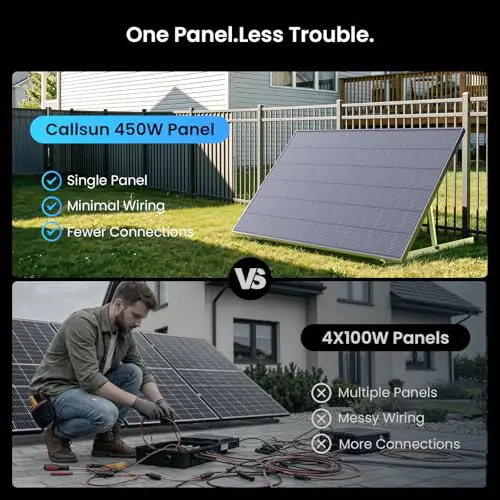
Monocrystalline solar panels use silicon cells to turn sunlight into electricity. They suit homeowners, RV travelers, and off-grid users who want dependable power from limited space. People buy them for their strong output, broad range of sizes, and ability to charge batteries or support home energy systems.
A panel that looks powerful on a product page can disappoint if it does not fit your roof, charge controller, or battery setup. Some buyers focus on wattage and miss voltage, wiring, shading, or mounting needs. Others expect a solar panel alone to power appliances around the clock. Those mistakes can lead to slow charging, extra costs, and a setup that sits unused. The right choice should match your real energy needs and the conditions where you plan to install it.
I compared these options by their listed output, cell design, kit contents, and stated use cases, while keeping real setup needs in mind. I have worked with solar system planning and product research, so I look beyond headline wattage. This guide to the best monocrystalline solar panels puts fit, useful features, and clear trade-offs first.
What you’ll learn
- How to match panel wattage and voltage to your battery system
- Which solar panel or kit best suits RV, home, and off-grid use
- Why shading, charge controllers, and mounting matter
- What trade-offs to consider before choosing a panel
In This Article
How To Choose The Best Monocrystalline Solar Panels
Choosing the best monocrystalline solar panels means matching the panel to your space, battery, and daily power needs. A high watt rating alone cannot promise useful energy if the panel is shaded or the system is wired the wrong way. Low-quality listings may also leave out key details, such as controller type or what hardware comes in the box. Before you buy, check the full system plan: panel voltage, charge controller, battery limits, mounting space, and expected sunlight. A little planning can prevent costly surprises later.
Match Wattage and Voltage to Your System
Start with the energy your devices use, then choose panel wattage that can help replace that power in your local sun conditions. Check the panel’s voltage and current against your battery and charge controller. A 12-volt battery system may use a higher-voltage panel, but it needs a compatible controller to manage charging. Do not assume that a panel marked 12V has the same output voltage as your battery. Small panels can suit lights and basic charging, while larger panels are better for bigger loads. The best monocrystalline solar panels are the ones that fit the whole system.
Check the Controller, Wiring, and Kit Contents
A solar panel is only one part of a working setup. Check whether the listing includes a charge controller, cables, connectors, and mounting parts, and read the product details to confirm. A kit can save time for a first install, but controller type matters: PWM controllers are simple, while MPPT models can make better use of panel voltage in many setups. Avoid buying parts based only on connector photos or a broad voltage label. Confirm that the controller supports your battery type and panel input. This step helps RV and cabin users avoid mismatched parts.
Plan for Space, Shade, and Mounting
Measure your roof, RV, shed, or ground mount before choosing a panel. Leave room for mounting hardware and safe cable routing, and consider how trees, vents, or nearby buildings may cast shade. Even a small shadow can lower the output of some panel setups, so placement is important. Bifacial panels may gain power from light reflected onto the rear side, but they need suitable mounting and a bright surface behind them. Read the panel dimensions and installation notes, not just its watt rating. A compact panel can suit travel, while a larger one may fit a fixed off-grid site.
Quick Comparison
| Model | Category | Best For | Key Spec | Amazon |
|---|---|---|---|---|
| Callsun 450W Bifacial Solar Panel 2-Pack | Best Overall | Larger rooftop and off-grid setups | 900W total; bifacial, double-glass design | Amazon |
| ECO-WORTHY 200W Solar Panel Kit | Best Kit | RV and beginner off-grid systems | 200W panel with 30A PWM controller | Amazon |
| ECOBOSS 200W N-Type Solar Panel | High-Efficiency Pick | Compact RV, van, and marine systems | 200W; N-type cells; IP68 rating claimed | Amazon |
| JJN 100W Monocrystalline Solar Panel | Budget Compact | Small battery charging and camping | 100W; 10BB; 12V panel listing | Amazon |
| DOKIO 400W Monocrystalline Solar Panel | High-Output Panel | Sheds, gardens, and off-grid sites | 400W; 31V; MC4 cable included | Amazon |
In-Depth Reviews for Best Monocrystalline Solar Panels
1.
Callsun 900W Bifacial Solar Panels
 Check Price on Amazon
This Callsun bundle pairs two 450W bifacial panels for 900W of listed front-side output. It uses N-type 16BB monocrystalline cells and a double-glass build. The maker lists up to 25.6% efficiency, a figure that depends on test conditions. Its parallel anti-shade design may help limit some shade effects. It stands out for its high listed output.
The two-panel format can suit a roof, RV, or off-grid system with enough mounting room. Buyers should plan wiring, a compatible charge controller, and secure mounts before installation. Bifacial cells can use reflected light, but rear-side gains depend on placement and the surface below. This option best suits users who want high output and can design a suitable system.
Double glass offers a sturdy panel design, but the panels still need careful handling and a sound mount. Wipe off dust with water and a soft cloth when needed. Check dimensions and included hardware before purchase. Its value depends on your space, system match, and ability to use the listed output.
Why It’s Great
- Two panels provide 900W of listed front-side output.
- Bifacial design can use suitable reflected light.
- N-type 16BB cell design is a notable feature.
- Double-glass construction is intended for a durable panel build.
- Parallel anti-shade design may help in some partial-shade conditions.
Good to Know
- The 25.6% efficiency figure is a maker-listed claim, not a guarantee of real-world output.
- Bifacial gains depend on rear-side light, spacing, and the mounting surface.
- The listing does not make this a complete solar kit; plan for controller, wiring, and mounts.
2.
ECO-WORTHY 200W Solar Panel Kit
 Check Price on Amazon
This ECO-WORTHY kit combines a 200W monocrystalline panel with a 30A PWM charge controller. The listing says it supports 12V and 24V systems and names RV, camper, vehicle, caravan, and off-grid use. A panel and controller in one package can simplify a first system plan. It is a practical option for buyers who want a starter kit.
The kit is aimed at users who want to charge a compatible battery without sourcing every main part separately. Before connecting it, check the controller settings, battery type, cable needs, and system voltage. The PWM controller is a basic choice for many small systems, though it may not suit every panel and battery setup. It best fits RV owners and new off-grid users.
The included controller can reduce the need for a separate first purchase, but confirm which mounting parts and cables are in the box. Keep the panel clear of dirt and inspect connections from time to time. Its value is strongest when the included parts match your battery plan.
Why It’s Great
- Includes a 200W monocrystalline panel and charge controller.
- The 30A controller is clearly stated in the listing.
- Made for common RV, camper, and off-grid use cases.
- A kit can make early system planning more straightforward.
- Listed for both 12V and 24V system use.
Good to Know
- PWM control may be less efficient than MPPT in some system designs.
- Check the exact included cables and mounting hardware before ordering.
- Confirm compatibility with your battery chemistry and system voltage.
3.
ECOBOSS 200W N-Type Solar Panel
 Check Price on Amazon
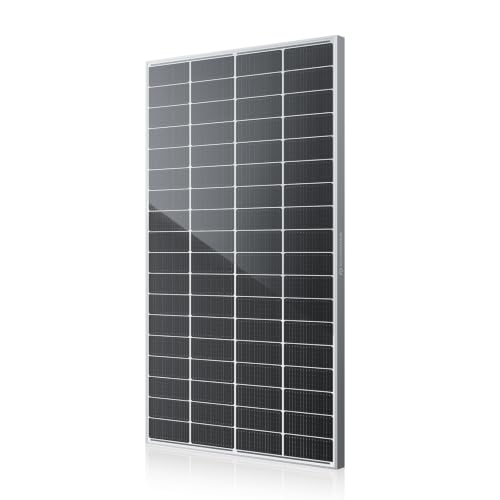
The ECOBOSS is a 200W N-type monocrystalline panel listed with 16BB Grade A+ cells and a claimed 25.6% efficiency. Its IP68 waterproof rating is also stated by the maker. These are specifications to compare, not a promise of a set daily energy yield. This panel stands out for combining a compact power rating with newer cell design claims.
At 200W, it may suit a van, RV, boat, or small off-grid system when the panel dimensions fit the available space. It is a panel rather than a complete charging kit, so buyers need a compatible controller, wiring, and mounting plan. The best monocrystalline solar panels still need good sun and correct system parts. This one suits experienced planners and compact builds.
The IP68 rating is a maker-listed claim, so check product details and warranty terms for the exact protection offered. Use a soft cloth to clear dust and salt, especially for marine use. Its value rests on verified fit, support, and system compatibility.
Why It’s Great
- N-type monocrystalline cells are listed for the panel.
- The 16BB design is a clear point of comparison.
- The 200W rating suits many compact system plans.
- The maker lists an IP68 waterproof rating.
- Designed for RV, van, marine, roof, and off-grid uses.
Good to Know
- The 25.6% efficiency claim should not be treated as guaranteed field performance.
- A charge controller, wiring, and mounts are needed for a working system.
- Check panel size and electrical ratings before matching it to your setup.
4.
JJN 100W Monocrystalline Solar Panel
 Check Price on Amazon
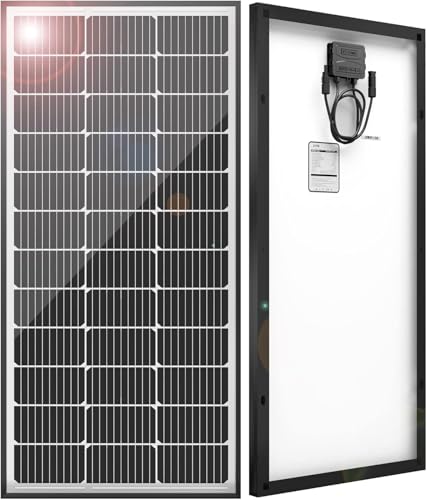
This JJN panel is listed as a 100W, 12V monocrystalline model with a 10BB cell design and claimed 23% efficiency. Its smaller output can be a sensible fit for basic battery charging, camping, or a modest off-grid setup. Among the best monocrystalline solar panels for small needs, it offers a simple single-panel option without a large output target.
Its compact rating can help buyers build a small system or add solar to an existing one. It is listed for RV, home, farm, camping, marine, and off-grid use. Users still need to match the panel to a suitable controller and battery. It is best suited to people with light power needs, limited roof space, or a starter system.
The maker lists an IP68 rating, but buyers should review the warranty and installation guidance for details. A soft cloth can clear dust and debris. Its value depends on whether 100W meets your needs; users with larger loads may need several panels and added system parts.
Why It’s Great
- A 100W rating suits modest charging needs.
- The 10BB design is stated in the listing.
- Its size may fit smaller RV and camping setups.
- Listed for use across home, farm, and marine settings.
- A single panel can be a simple starting point.
Good to Know
- A 100W panel may not support larger appliances or heavy daily use.
- The listed 23% efficiency is a maker claim, not a daily output estimate.
- A compatible controller, battery, and mounting plan are still needed.
5.
DOKIO 400W Monocrystalline Solar Panel
 Check Price on Amazon
DOKIO lists this monocrystalline panel at 400W and 31V, with a 9.84-foot MC4 cable included. It is designed for 12V and 24V systems, along with gardens, sheds, greenhouses, cabins, and other off-grid sites. Its higher listed wattage can help users who need more power from one panel. Check controller limits before connecting it.
This panel may suit a fixed install where there is room for safe mounting and good sun exposure. Its cable length can offer some flexibility when planning the route to a controller, but measure first. Buyers must confirm electrical compatibility rather than assume a 12V or 24V label ensures a direct match. It is best for sheds and off-grid users planning a larger array.
The MC4 cable is a useful included detail, but mounting hardware and other system parts may be separate. Keep the glass clear with gentle cleaning and inspect cables for wear. Its overall value depends on the space available and whether your controller can handle the panel’s voltage and current.
Why It’s Great
- The listing gives a 400W panel rating.
- A 9.84-foot MC4 cable is included.
- Listed for use with 12V and 24V systems.
- Its stated uses include cabins, sheds, and greenhouses.
- Higher output may suit larger off-grid plans.
Good to Know
- Confirm controller input limits for the stated 31V panel.
- The listing does not describe a complete kit with controller and mounts.
- A 400W panel needs adequate space, sun, and secure support.
Final Thoughts: The Verdict
My personal top pick is the Callsun 450W Bifacial Solar Panel 2-Pack. Its 900W listed total, bifacial design, and double-glass build make it a strong choice for users with room and a compatible system. It earns the top spot among these best monocrystalline solar panels for its high stated output, though its efficiency claim and real-world gains depend on conditions.
For an easier starter setup, the ECO-WORTHY 200W Solar Panel Kit includes a panel and PWM controller. The ECOBOSS and JJN suit smaller builds, while DOKIO offers a higher-output panel for fixed off-grid sites. Before buying, check your battery, controller, space, and budget, then choose the panel that fits your real needs.
1 thought on “Best Monocrystalline Solar Panels: How To Choose”
Comments are closed.