
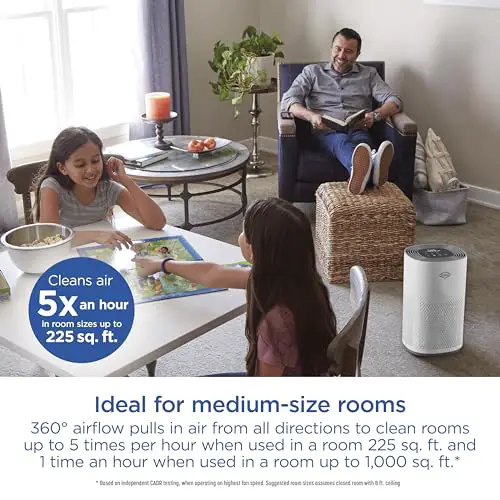
An air purifier with a properly sized particle filter can capture airborne mold spores and other particles. It may help people who want cleaner air in a bedroom, home office, or living space. The best air purifier to remove mold is a useful part of an indoor air plan, but it cannot fix damp walls or stop mold growth.
Buying the wrong purifier can feel like running a fan that never catches up. A unit may list a huge room size but move too little clean air for that space, especially if the rating assumes just one air change per hour. Some filters also cost more to replace than expected. Mold spores are only part of the problem: if a leak, damp room, or hidden patch remains, mold can return. Match the purifier to your room, check filter costs, and treat the moisture source instead of expecting one appliance to solve everything.
I focus on indoor air products and the details that matter after setup: filter type, room-size claims, controls, and upkeep. I compared these models using their listed features and practical room-use needs, while keeping in mind that coverage figures can use different air-change rates. This guide prioritizes clear trade-offs, sensible sizing, and the best air purifier to remove mold spores from room air.
What you’ll learn
- Why room size and clean-air delivery matter for mold spores.
- How a HEPA-style filter can help reduce airborne particles.
- What to check before buying replacement filters.
- Why moisture control is still needed when you use a purifier.
In This Article
How To Choose The Best Air Purifier to Remove Mold
A purifier can capture airborne spores, but only if it moves enough air through a suitable filter for your room. A common mistake is trusting the largest room-size number without checking how often the air is cleaned. Another is buying a low-cost unit, then finding its replacement filters are hard to get or costly. Before choosing the best air purifier to remove mold, check room size, filter details, noise, and upkeep. Also fix leaks and damp areas; a purifier is not a mold-removal tool.
Match Clean-Air Output to Your Room
Room coverage can be confusing because brands may list an area based on only one air change per hour. For mold spores, a smaller effective room rating with more frequent air cleaning is often a better guide. Look for a clean air delivery rate, or CADR, and compare it with your room size. Avoid placing a large-room claim above a real CADR or air-change figure. A compact model may suit a bedroom, while an open living area may need a larger unit or more than one purifier.
Check the Filter and Replacement Cost
Choose a purifier with a clearly described particle filter, such as a true HEPA filter or a well-documented HEPA-style system. These filters can capture airborne particles, including many mold spores, but they do not remove mold growing on a surface. Check how often the maker says to replace the filter and whether replacements are easy to find. A low purchase price can be less appealing if filters are costly or scarce. For many homes, a simple filter system is easier to maintain than a model with extra features.
Consider Noise, Placement, and Moisture
A purifier only helps while it runs, so think about fan noise and where the unit will sit. A quiet setting may be useful in a bedroom, while a higher setting can help when you need more airflow. Leave space around the air intake and outlet, and do not hide the unit behind furniture. Before choosing the best air purifier to remove mold, look for easy controls and a filter-change reminder if you value them. Most important, repair leaks, reduce excess humidity, and clean or remove mold safely.
Quick Comparison
| Model | Category | Best For | Key Spec | Amazon |
|---|---|---|---|---|
| BLUEAIR Blue 511i Max | Best Overall | Bedrooms and small shared spaces | Smart controls; particle filtration | Amazon |
| Clorox Medium Room Air Purifier | True HEPA Pick | Bedrooms and medium rooms | True HEPA filtration | Amazon |
| Purivortex PX500 | Large-Room Value | People seeking broad stated coverage | Advertised coverage up to 880 sq ft | Amazon |
| FreAire HAP605 | Large-Room Option | Large open rooms | Advertised coverage up to 2,600 sq ft | Amazon |
| GermGuardian AC4825E | Tower Budget Pick | Simple room air cleaning | HEPA filter and UV-C feature | Amazon |
In-Depth Reviews for the Best Air Purifier to Remove Mold
1. BLUEAIR Blue 511i Max Air Purifier
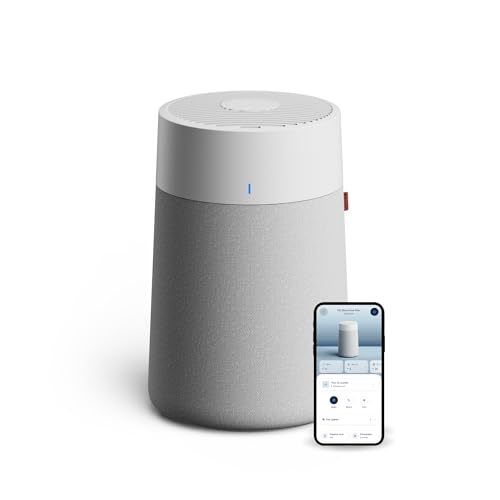
The Blueair Blue 511i Max is a compact air purifier made for bedrooms, dorms, and other home spaces. Its particle filtration is designed to reduce airborne dust, pollen, and similar particles, including mold spores. Smart features add ease of use. Check the room rating and air-change rate before relying on it in a larger space.
This model suits people who want a small purifier with convenient controls and a modern look. Set it in a bedroom or home office with open space around its air inlet and outlet. It is best for users who value simple daily operation and plan to run the unit often. Use the correct room size when judging performance.
The compact form is easy to place and should need little day-to-day care beyond routine filter checks. Replacement filters add to the long-term cost, so confirm availability and price before buying. For the right room, its feature set and small footprint offer useful value.
Why It’s Great
- Compact size works well in bedrooms, dorms, and offices.
- Smart controls make daily use more convenient.
- Particle filtration can help reduce airborne mold spores.
- A clean, simple design is easy to fit into a home.
- Useful choice for people who want a purifier they can run regularly.
Good to Know
- Large coverage claims may assume fewer air changes than a small room needs.
- Replacement filters create an ongoing cost.
- It cannot remove mold growing on walls, ceilings, or other surfaces.
2. Clorox Medium Room True HEPA Purifier

The Clorox Medium Room Air Purifier uses a true HEPA filter to capture airborne particles, including many mold spores. It is designed for home use in spaces such as bedrooms and living rooms. Its clear filter focus makes it a practical option for shoppers seeking the best air purifier to remove mold from room air, not a source of mold.
Its medium-room format can suit households that want a straightforward purifier without a bulky footprint. Place it where air can move freely and choose a fan setting you can tolerate for long periods. It is best for bedrooms or medium spaces when its stated room rating matches your needs. Check the rating’s air-change basis first.
Routine care mainly means checking the filter and replacing it on schedule. Filter replacement adds to the total cost, so compare prices before purchase. The simple design and true HEPA filter make it a sensible value for people who want particle filtration in a properly sized room.
Why It’s Great
- True HEPA filtration is designed to capture fine airborne particles.
- Medium-room size suits many bedrooms and home spaces.
- Simple controls are approachable for everyday use.
- A familiar brand makes replacement planning easier.
- Can support a broader plan to reduce airborne mold spores.
Good to Know
- Room coverage depends on the air-change rate used for the rating.
- Replacement filters add recurring costs.
- It will not stop mold from returning if dampness remains.
3. Purivortex PX500 Air Purifier

The Purivortex PX500 is listed for rooms up to 880 square feet, which may appeal to buyers seeking broad coverage at home. Its filter system is intended to clean airborne particles. For mold concerns, compare the advertised area with the air-change rate and filter details. A large number alone does not show how well it suits your room.
The black PX500 can work in a bedroom or shared living space where its size and airflow fit the room. Keep it clear of walls and furniture so air can reach the intake. It is best for shoppers who want a large stated coverage area, but it may be less suited to anyone who needs a verified CADR for a specific room.
Regular filter checks and timely replacements are key to keeping performance steady. Before buying, confirm the correct replacement filter and its cost. The broad stated coverage may offer value for open spaces, as long as the real room rating matches your desired air-cleaning pace.
Why It’s Great
- Advertised coverage up to 880 square feet suits broad-room shoppers.
- Black finish can blend with many home settings.
- Can help capture airborne particles when sized and maintained well.
- Offers an option for people who prefer a larger coverage claim.
- May suit shared spaces with room for a full-size unit.
Good to Know
- The 880-square-foot figure may not mean frequent air changes.
- Check filter specifications and replacement costs before purchase.
- It cannot address mold growth or excess moisture in a home.
4. FreAire HAP605 Large-Room Purifier

The FreAire HAP605 is advertised for spaces up to 2,600 square feet, a large figure that may attract owners of open-plan homes. It is designed to filter air, but shoppers should check its clean-air output and the air-change rate behind that coverage claim. Those details matter when choosing the best air purifier to remove mold spores.
Its white finish can suit a bright living area, and a large-room model may be useful where a small purifier feels outmatched. This option is best for buyers who need broad coverage and can confirm the unit’s performance at their intended room size. Keep the intake clear, and consider noise before placing it near a bed.
A large purifier needs regular filter care, so check replacement availability and cost before purchase. The unit may offer good value for an open space if its real airflow suits that room. No purifier replaces moisture control or safe cleanup of mold on surfaces.
Why It’s Great
- Very large advertised coverage may suit open-plan areas.
- White design can blend into many bright rooms.
- A larger unit may be more practical than several small ones.
- Offers a choice for people who need broad stated coverage.
- Can help reduce airborne particles when properly sized.
Good to Know
- The advertised area does not by itself confirm strong cleaning in every room.
- Check actual CADR, air-change details, and filter costs before buying.
- Large units need enough floor space and clear airflow.
5. GermGuardian AC4825E HEPA Tower Purifier

The GermGuardian AC4825E is a 22-inch tower air purifier with a HEPA filter and a UV-C feature. Its filter is designed to capture airborne particles, including many mold spores. The slim shape gives it a different feel from wide units. Check its room rating and filter details to see if it fits your mold-spore concerns.
The upright tower can fit beside a desk or in a bedroom where floor space is limited. It is best for users who want a familiar, simple design and are comfortable checking filter replacements. As with any purifier, keep it running in the room where you need cleaner air and leave its vents unobstructed.
The tower shape is easy to place, and upkeep centers on filter replacement and basic dust removal. Compare the replacement filter price with the initial cost to judge long-term value. Its extra UV-C feature should not replace proper mold cleanup or moisture repair.
Why It’s Great
- Slim tower design takes up less floor space.
- HEPA filtration is aimed at airborne particles.
- UV-C feature adds another listed function.
- Simple format may suit a bedroom or office.
- A practical pick for people who want a familiar tower style.
Good to Know
- UV-C does not remove mold growing on surfaces or fix moisture.
- Check the room-size rating and replacement filter cost.
- Fan noise may be noticeable at higher settings.
Final Thoughts: The Verdict
My personal top pick is the BLUEAIR Blue 511i Max for its compact size, smart controls, and useful fit for bedrooms or smaller shared spaces. It is a strong best air purifier to remove mold spores from room air when sized for the space. The Clorox Medium Room model is a good alternative if you want a true HEPA filter.
For broad stated coverage, consider the Purivortex PX500 or FreAire HAP605, but check their room ratings and air-change details first. The GermGuardian suits buyers who prefer a slim tower. Fix dampness and mold growth, then choose based on room size, filter costs, and budget.