
A hot tub room needs steady airflow to help control humid air, odors, and lingering dampness. The best exhaust fan for hot tub room use depends on room size, vent route, and moisture load. This guide compares practical fan options for homeowners planning a spa room or indoor tub area.
A fan that looks powerful on the box can still disappoint if its airflow is too low, its duct is poorly sized, or it simply recirculates air instead of venting outdoors. Cheap units may also be loud, hard to clean, or unsuited to long humid run times. In a hot tub room, that can mean fogged windows, damp walls, peeling paint, and a room that never feels fresh. Choosing the right fan matters, but ventilation is only part of the plan: indoor spas may also need dedicated dehumidification and professional moisture control.
I review ventilation products by comparing stated airflow, sound ratings, controls, installation needs, and the limits of each design. For this guide, I assessed the supplied product details and considered how each style may fit a hot tub room, rather than claiming hands-on test results. My goal is to help you find the best exhaust fan for hot tub room needs while keeping safety, fit, and value in view.
What you’ll learn
- How to match fan airflow to room size and moisture needs.
- Why venting outdoors and sizing the duct both matter.
- Which listed fans suit small rooms, retrofit work, or higher airflow needs.
- What an exhaust fan can and cannot do for indoor spa humidity.
In This Article
How To Choose The Best best exhaust fan for hot tub room
A good fan can move damp air out, but the wrong size or vent path can leave moisture behind. Do not choose by a big CFM number alone: check the room volume, duct length, bends, and whether the fan can exhaust outdoors. Small bath fans may suit compact spaces, yet an indoor hot tub can create more moisture than a standard bathroom. Read the installation and electrical rules, and plan for a dehumidifier when needed. The best exhaust fan for hot tub room use is the one that fits the whole ventilation plan.
Match Airflow to Room Size and Moisture
Airflow is measured in CFM, but the right number depends on room size, ceiling height, tub use, and how air enters the space. A 50 or 80 CFM bath fan may help in a small room, while a larger wall fan can move far more air. Do not assume a higher rating means better results; a short, properly sized duct can outperform a high-rated fan on a restrictive run. Check the maker’s guidance and consider an HVAC professional for a frequent-use indoor spa. The best exhaust fan for hot tub room use should support a full moisture plan, not replace it.
Plan the Duct Route and Outdoor Exhaust
An exhaust fan must carry damp air outside, not into an attic, ceiling void, or another enclosed space. Long ducts, sharp turns, and undersized runs can cut real airflow and raise noise. Before buying, check the fan’s outlet size, the existing opening, and the path to an exterior wall or roof. A wall shutter model may suit a direct wall route, while a ceiling fan needs compatible ducting. Avoid buying a unit before confirming the opening and vent route. In a hot tub room, the best exhaust fan for hot tub room results depend as much on installation as on the fan itself.
Check Noise, Controls, and Moisture Needs
A fan that is too loud may get switched off just when the room needs ventilation. Compare sones when ratings are available, and look for useful controls such as variable speed or a thermostat where suitable. A timer or humidity control can also help, though these features are not listed for every model here. Remember that exhaust air must be replaced with fresh air, and strong exhaust can affect room pressure or heating. For a spa room used often, ask a qualified contractor about humidity control, safe electrical placement, and the best exhaust fan for hot tub room conditions.
Quick Comparison
| Model | Category | Best For | Key Spec | Amazon |
|---|---|---|---|---|
| Broan-NuTone 50 CFM Modern Grille Fan | Compact Bath Fan | Small rooms with modest ventilation needs | 50 CFM, 2.0 sones | Amazon |
| iLiving 12-Inch Wall Shutter Fan | High Airflow Wall Fan | Direct-wall venting and higher airflow needs | Up to 960 CFM; variable speed | Amazon |
| V2262-50 7-Inch Exhaust Fan | Compact Ceiling Fan | Rooms with a compatible ceiling opening | 50 CFM, 1.0 sone | Amazon |
| Broan-NuTone 80 CFM LED Retrofit Fan | Retrofit Fan with Light | Retrofit jobs without attic access | 80 CFM, 1.5 sones | Amazon |
| Panasonic WhisperFit Retrofit Fan | Selectable Airflow Fan | Retrofits needing selectable airflow | 50, 80, or 110 CFM | Amazon |
In-Depth Reviews for best exhaust fan for hot tub room
1. Broan-NuTone 50 CFM Modern Grille Fan

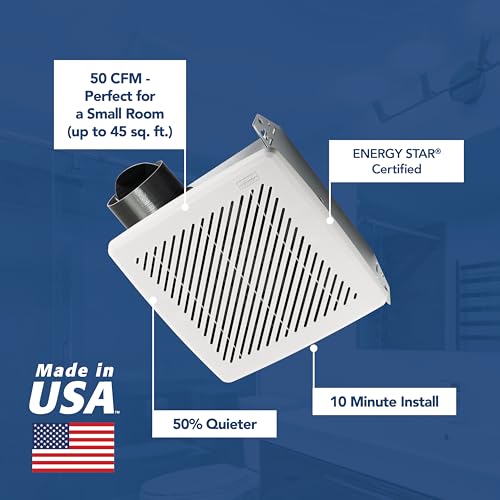
This Broan-NuTone fan is a compact choice for basic exhaust needs. It moves 50 CFM and has a modern grille, plus an ENERGY STAR rating as listed. Its 2.0-sone sound rating gives buyers a clear noise reference. For a small hot tub room, it may help clear stale air, but check that its airflow suits the room and moisture load.
The simple ceiling-fan format can fit a bathroom-style layout, and the modern grille keeps the look neat. Its modest airflow makes it more suited to a small room or a secondary ventilation point than a large spa enclosure. Review the duct route and opening before purchase. It may suit owners who want a familiar fan style and modest energy use.
The grille should be accessible for routine dust removal, while the ceiling location keeps the unit out of the way. The listed rating offers useful efficiency context, but does not prove it can manage heavy spa humidity alone. It can be a sensible value for small spaces with realistic ventilation needs.
Why It’s Great
- ENERGY STAR rating is listed for buyers comparing energy use.
- Modern grille offers a clean, simple ceiling appearance.
- 50 CFM suits some compact ventilation tasks.
- A familiar bathroom-fan format may simplify replacement planning.
- The published 2.0-sone rating helps set sound expectations.
Good to Know
- 50 CFM may be too low for a hot tub room with a high moisture load.
- The listed 2.0-sone rating is not the quietest among these options.
- The supplied details do not list humidity sensing or variable speed.
- The product alone does not replace a spa dehumidifier or full moisture plan.
2. iLiving 12-Inch Wall Shutter Exhaust Fan

The iLiving 12-inch wall fan stands apart with a listed 960 CFM capacity, automatic shutter, thermostat, and variable speed controller. That higher airflow can suit a room that needs more air movement than a small bath fan can provide. For a best exhaust fan for hot tub room shortlist, it is the strongest airflow option here, provided the wall route and room plan fit.
This wall-mounted design works best where a suitable exterior wall allows a direct exhaust path. The variable speed control gives users a way to adjust airflow, while the thermostat adds a control feature. It may suit larger spaces or owners planning a wall installation. Confirm the opening, make-up air, electrical requirements, and noise tolerance before choosing it.
The automatic shutter can help close the opening when the fan is off. A wall-mounted unit may be easier to access than a ceiling fan, but it needs a compatible exterior location. Its airflow and controls offer strong utility; confirm construction and corrosion suitability for the room before purchase.
Why It’s Great
- Listed 960 CFM offers much higher airflow than the compact bath fans here.
- Variable speed control allows airflow adjustment.
- Thermostat control adds an automatic operating option.
- Automatic shutter helps cover the wall opening when idle.
- Wall mounting can provide a direct route outdoors when the layout allows.
Good to Know
- The high airflow may be excessive for a small room or poorly balanced system.
- It needs a suitable wall opening and exterior installation location.
- The supplied details do not provide a sone rating.
- Verify corrosion resistance and suitability for persistent spa humidity with the seller or maker.
3. V2262-50 7-Inch Exhaust Fan

The V2262-50 is a 50 CFM ceiling exhaust fan with a listed 1.0-sone sound rating. Its 7-inch fan is designed for an 8-inch diameter rough-in opening, so it may suit a matching installation. The low stated sound level is a draw for quiet rooms. Check the actual air needs before treating it as the best exhaust fan for hot tub room use.
This fan is listed for bathrooms, laundry rooms, mobile homes, kitchens, and garages. That range suggests flexible placement, but it does not confirm suitability for every spa setting. Measure the ceiling opening and check duct fit before ordering. It may suit a small room or supplemental ventilation where low noise matters more than high airflow.
A ceiling-mounted fan keeps floor and wall space clear, and the accessible grille can be cleaned as part of routine care. Confirm materials and installation needs for a humid spa room. Its quiet rating and simple airflow may offer good value when the room and vent plan are a proper match.
Why It’s Great
- The listed 1.0-sone rating is a quietness advantage.
- 50 CFM can suit small, modest ventilation needs.
- Designed around an 8-inch rough-in opening.
- The listed use cases include several common utility spaces.
- Ceiling installation leaves wall and floor space free.
Good to Know
- 50 CFM may not remove enough moisture from a frequently used hot tub room.
- The 8-inch rough-in requirement can limit retrofit fit.
- The supplied details do not list a humidity sensor or speed control.
- Confirm that its materials and installation are suitable for a spa environment.
4. Broan-NuTone 80 CFM LED Retrofit Fan

This Broan-NuTone model combines an 80 CFM exhaust fan with an LED light and a listed 1.5-sone rating. Its stated retrofit design avoids attic access, which can help when working from below in some existing rooms. ENERGY STAR certification is listed, along with moisture and odor control. It is a useful middle-ground option, though spa moisture needs careful planning.
The fan and light share a ceiling unit, which may reduce the need for a separate fixture. The no-attic-access retrofit feature can appeal to owners updating an existing space where overhead access is limited. It may suit a small or moderate room with compatible wiring and ducting. Check the opening and confirm airflow needs before selecting it for a hot tub area.
The integrated light keeps the ceiling layout tidy, while the grille needs routine dust cleaning. Its stated retrofit feature may reduce installation hurdles, but does not remove the need for correct venting. The combination of light, airflow, and listed efficiency can offer solid value when the fit is right.
Why It’s Great
- 80 CFM provides more listed airflow than 50 CFM models.
- Integrated LED light combines two ceiling functions.
- The retrofit design is listed for installation without attic access.
- A 1.5-sone rating gives buyers a sound reference.
- ENERGY STAR certification is listed.
Good to Know
- 80 CFM may still fall short for a large or high-use spa room.
- Confirm that the retrofit design matches the existing opening and duct.
- The supplied details do not specify adjustable speed or humidity sensing.
- An integrated light may not suit every lighting layout.
5. Panasonic WhisperFit Selectable Airflow Fan

The Panasonic FV-0511VF1 WhisperFit offers selectable airflow settings of 50, 80, or 110 CFM. That range lets an installer choose a setting that better matches the room than a fixed-output fan. Its retrofit format can help with some upgrade jobs. For a best exhaust fan for hot tub room plan, this flexibility is useful, but the top setting may not meet every spa’s needs.
Selectable airflow is handy when a room’s needs or duct layout call for a careful balance. The fan is intended for retrofit use, so it may appeal to owners replacing an older ceiling unit. Confirm the rough opening, duct size, and installation instructions before buying. It may suit users who want a compact fan with several airflow choices.
The ceiling-mounted format keeps the unit out of the way and supports a tidy room. Check grille access for cleaning and confirm the finish and materials suit humid use. Its airflow choices add practical flexibility, making it a worthwhile option when its capacity and installation fit the room.
Why It’s Great
- Three airflow settings offer more choice than a fixed-output fan.
- 110 CFM is the highest listed setting among the compact ceiling models here.
- Selectable airflow can help match output to the room and duct.
- Retrofit design may suit replacement projects.
- The WhisperFit name makes it appealing to buyers prioritizing a bathroom-style fan.
Good to Know
- The supplied product details do not state a sound rating.
- 110 CFM may still be insufficient for some large or frequently used hot tub rooms.
- Correct setup and duct sizing remain essential for rated performance.
- Confirm humidity suitability and the full installation requirements before purchase.
Final Thoughts: The Verdict
My personal top pick is… the iLiving 12-Inch Wall Shutter Exhaust Fan for rooms that need higher airflow and have a suitable exterior wall. Its listed 960 CFM, variable speed, and thermostat make it the most capable option in this group. Still, check the room plan, make-up air, and moisture needs before choosing it as the best exhaust fan for hot tub room use.
For a ceiling retrofit, consider the Panasonic WhisperFit Retrofit Bath Fan, which offers three airflow settings. The Broan-NuTone 80 CFM model suits buyers who also want a light and a retrofit design. No exhaust fan replaces a complete humidity plan for an indoor spa. Compare your room size, duct route, installation limits, and budget, then choose the option that truly fits your needs.
3 thoughts on “Best Exhaust Fan For Hot Tub Room: How To Choose”
Comments are closed.