
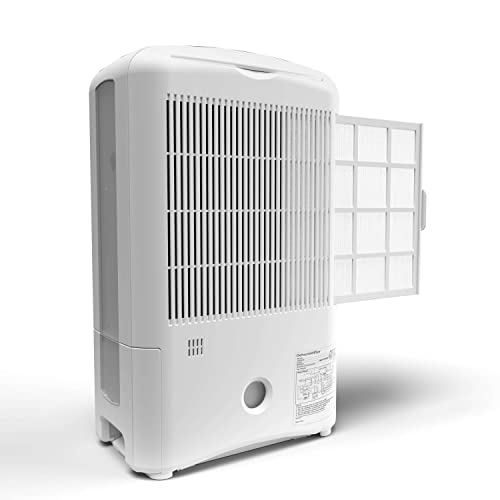
A dehumidifier pulls extra moisture from the air, but cold rooms need the right kind. This guide compares options for chilly basements, crawl spaces, and other damp areas, plus a dry cabinet for camera gear. If you are seeking the best dehumidifier for cold temperatures, start by matching the machine to the space.
A common buying mistake is choosing a unit by its big room-size claim alone. Many standard compressor models lose efficiency as the air gets cold, and frost can interrupt their work. A unit that sounds powerful in a warm room may leave a chilly basement damp. Small tanks can also mean constant emptying, while a cabinet dehumidifier cannot dry a whole room. These mismatches waste money and patience. The best dehumidifier for cold temperatures depends on the actual room temperature, moisture level, drainage needs, and the job you need done.
I focus on practical home climate gear and compare how each product’s stated type, coverage, and design fit its intended use. I reviewed the supplied product details and kept room dehumidifiers separate from enclosed storage cabinets. This guide prioritizes cold-weather suitability, honest limits, simple upkeep, and a clear match for your space so you can choose the best dehumidifier for cold temperatures with confidence.
What you’ll learn
- Why desiccant models can suit cold areas better than many compressor units.
- How to compare room coverage, capacity, and drainage needs.
- Which listed product is meant for rooms and which is only for stored gear.
- What limits to check before buying a dehumidifier for a chilly space.
In This Article
How To Choose The Best best dehumidifier for cold temperatures
Cold air changes how a dehumidifier works. Many compressor units remove less water as temperatures fall, and some need to pause when coils frost. A low price or large coverage claim cannot fix a poor match. Before buying the best dehumidifier for cold temperatures, check the room’s usual temperature, the unit’s operating range, and whether you can drain it safely. Also decide if you need to dry a whole room or protect items inside a sealed cabinet. Those simple checks can save you from damp walls and needless returns.
Choose the Right Type for Cold Air
For a cold basement or crawl space, look closely at the dehumidifier type and its stated operating range. Desiccant units are often a stronger fit for chilly conditions than standard compressor models, which can lose output or pause to defrost. Do not assume every product works below freezing; check the maker’s limits for the exact model. The Eva-Dry listed here is a rotary desiccant model, making it the clearest cold-space choice in this group. Hisense compressor models may suit warmer rooms, but confirm the temperature range before using one in an unheated area.
Match Capacity and Coverage to Your Space
Room coverage and daily water capacity are useful clues, not guarantees. A damp, cold basement may need more work than a dry room of the same size, and listed coverage can depend on test conditions. Measure the space and consider how wet it gets after rain or snow. Avoid buying a room unit for a small camera cabinet, or expecting a storage cabinet to dry a basement. For a small enclosed gear space, the 30L cabinet has a distinct role. For room moisture, compare the Eva-Dry and Hisense models by their published capacity and rated area.
Plan for Drainage, Noise, and Care
A dehumidifier is easier to live with when emptying and upkeep fit your routine. Check whether the unit has a removable bucket, auto shut-off, or a continuous-drain option; confirm the drain hose is included before you count on it. A unit with a larger advertised area can still need frequent emptying in wet weather. Noise matters near a bedroom, while filter access matters for regular care. If you choose a renewed unit, read the condition and return details. The best dehumidifier for cold temperatures is one you can safely run and maintain in its actual location.
Quick Comparison
| Model | Category | Best For | Key Spec | Amazon |
|---|---|---|---|---|
| Eva-Dry EDV-4000H | Cold-space pick | Chilly crawl spaces and rooms | Rotary desiccant; listed for 444 sq ft | Amazon |
| Hisense 35-Pint Compact | Room dehumidifier | Larger, less-cold spaces | 35-pint rating; listed for 3,500 sq ft | Amazon |
| Hisense HD3524 | Portable room unit | Flexible use in warmer areas | 35-pint rating; 3 speeds | Amazon |
| Hisense DH5023KP Renewed | Renewed room unit | Buyers considering a renewed model | 50-pint rating; listing states up to 4,500 sq ft | Amazon |
| 30L Camera Dry Cabinet | Gear storage | Cameras and small electronics | 30L enclosed storage cabinet | Amazon |
In-Depth Reviews for best dehumidifier for cold temperatures
1.
Eva-Dry EDV-4000H Desiccant Dehumidifier
 Check Price on Amazon
The Eva-Dry EDV-4000H uses rotary desiccant technology and is listed for spaces up to 444 square feet. That makes it the strongest match here for a cold crawl space or basement, where many compressor units can struggle. Its design targets room moisture without relying on the same cooling cycle used by common compressor models.
This unit is best suited to people who need moisture control in a chilly utility area, crawl space, or similar room. Its stated coverage gives buyers a starting point, but actual results depend on temperature, dampness, and airflow. Check the product instructions and operating range before placing it in a very cold space.
A desiccant unit avoids some cold-weather issues common to compressor models, but it still needs routine care and safe placement. Review its drainage and filter instructions before use. For buyers who need a room unit for cool conditions, its focused design can offer good value.
Why It’s Great
- Desiccant type is a practical match for many chilly spaces.
- Listed 444-square-foot coverage suits more than a tiny closet.
- Designed for crawl-space use as well as other rooms.
- Offers a clear alternative to standard compressor models.
- A strong first option for the best dehumidifier for cold temperatures.
Good to Know
- The listed coverage does not guarantee the same results in every damp space.
- Confirm the unit’s operating temperature range for your specific cold area.
- Check the drainage and maintenance details before installing it in a crawl space.
2.
Hisense 35-Pint Compact Dehumidifier
 Check Price on Amazon
The Hisense compact model is rated at 35 pints and its listing names coverage up to 3,500 square feet. It is a room dehumidifier for broad moisture control, not a dedicated cold-weather desiccant model. That distinction matters: in a cool home it may help, but its low-temperature range should guide any basement or winter use.
This model may suit owners of larger living areas who want one appliance to manage everyday dampness. Before choosing it for an unheated basement, check the manual for its minimum operating temperature and defrost behavior. Coverage claims are best treated as a guide, since room layout and moisture load affect real results.
A compact room design can be easier to place than a bulky unit, but bucket care and filter cleaning remain part of ownership. Verify drainage options and parts before purchase. It can be useful in suitable conditions, though it is not my first pick for very cold spaces.
Why It’s Great
- 35-pint rating offers substantial daily moisture capacity.
- Listed coverage may suit a large room or open area.
- A room-focused option for damp indoor spaces.
- Can be considered where temperatures stay within the maker’s range.
- A useful comparison against desiccant options for the best dehumidifier for cold temperatures.
Good to Know
- The listing does not establish that it is a desiccant unit.
- Cold-weather performance depends on the exact operating range and room conditions.
- Large coverage figures do not promise equal performance in divided or very damp rooms.
3.
Hisense HD3524 35-Pint Dehumidifier
 Check Price on Amazon
The Hisense HD3524 is listed as a 35-pint portable dehumidifier for areas up to 3,000 square feet. The product details also name a three-speed airflow system and a removable, washable filter. It is a conventional room-focused choice, so check its temperature limits before treating it as the best dehumidifier for cold temperatures.
Its carry handle and speed choices are useful if you plan to move the unit between rooms. The washable filter also gives owners a simple care task. This model is best suited to people managing dampness in spaces that remain inside its operating range, rather than very cold, unheated areas.
The removable filter can be rinsed as directed, and portable design helps with repositioning. As with any bucket-style unit, plan for water removal unless the model supports a drain setup. Its features make it practical for suitable rooms, but cold use needs a manual check.
Why It’s Great
- 35-pint rating suits ongoing room moisture control.
- Three airflow speeds provide more than one operating choice.
- Removable, washable filter supports routine upkeep.
- Carry handle helps when moving it between rooms.
- A practical portable option for users comparing the best dehumidifier for cold temperatures.
Good to Know
- The product details do not identify it as a desiccant dehumidifier.
- Check the minimum operating temperature before using it in a cold basement.
- Portable design does not remove the need to empty or drain collected water.
4.
Hisense 50-Pint DH5023KP Renewed
 Check Price on Amazon
This renewed Hisense model is listed with a 50-pint rating, three speeds, auto shut-off, and a slide-out bucket. Its listing says it can cover up to 4,500 square feet, though another area figure appears in the supplied title. Confirm the current product details and use rating before purchase. It is not specifically identified as a cold-weather desiccant unit.
The bucket handle and low, high, and auto speed choices aim to make daily use straightforward. A renewed unit may appeal to shoppers seeking a lower-cost route to a larger room dehumidifier. It is best for spaces that stay within the manufacturer’s temperature range, not as an assumed solution for a freezing crawl space.
The slide-out bucket and auto shut-off help with routine water handling. Since this is a renewed product, inspect the seller’s condition notes, warranty, and return terms. Value depends on its verified condition and price, so compare those details with a new unit.
Why It’s Great
- 50-pint rating is the largest listed among these room dehumidifiers.
- Slide-out bucket with a carry handle supports easier emptying.
- Auto shut-off can help prevent operation with a full bucket.
- Three listed modes offer low, high, and automatic settings.
- Could suit shoppers looking for a renewed larger-capacity appliance.
Good to Know
- Renewed condition, included parts, and warranty depend on the seller’s current terms.
- The supplied title includes conflicting area figures, so verify the live listing.
- Check the operating temperature range before choosing it as the best dehumidifier for cold temperatures.
5.
30L Electronic Camera Dry Cabinet
 Check Price on Amazon
This 30L electronic dry cabinet is made for enclosed storage, not whole-room moisture removal. Its purpose is to help protect cameras and other gear in a dedicated cabinet. That makes it a different kind of product from the best dehumidifier for cold temperatures, but a useful choice when your concern is damp storage rather than a basement.
A cabinet gives photographers a small, contained place to store equipment instead of treating the whole room. Check the control range, shelf layout, power needs, and stated humidity settings on the current listing before buying. It is best suited to cameras or small electronics that need a more controlled storage space.
The enclosed design keeps gear together and limits the space that needs attention. Keep the cabinet clean and follow the maker’s setup instructions. Its value comes from protecting stored items, not drying a room, so compare its capacity with the size of your camera kit.
Why It’s Great
- A dedicated storage solution for cameras and small electronics.
- 30L capacity provides a contained space for gear.
- Does not require treating an entire room to manage stored items.
- Useful for photographers with moisture-sensitive equipment.
- Fills a different need from a room dehumidifier in this best dehumidifier for cold temperatures guide.
Good to Know
- It is not designed to dehumidify a basement or other room.
- Check the stated humidity range and controls before storing valuable gear.
- Capacity may be too small for large camera kits or bulky equipment.
Final Thoughts: The Verdict
My personal top pick is Eva-Dry EDV-4000H Rotary Desiccant Dehumidifier. Its desiccant design makes it the clearest fit in this group for chilly crawl spaces and rooms, though you should still confirm its temperature range and drainage needs. For a cold space, that type-based match matters more than a large coverage claim alone.
For larger areas that stay within the maker’s temperature limits, consider the Hisense HD3524 for portable use and a washable filter. Choose the camera cabinet only for stored gear, not room moisture. The best dehumidifier for cold temperatures is the one that fits your actual space, conditions, and budget, so check the manual before you buy.
2 thoughts on “Best Dehumidifier For Cold Temperatures: Buying Guide”
Comments are closed.