
A dehumidifier pulls extra moisture from damp air and sends the water to a tank or drain. The best dehumidifier for attic space can help homeowners, landlords, and renovators protect stored items and reduce musty smells. People buy one when ventilation alone cannot keep attic humidity in check.
A weak unit can run for hours yet leave the attic clammy. Some buyers focus on a big pint number and miss drain access, hose routing, power needs, or the unit’s operating limits. A tank that needs frequent emptying can turn moisture control into a chore, especially in a hard-to-reach attic. Poor setup can also send water back toward the space you hoped to protect. Choosing the right machine matters: steady moisture control can help protect belongings and finishes, while the wrong fit can waste energy, time, and money.
I compare dehumidifiers by their stated capacity, pump and drain features, listed coverage, and how practical they appear for a remote space. I also look for details buyers should confirm before installation, since product listings cannot replace a site check. This guide to the best dehumidifier for attic space puts fit, drainage, and clear expectations first.
What you’ll learn
- How pint capacity and room size affect attic moisture control
- Why pump access and drain routing matter in a remote attic
- Which listed models suit larger or more modest spaces
- What to confirm before installing a dehumidifier
In This Article
How To Choose The Best best dehumidifier for attic space
The right unit should match the attic’s dampness, size, and drain options. A common mistake is buying by the largest pint claim alone, without checking how that rating applies or whether a hose can reach a safe drain. Low-quality or poorly matched units may cycle often, need constant tank emptying, or struggle in conditions beyond their stated limits. Before choosing the best dehumidifier for attic space, measure the area, inspect the source of moisture, and plan a safe power and drain setup. Fix leaks and ventilation issues too; a dehumidifier is not a repair for a wet roof.
Match Capacity to the Attic
Pint ratings help compare units, but they do not tell the whole story. A large, very damp attic may need more capacity than a small space with mild humidity. Check the maker’s rating conditions and coverage claim, then consider how warm or cool the attic gets. Do not treat a listed square-foot figure as a guarantee for every home. For a larger or persistently damp attic, a higher-capacity commercial model may make sense. For a smaller area, a lower-capacity unit may be easier to place and may use less power. The best dehumidifier for attic space is sized for real conditions, not just a headline number.
Plan the Drain and Pump Route
Attics are often hard to reach, so a pump and drain hose can save repeated trips to empty a tank. Check whether the model includes a pump, how the hose must be routed, and where water can drain safely. A gravity hose needs a suitable downhill path; a pump may help move water where gravity cannot. Avoid sharp bends, kinks, and drain points that could leak into insulation or ceilings. If the unit uses a collection tank, think about how often you can check it. The right drainage plan can make the best dehumidifier for attic space far easier to use day after day.
Check Attic Conditions and Setup
Before buying, look for roof leaks, blocked vents, and gaps that let damp outdoor air enter. A dehumidifier can remove moisture, but it cannot fix those causes. Review the unit’s operating range, power needs, clearances, and placement rules in its manual. Attics can become very hot or cold, and some machines may not suit those conditions. Also plan a stable, level spot and a safe way to check the unit. A professional can help if wiring, drainage, or roof repairs are needed. These checks help you choose the best dehumidifier for attic space without costly installation surprises.
Quick Comparison
| Model | Category | Best For | Key Spec | Amazon |
|---|---|---|---|---|
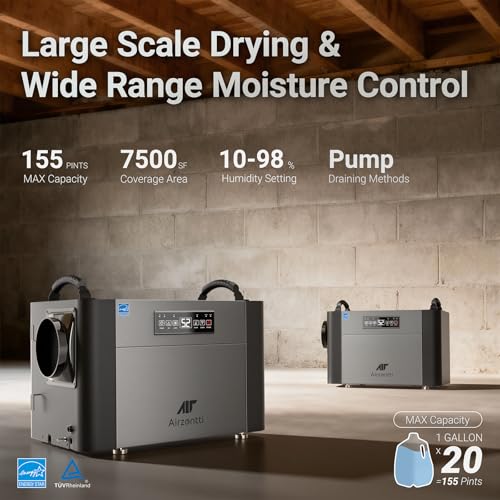
| Airzentti 155 Pint Commercial Dehumidifier | High capacity | Large, damp attic spaces | 155 pints; pump and drain; Energy Star listed | Amazon |
| ALORAIR Helios MP35 70-Pint Dehumidifier | Commercial | Moderate moisture with pump drainage | 70 pints; pump | Amazon |
| 125-Pint Crawl Space Dehumidifier | High capacity | Large areas needing broad coverage | 125 pints; pump and drain; listed up to 6,500 sq. ft. | Amazon |
| Airecoler 170-Pint Commercial Dehumidifier | Very high capacity | Very damp, large spaces | 170 pints; pump | Amazon |
| 70-Pint Crawl Space Dehumidifier | Mid capacity | Smaller spaces with a pump drain | 70 pints; pump and drain; listed up to 4,000 sq. ft. | Amazon |
In-Depth Reviews for best dehumidifier for attic space
1.
Airzentti 155-Pint Commercial Dehumidifier
 Check Price on Amazon
The Airzentti is listed as a 155-pint commercial dehumidifier with a pump and drain. Its high stated capacity may suit a large or very damp attic that needs more moisture removal than a small home unit can offer. The listing also identifies it as Energy Star, a useful detail for shoppers comparing long-run energy use.
A built-in pump can help move collected water toward a suitable drain, which may reduce trips to an attic tank. Check the hose route, outlet, and setup instructions before placing it. This model may suit homeowners managing a large, damp space, but its actual fit depends on attic conditions and the maker’s rating details.
A planned drain route can make routine care simpler. Confirm that the unit sits level and has safe clearance, then check filters and hoses as the manual directs. Its listed capacity and pump offer strong value for large spaces, provided the size and power needs fit your attic.
Why It’s Great
- Listed 155-pint capacity suits large moisture-control jobs.
- Pump and drain features can reduce tank-emptying trips.
- Energy Star designation is stated in the product title.
- Commercial-style capacity may help in a persistently damp attic.
- A good choice when a remote drain route is available.
Good to Know
- The listing does not provide enough detail here to confirm its rating conditions or operating range.
- A high-capacity commercial unit may be more than a small or mildly damp attic needs.
- Plan space, safe power, and a proper drain route before installation.
2.
ALORAIR Helios MP35 70-Pint Dehumidifier
 Check Price on Amazon
The ALORAIR Helios MP35 is listed as a 70-pint crawl space and commercial dehumidifier with a pump. That stated capacity is below the largest models in this guide, which may make it worth considering for a more moderate attic moisture load. Its pump feature helps distinguish it from units that rely only on a tank.
The crawl-space and commercial label suggests a design aimed at utility areas rather than living rooms. Before choosing it for an attic, compare its dimensions, power needs, operating range, and drain instructions with your space. It may suit owners who want pump-assisted drainage without stepping up to the highest listed capacity.
Check the pump hose and any filter or service steps on a regular schedule. Its stated 70-pint capacity and pump offer a useful balance for a moderate moisture problem. Value depends on the attic’s size and conditions, so verify the maker’s details before buying.
Why It’s Great
- Listed 70-pint capacity offers a middle ground among these models.
- Pump feature can help with remote water disposal.
- Commercial and crawl-space use is stated in the product name.
- May suit a moderate moisture load better than an oversized unit.
- Useful option when pump drainage is a priority.
Good to Know
- The provided title does not state a square-foot coverage figure.
- Confirm the operating temperature range before placing it in an attic.
- A 70-pint rating may not suit a very large or heavily damp space.
3.
125-Pint Dehumidifier for Up to 6,500 Sq. Ft.
 Check Price on Amazon
This crawl space dehumidifier is listed at 125 pints and includes a pump and drain hose. Its stated coverage reaches up to 6,500 square feet, which may interest owners with a broad attic or connected utility area. Treat that figure as a listing claim, not a promise for every home or climate.
The pump and hose can help move water away from a hard-to-reach space when the drain path is planned well. Measure the attic and check the hose length, placement needs, power supply, and operating limits before purchase. It may suit a large area that needs more capacity than a 70-pint model offers.
A hose-based drain can cut down on manual tank care, though it still needs checks for kinks and leaks. Review the build and service guidance in the product details before installation. The listed capacity and coverage may offer value when they match the real space.
Why It’s Great
- 125-pint capacity is higher than the two 70-pint options.
- Pump and drain hose are included in the product title.
- Listed coverage of up to 6,500 square feet is broad.
- May suit large spaces where manual tank emptying is inconvenient.
- A useful middle point between 70-pint and 155-plus-pint listings.
Good to Know
- The stated coverage is not a guarantee under all attic conditions.
- Confirm hose reach and the safe location of the drain.
- The title does not specify its operating range or energy rating.
4.
Airecoler 170-Pint Commercial Dehumidifier
 Check Price on Amazon
The Airecoler is listed as a 170-pint commercial dehumidifier with a pump for crawl spaces. Among the five supplied product titles, it has the highest stated pint capacity. That may appeal to buyers facing a very damp, large area, though pint ratings depend on the test conditions and should not be compared without checking details.
A pump may ease water removal when the attic is far from a floor drain or sink. The product title does not give a coverage figure, so measure your space and review the full listing before deciding. It may suit a demanding moisture problem where a high-capacity commercial unit is appropriate.
Keep the hose clear and inspect the drain for leaks as part of normal care. The high listed capacity and pump are appealing, but the unit’s size, power draw, and conditions of use need checking. Its value is strongest when the attic truly needs this level of capacity.
Why It’s Great
- Highest stated capacity among the supplied product titles.
- Pump feature may help with a remote drain setup.
- Commercial positioning suggests use beyond small rooms.
- May suit very damp areas that need substantial moisture removal.
- A possible fit when lower-capacity models are not enough.
Good to Know
- No square-foot coverage figure is provided in the product title.
- High stated capacity may be unnecessary for a small attic.
- Check power needs, operating range, and drain setup before purchase.
5.
70-Pint Dehumidifier for Up to 4,000 Sq. Ft.
 Check Price on Amazon
This crawl space dehumidifier is listed at up to 70 pints and up to 4,000 square feet. It also includes a pump and drain hose, according to the product title. Those figures make it a possible option for a moderate-size attic, but actual performance depends on humidity, temperature, and the maker’s rating conditions.
A pump and hose can be handy when an attic tank would be hard to reach. Check the hose route, unit dimensions, outlet needs, and the full coverage terms before placing an order. It may suit homeowners who want a listed coverage figure and pump drainage without choosing the biggest capacity here.
Routine care still matters: inspect the hose, drain point, and filter as the manual advises. Its stated capacity and pump may offer practical value for a moderate space. Make sure the coverage claim matches your conditions and that the attic has a safe setup.
Why It’s Great
- Listed capacity of up to 70 pints fits moderate moisture needs.
- Product title lists coverage up to 4,000 square feet.
- Pump and drain hose can reduce repeated tank-emptying trips.
- Smaller stated capacity than the high-output options may suit some homes.
- A practical choice when a pump and coverage claim are key needs.
Good to Know
- The 4,000-square-foot figure may not reflect a very hot or damp attic.
- The product title does not state its energy rating or operating range.
- Check drain hose reach and safe placement before installation.
Final Thoughts: The Verdict
My personal top pick is the Airzentti 155 Pint Commercial Dehumidifier. Its stated capacity, pump, drain, and Energy Star listing make it a strong fit for a large, damp attic when the setup and rating details check out. It stands out as a well-rounded choice for the best dehumidifier for attic space.
For a moderate moisture load, consider the ALORAIR Helios MP35 70-Pint Dehumidifier. The 125-pint model is another option for a larger area, while the 170-pint Airecoler suits buyers who need the highest listed capacity. Check attic temperature, drain access, and the full rating details, then choose the best dehumidifier for attic space that fits your needs and budget.
1 thought on “Best Dehumidifier For Attic Space: Find The Right Fit”
Comments are closed.