
An attic dehumidifier removes excess moisture that can feed musty odors, damp insulation, and mold growth. It can help homeowners, landlords, and property managers who struggle with a humid attic or roof space. The best attic dehumidifier fits the area, drains well, and can handle its temperature.
A small tank that fills too fast can turn moisture control into a daily chore. A weak unit may run for hours without making a clear difference, while a model that is too large can waste space and energy. Attics add another challenge: heat, cold, dust, and limited access can affect how a unit works. Choosing by a big coverage number alone is an easy mistake. The right fit can mean steadier humidity and less worry; the wrong one can leave you with noise, spills, or damp air.
I compare dehumidifiers by their listed capacity, drain options, controls, and stated coverage, then consider how those features may fit attic use. I also flag details buyers should verify, such as operating temperature and safe placement, because attic conditions vary. This guide prioritizes practical moisture control, easier upkeep, and a sensible match for your space and budget.
What you’ll learn
- How to match moisture capacity to your attic and humidity level
- Why continuous drainage can make upkeep easier
- Which listed features may suit cold or quiet spaces
- What to check before placing a dehumidifier in an attic
In This Article
How To Choose The Best best attic dehumidifier
The best attic dehumidifier is not always the one with the biggest capacity or the most features. Attics can be hot, cold, dusty, and hard to reach, so a poor match may struggle or need constant attention. Check the stated capacity, room coverage, drain setup, and operating temperature before buying. A small tank can become a chore, while a large unit may not suit a tight space. Also confirm the unit can be placed safely near a proper outlet and drain.
Match Capacity to Attic Size
Capacity and coverage help you narrow the options, but they do not promise the same results in every attic. Humidity, air leaks, insulation, and temperature all affect performance. A large, damp attic may call for a higher-capacity model, while a smaller area may need less. Avoid choosing only by the largest square-foot figure; check the product details and measure your space first. If the attic is split into enclosed sections, one unit may not reach every area. For a persistently wet attic, look for the source of moisture as well as a dehumidifier.
Plan for Drainage and Upkeep
A dehumidifier collects water, so think about where that water will go before you set up the unit. A pump or drain hose can reduce the need to empty a tank, especially if the attic is difficult to access. Check whether the hose and outlet can reach a safe drainage point, and follow the product instructions. Do not assume a hose is included unless the listing says so. A tank may work for occasional use, but it needs regular checks. The best attic dehumidifier is one you can maintain without risking a leak or missed overflow.
Check Temperature, Noise, and Placement
Attic temperatures can change with the season, and not every dehumidifier is made to run in every condition. Review the operating temperature range in the manual before choosing a model. A desiccant design may be worth considering for colder spaces, but confirm its limits and energy use. If people use the attic as a room, noise matters too; a listed quiet rating can help with comparison. Leave room for airflow, keep the unit level, and use a suitable outlet. Never place it where a leak could damage wiring or stored items.
Quick Comparison
| Model | Category | Best For | Key Spec | Amazon |
|---|---|---|---|---|
| Airzentti 155 Pint Commercial | High capacity | Large moisture loads and planned drainage | 155 pints; pump and drain | Amazon |
| AEOCKY 50 Pint Quiet | Quiet pick | Spaces where lower noise matters | 50 pints; 3,500 sq. ft.; 40 dB | Amazon |
| AEOCKY Rotary Desiccant | Cold-space option | Buyers considering desiccant operation | 2,000 sq. ft.; humidistat; never-frost claim | Amazon |
| Frigidaire 50 Pint Wi-Fi | Connected pick | Remote monitoring and control | 50 pints; Wi-Fi | Amazon |
| Waykar 80 Pint | Large-area pick | Large areas needing higher capacity | 80 pints; 5,000 sq. ft.; Energy Star | Amazon |
In-Depth Reviews for best attic dehumidifier
1.
Airzentti 155 Pint Commercial Dehumidifier
 Check Price on Amazon
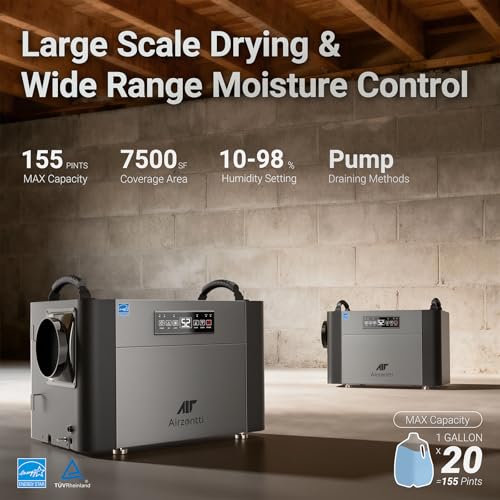
The Airzentti is a high-capacity commercial dehumidifier listed at 155 pints, with a pump and drain. That combination stands out for spaces with heavy moisture and a suitable place to send collected water. Its Energy Star label is another listed feature to weigh. For a large attic, confirm that its capacity and operating range match your actual conditions.
A pump can help move water to a drain, which may reduce tank-emptying trips in a hard-to-reach attic. This unit is best suited to buyers with a large, damp area and room for commercial equipment. Check the manual for setup, outlet needs, and temperature limits before use. The attic should also have enough clear space for airflow and service access.
The drain setup may ease routine water handling, but the unit still needs regular checks and a clean air path. Its commercial size may be more than a small attic needs. Compare purchase cost, power needs, and the moisture problem before deciding whether its higher capacity offers useful value.
Why It’s Great
- High listed capacity may suit large moisture loads.
- Pump and drain can help reduce manual tank emptying.
- Energy Star is a useful efficiency detail to compare.
- Commercial positioning may fit demanding spaces.
- A strong option when a smaller unit cannot keep up.
Good to Know
- Its commercial size may be awkward in a cramped attic.
- Verify operating temperature and power needs before installation.
- The 155-pint rating does not guarantee the same output in every attic.
2.
AEOCKY 50 Pint Quiet Dehumidifier
 Check Price on Amazon
This AEOCKY model is listed at 50 pints per day, with coverage up to 3,500 square feet and a 40 dB noise rating. A drain hose is part of its listed setup. Those details make it a useful option to compare when seeking the best attic dehumidifier for a moderate space. Check its temperature range before placing it in an attic.
The listed noise rating may appeal to buyers who use nearby rooms or want a less intrusive appliance. A drain hose can also help when the unit sits near a suitable drain, though you should confirm what comes in the box. This model may suit a medium-sized attic with steady moisture, provided its operating limits match local conditions.
A hose-based drain can cut down on bucket handling, but the connection still needs checks for secure flow. The listed coverage and noise level offer clear comparison points. Confirm the manual, warranty, and upkeep needs to judge its value for your attic.
Why It’s Great
- Listed 50-pint capacity suits many moderate moisture needs.
- 40 dB rating is a helpful noise comparison point.
- Drain hose setup may simplify continuous water removal.
- Listed coverage reaches up to 3,500 square feet.
- Balances capacity and quiet operation on paper.
Good to Know
- Actual results depend on attic temperature, humidity, and airflow.
- Check hose placement and drainage before leaving it unattended.
- Confirm the operating temperature range in the manual.
3.
AEOCKY Rotary Desiccant Dehumidifier
 Check Price on Amazon
This AEOCKY unit uses a rotary desiccant design and lists coverage up to 2,000 square feet. It also has a humidistat and a never-frost claim, features that may interest buyers comparing options for cooler spaces. Attic conditions can shift widely, so review the stated operating range and manual before treating it as the best attic dehumidifier for your home.
A humidistat can help users set a target level rather than guess when to run the unit. The desiccant design may be worth considering where temperatures are low, but check its power use and limits against your needs. It may suit a smaller attic or another cool space, if the product instructions allow that placement.
The controls may support more measured use, while the desiccant system differs from common compressor models. Check any filter or maintenance steps in the manual and keep the air path clear. Its value depends on attic temperature, area, and the cost of ongoing operation.
Why It’s Great
- Rotary desiccant design offers an alternative to compressor units.
- Humidistat supports setting a moisture target.
- Listed coverage is up to 2,000 square feet.
- Never-frost claim may interest buyers with cool spaces.
- Useful model to compare for temperature-sensitive locations.
Good to Know
- Verify the temperature range and never-frost claim in the manual.
- Desiccant units can use power differently from compressor models.
- Its listed coverage may not fit a large attic.
4.
Frigidaire 50 Pint Wi-Fi Dehumidifier
 Check Price on Amazon
This Frigidaire dehumidifier is listed with a 50-pint capacity and Wi-Fi. Connected control may appeal to owners who want to check or adjust a unit without walking into the attic. Before choosing it as the best attic dehumidifier, check the product page and manual for coverage, drainage details, and approved operating temperatures for your space.
Wi-Fi can add convenience when the unit is in a hard-to-reach area, though the connection depends on a reliable network and compatible controls. This model may suit a homeowner who values remote access and needs moderate moisture removal. Confirm that the attic has a safe outlet and enough room for airflow, service, and water handling.
Remote features may make routine checks easier, but they do not replace physical inspection of the unit and drain. Look over the setup steps and maintenance needs before buying. Its value will depend on how much you will use Wi-Fi and whether its capacity fits your attic.
Why It’s Great
- Wi-Fi can add convenience for a hard-to-reach unit.
- Listed 50-pint capacity offers a clear comparison point.
- May suit users who prefer connected home controls.
- Remote access may help with routine status checks.
- Frigidaire is a familiar appliance brand for many shoppers.
Good to Know
- Wi-Fi needs a reliable network and compatible setup.
- Confirm coverage and drain options in the listing.
- Remote monitoring does not replace regular physical checks.
5.
Waykar 80 Pint Energy Star Dehumidifier
 Check Price on Amazon
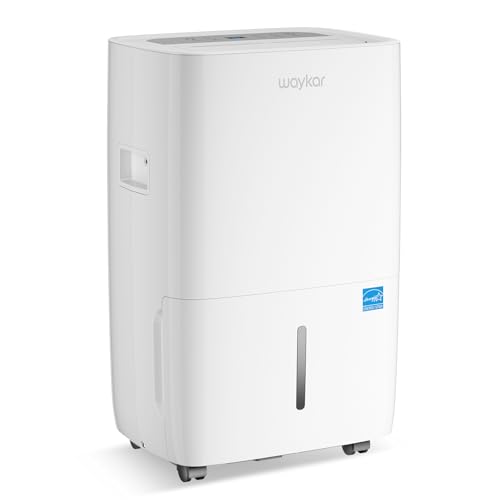
The Waykar is listed as an 80-pint dehumidifier for spaces up to 5,000 square feet, with an Energy Star label. Those figures make it worth comparing for a large area with notable moisture. Its listing describes it for a basement, so check the manual for attic use, temperature limits, drainage, and safe placement before making it your best attic dehumidifier.
A higher listed capacity may help when a smaller model is not enough, while the broad coverage figure offers a starting point for sizing. This unit may suit owners of large spaces who can provide proper clearance and drainage. Attics vary, so do not assume the listed square footage guarantees performance in a hot or cold roof space.
The Energy Star label is a helpful point for comparing products, but installation and operating costs still matter. Review filter care, tank or hose needs, and the manual before use. This model may offer value for large areas when its conditions and upkeep suit your attic.
Why It’s Great
- Listed 80-pint capacity suits larger moisture loads.
- Coverage is listed up to 5,000 square feet.
- Energy Star label is useful for product comparison.
- May suit owners who need more capacity than a 50-pint unit.
- A broad-area option for reviewing attic moisture needs.
Good to Know
- The listing describes basement use, so verify attic suitability.
- Check the temperature range before using it in a roof space.
- Large coverage figures do not account for every attic layout.
Final Thoughts: The Verdict
My personal top pick is the Airzentti 155 Pint Commercial Dehumidifier for large, damp spaces where its high listed capacity and pump may help. Check attic temperature limits and placement first. It is my leading best attic dehumidifier option when the space can handle commercial equipment and has safe drainage.
For a quieter, moderate-capacity alternative, consider the AEOCKY 50 Pint Quiet Dehumidifier. The desiccant AEOCKY may suit shoppers considering cooler spaces, while Frigidaire adds Wi-Fi and Waykar offers higher listed capacity. Compare temperature range, drainage, and space before buying. Choose the model that fits your attic and budget.
2 thoughts on “Best Attic Dehumidifier: Find The Right Fit”
Comments are closed.