
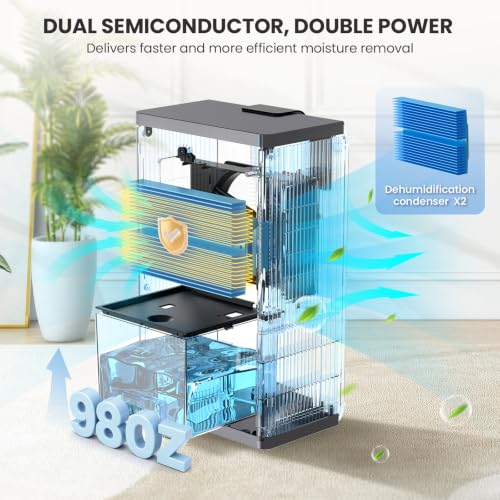
A basement dehumidifier pulls extra moisture from the air to help keep rooms more comfortable and reduce damp smells. It can suit homeowners, renters, and anyone storing items below ground. People buy the best affordable basement dehumidifier to manage humidity without paying for a large, costly system.
A low-cost unit can look like a win until its small tank fills again and again, or it barely changes the feel of a damp basement. A common mistake is trusting a large square-foot claim without checking the moisture-removal rate and room conditions. A compact model may help a bathroom or small room, but it can struggle in a cool, wet basement. The right choice can save time and help protect stored belongings; the wrong one can leave you emptying a tank while the musty smell stays.
I focus on practical home comfort and compare dehumidifiers by their stated capacity, tank size, controls, and intended room size. I reviewed the supplied product details and separated compact units from higher-capacity basement models, since they serve different needs. This guide prioritizes clear trade-offs, useful features, and realistic expectations so you can find the best affordable basement dehumidifier for your space.
What you’ll learn
- How to match moisture capacity to your basement and its dampness.
- Which listed models are compact room units and which are built for larger spaces.
- Why a drain option, tank size, and auto shutoff matter in daily use.
- How to compare value without relying on room-size claims alone.
In This Article
How To Choose The Best best affordable basement dehumidifier
The right dehumidifier should match the amount of moisture in your basement, not just its advertised room size. A small tank may mean frequent trips to empty it, while a weak unit can run for hours with little change. Some listings use broad coverage claims that do not tell the whole story. Before you buy the best affordable basement dehumidifier, check its stated moisture capacity, tank or drain setup, and intended use. Also consider how cool the room gets, since conditions can affect performance.
Match Capacity to Basement Dampness
Capacity matters more than a large square-foot number alone. Check how much water the dehumidifier is rated to remove and the conditions used for that rating. A compact 95- or 98-ounce tank unit may fit a small room or a mild moisture problem, but it is not the same as an 80-pint basement model. Very damp, large spaces usually need a higher-capacity compressor unit. Avoid choosing by coverage claims alone; pick a model that fits both the room and the level of moisture you face.
Plan for Tank Emptying and Drainage
A dehumidifier only helps while it can keep collecting water. A small tank may need frequent emptying in a damp basement, so consider tank size and whether the model supports continuous drainage before buying. Auto shutoff is useful because it can stop collection when the tank is full and help prevent overflow. Check the product details for the drain setup and any parts needed; do not assume a hose is included. For a space that needs constant moisture control, a drain-ready model can be easier to live with.
Consider Room Temperature, Noise, and Controls
Basements can be cool, and low temperatures may affect how well some dehumidifiers work. Read the listed operating guidance and choose a model suited to your room conditions. If the unit will sit near a bedroom or living area, noise and simple controls matter too. A humidity display can help you track changes, while auto shutoff reduces the need for constant checks. Compact units may suit small spaces, but larger damp basements often call for a more capable model. Compare the features you will use, not just the price.
Quick Comparison
| Model | Category | Best For | Key Spec | Amazon |
|---|---|---|---|---|
| PSOS 98 oz Dehumidifier | Compact | Small rooms and mild dampness | 98 oz tank; listed for 1,000 sq. ft. | Amazon |
| 95 oz Dehumidifier, Black | Compact | Bedrooms and small spaces | 95 oz tank; seven-color light | Amazon |
| KNKA 80-Pint Dehumidifier | High Capacity | Large, damp basements | Up to 80 pints per day; listed for 5,500 sq. ft. | Amazon |
| 2026upgraded 80-Pint Dehumidifier | High Capacity | Basements needing higher capacity | 80-pint claim; energy-star wording in title | Amazon |
| Waykar 80-Pint Dehumidifier | High Capacity | Large basement moisture control | 80 pints; listed for 5,000 sq. ft. | Amazon |
In-Depth Reviews for best affordable basement dehumidifier
1.
PSOS 98 oz Compact Dehumidifier
 Check Price on Amazon
The PSOS dehumidifier has a 98-ounce water tank, a humidity display, and auto shutoff. Its listing says it is suited to spaces up to 1,000 square feet, though room size alone cannot predict results. The seven-color ambient light adds a decorative touch. This compact unit may suit mild moisture in a small basement room.
Its controls and humidity display make basic monitoring simple, while the auto shutoff can stop the unit when its tank is full. The product is described as quiet and is also aimed at bathrooms and bedrooms. It may suit someone who wants a small, simple unit for a modest space, rather than a primary fix for a very damp basement.
The tank needs regular emptying, and the listed details do not confirm continuous drainage. Its compact format may be easy to place, but it is not a substitute for a high-capacity basement model. Consider it for light moisture, and compare its price with the results you need.
Why It’s Great
- A 98-ounce tank holds more than the other compact option listed here.
- Humidity display helps you check room conditions.
- Auto shutoff can stop operation when the tank is full.
- Seven-color ambient light offers a decorative feature.
- Compact design suits small rooms with mild dampness.
Good to Know
- The 1,000-square-foot claim does not state the moisture conditions behind that coverage.
- Tank emptying may be frequent in a damp basement.
- The listing does not establish that it can handle heavy basement moisture like an 80-pint unit.
2.
95 oz Compact Dehumidifier in Black
 Check Price on Amazon
This black compact dehumidifier has a 95-ounce tank, auto shutoff, and a seven-color ambient light. The listing describes it as quiet and suitable for a living room, bedroom, or basement. Those features make it a possible fit for mild moisture in a small area. Its listed details do not provide a pint-per-day removal rate.
The small footprint and simple feature set may work well in a bedroom or other room where space matters. Auto shutoff helps limit overflow when the tank fills, and the ambient light can add a soft glow. It is best suited to users who need a compact helper, not those facing persistent, heavy basement dampness.
A 95-ounce tank needs periodic emptying, especially when moisture is high. The supplied details do not confirm a continuous drain connection or long-term build materials. It may offer useful value for a small room, but compare its price with a larger unit if your basement is wet.
Why It’s Great
- A 95-ounce tank provides a clear collection capacity.
- Auto shutoff can reduce the risk of an overflowing tank.
- Quiet operation is a listed feature for shared living spaces.
- Seven-color ambient light adds a decorative option.
- Compact size may fit bedrooms and small basement areas.
Good to Know
- The product details do not state a pint-per-day removal rate.
- A 95-ounce tank may need frequent emptying during damp weather.
- It may be too small for a large or persistently wet basement.
3.
KNKA 80-Pint Basement Dehumidifier
 Check Price on Amazon
The KNKA is listed as an Energy Star dehumidifier for spaces up to 5,500 square feet, with a maximum removal claim of 80 pints per day. That makes it a more suitable category for a large, damp basement than compact tank models. Check the listing and rating conditions before comparing its capacity with other units.
This larger model is aimed at people who need more moisture removal across a wide area. It may be a better match for a basement that stays damp than a small room unit, though its size and setup deserve planning. Review the controls, tank handling, and drainage details on the product page before purchase.
A higher-capacity dehumidifier can reduce repeated tank trips if its setup supports your needs, but the listed product details here do not confirm drainage parts or build materials. Check those points before buying. It may offer stronger basement value than a compact model when the space is truly large.
Why It’s Great
- The listing states a maximum capacity of 80 pints per day.
- Its stated 5,500-square-foot coverage targets large spaces.
- A higher-capacity class is more appropriate for many damp basements.
- The title includes Energy Star wording for buyers to verify.
- It offers a clear alternative to small tank-style units.
Good to Know
- The maximum pint claim depends on test conditions and may not match everyday output.
- Verify current Energy Star certification and model details before purchase.
- The supplied details do not confirm tank size, drain setup, or operating noise.
4.
2026upgraded 80-Pint Dehumidifier
 Check Price on Amazon
This listing describes a 2026-upgraded 80-pint dehumidifier for basements and includes Energy Star wording in its title. The stated 80-pint capacity puts it in a higher-capacity class than the compact units in this guide. Since the supplied details do not give a coverage figure, check the current listing for rated conditions and room guidance.
An 80-pint claim may appeal to owners of damp basements who need more removal than a small tank unit can offer. Before choosing it, check how the controls work, how water is collected, and whether a drain hose or other parts are included. It is best suited to buyers who confirm the setup fits their room.
The available details do not confirm tank size, noise, or construction materials, so inspect the full listing before purchase. A higher-capacity model can be better value for a wet basement, but only if its features fit your space. Verify energy claims and warranty terms before deciding.
Why It’s Great
- The listing gives an 80-pint capacity claim.
- It is marketed for basement use rather than only small rooms.
- Higher stated capacity may suit persistent moisture better than compact units.
- Energy Star wording may interest buyers focused on energy use.
- It provides another high-capacity option to compare by price and features.
Good to Know
- The supplied product details do not state a coverage area.
- Verify Energy Star certification rather than relying on title wording alone.
- Tank capacity, drain setup, noise, and warranty need confirmation.
5.
Waykar 80-Pint Dehumidifier
 Check Price on Amazon
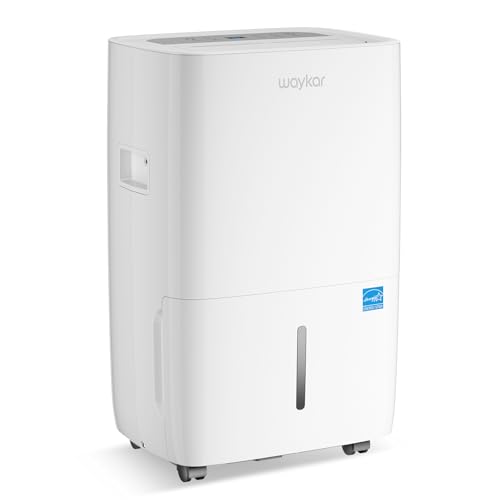
The Waykar listing states an 80-pint capacity and coverage of up to 5,000 square feet. It is described as a 2025 Energy Star dehumidifier for basements. These claims place it among the larger options here, though actual moisture removal can change with room temperature and humidity. Review the current product details before purchase.
This model may suit homeowners who need to manage moisture across a large basement, rather than a single small room. Its higher-capacity class makes it a more practical starting point for persistent dampness. Check the control layout, tank handling, and drainage instructions in the listing to see whether daily use fits your routine.
The product details supplied do not confirm tank size, included drain parts, or noise level, so verify those points first. If its listed capacity and coverage match your needs, it may offer stronger value than a compact unit. Compare warranty and current price before making your choice.
Why It’s Great
- The listing states an 80-pint capacity for higher moisture needs.
- Its stated coverage reaches up to 5,000 square feet.
- It is marketed for basement use.
- A larger-capacity format may reduce reliance on small room units.
- It gives buyers a specific option to compare with other 80-pint models.
Good to Know
- Actual removal can vary from the maximum claim with room conditions.
- Verify the Energy Star status and rating for the exact model.
- Confirm tank size, drain method, noise, and warranty in the current listing.
Final Thoughts: The Verdict
My personal top pick is the Waykar 80-Pint Dehumidifier for a large, damp basement. Its stated 80-pint capacity and 5,000-square-foot coverage make it a stronger fit than compact tank units. It stands out as my best affordable basement dehumidifier choice when higher moisture removal matters. Check its current listing for drainage, noise, and warranty details before you buy.
For another large-space option, consider the KNKA 80-Pint Dehumidifier, listed for up to 5,500 square feet. For mild dampness in a small room, the PSOS may be a better fit. Compare room conditions, capacity, and upkeep, then choose the model that suits your needs and budget.
2 thoughts on “Best Affordable Basement Dehumidifier: A Budget Buying Guide”
Comments are closed.