
A 100% plastic-free coffee maker has no plastic in its body, brewing parts, seals, or electrical housing.
Steel, glass, or ceramic can still hide a plastic ring, cord, or filter frame. This guide explains what a 100 plastic-free coffee maker means, how to check its parts, and how to balance quality, safety, and cost. Here, “100 plastic-free coffee maker” means a fully plastic-free design, not a list of 100 models. Read on for a practical buying and care plan.
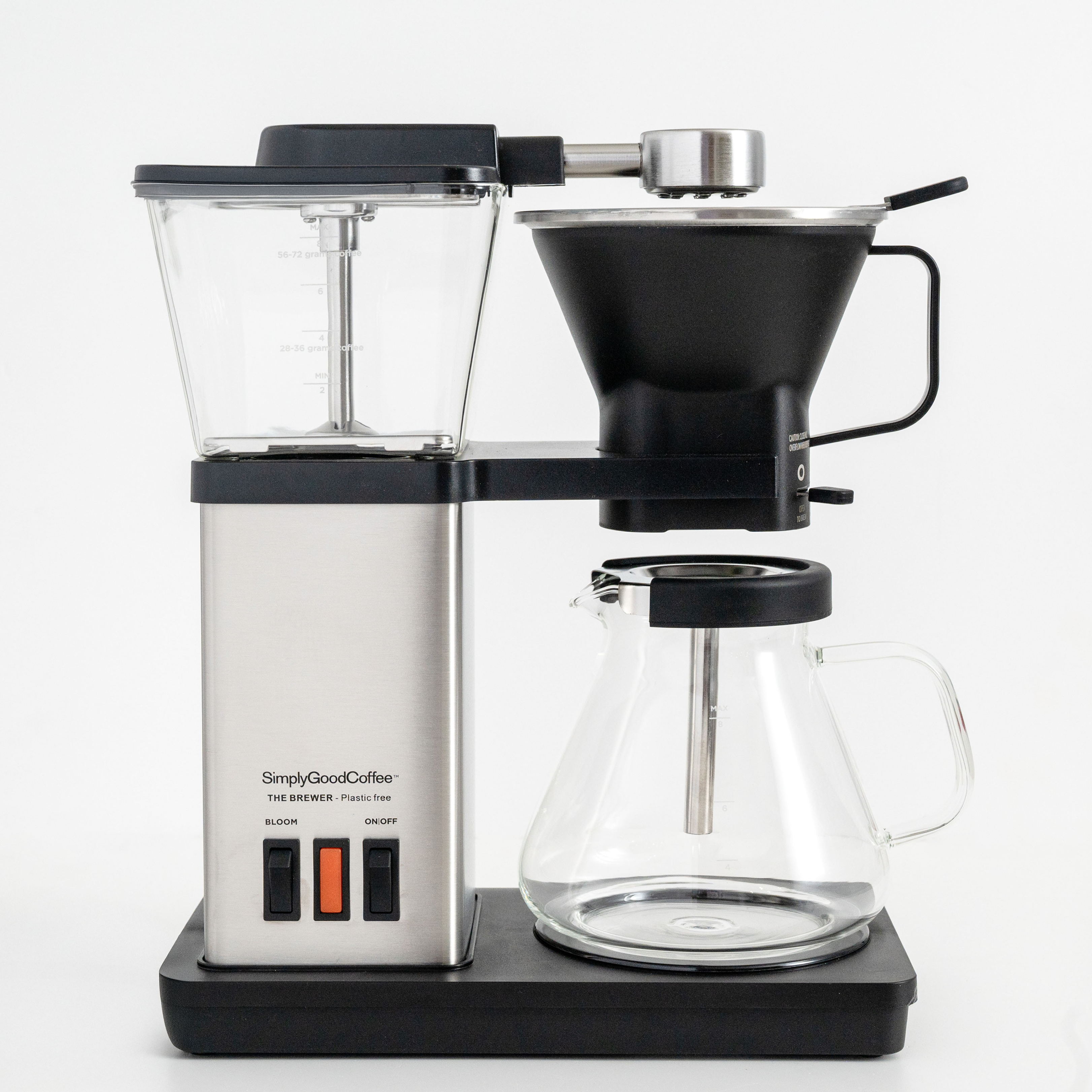
What a 100 Plastic-Free Coffee Maker Really Means
A 100 plastic-free coffee maker should have a clear, product-wide material claim. “Plastic-free” cannot mean that only the carafe or outside body contains no plastic. Hidden parts still count, especially those that touch hot water, coffee, or grounds.
There is no single worldwide test for a fully plastic-free home coffee maker. The U.S. Federal Trade Commission’s Green Guides do not provide a complete test for this type of appliance. That leaves the seller responsible for explaining the claim and supporting it with specific information.
“BPA-free” is also not the same as “plastic-free.” It addresses one chemical concern, not the presence of all plastic materials.
Choose the scope of the claim
A plastic-free claim can cover different boundaries. Ask which parts the seller includes.
- Whole product: The machine, housing, cord, feet, seals, controls, and brewing parts contain no plastic.
- Coffee-contact path: The carafe, filter, tubing, heating chamber, gaskets, and water reservoir contain no plastic.
- Included bundle: The check also covers supplied accessories, such as a measuring scoop or filter.
This guide focuses on the whole product. A seller can use a narrower scope, but it should say so clearly.
Where hidden plastics often appear
The main challenge is finding the parts that rarely appear in product photos. Check the lid, filter frame, steam wand, water hose, gasket, handle fasteners, switch, cord, and base feet.
A thin plastic liner can also sit inside an otherwise metal brewer. Silicone tubing and nylon fittings may look minor, but they break a full plastic-free claim.
Natural does not always mean plastic-free. Bio-based plastic, recycled plastic, and compostable bioplastic still contain plastic. Some compostable items also need industrial composting rather than a home compost bin.
A real-life example is the stainless travel mug with a plastic lid. Its metal body does not make the full mug plastic-free. The same rule applies to coffee makers.

Best Materials for a Truly Plastic-Free Coffee Maker
A strong material mix starts with glass, metal, and carefully checked natural components. Avoid any unknown resin, coating, or adhesive.
| Part | Strong options | Points to check |
|---|---|---|
| Carafe | Borosilicate glass or soda-lime glass | Follow heat limits. Temperature changes can crack glass. |
| Brew body | 304 stainless steel or verified ceramic | Check liners, handles, welds, and fasteners. |
| Filter | Stainless steel mesh or suitable paper | Paper may contain coatings or other additives. |
| Handle | Steel, ceramic, or untreated wood | Wood may have varnish, lacquer, or glue. |
| Lid | Steel, glass, or ceramic | Check any gasket, knob, or steam vent. |
| Seals | approved natural rubber, if you accept it | Natural rubber is not a universal zero-plastic standard. |
| Base | Steel, glass, or ceramic | Check switches, feet, cords, and electrical parts. |
Borosilicate glass contains boron and offers strong resistance to thermal shock. It is a common choice for laboratory glass, coffee brewers, and kitchen vessels. Soda-lime glass is widely used for ordinary pitchers, but its heat limits still matter.
Stainless steel has no need for a plastic inner coating. Common grades include 304 stainless and 18/8 stainless. The grade alone does not prove quality, though. Check the thickness, joints, and surface finish.
Ceramic is another useful option when its glaze has no plastic-based binder. Fired ceramic glazes often use metal compounds, but a supplier should confirm the full formulation.
For handles, untreated wood or cork may work. Hidden adhesives and finishes matter. Ask whether the handle contains varnish, lacquer, polyurethane, or plastic resin.
A simple plastic-free design
Picture a stainless drip brewer with a borosilicate carafe, a metal filter, and a steel handle. If its lid, pump hose, cord, and feet also contain no polymers, it can support a strict claim.
A glass French press with a steel mesh filter and an all-metal top is another possible design. Real models may replace one of these parts with plastic.
That small replacement can change the entire result. Review each component rather than judging the maker by its most visible material.

Why Choose One?
The case for a 100 plastic-free coffee maker begins with material clarity. You can often identify the main parts and understand what touches your coffee.
Potential benefits
- A simpler material mix: Steel, glass, and ceramic can be easier to assess than a mixture of many polymers.
- Fewer disposable filters: A metal mesh filter can replace many paper filters in a French press or pour-over setup.
- More durable options: A well-built metal brewer can last for years with basic care.
- Better control: A clear material list helps you avoid coatings and parts you do not want.
- Easier replacement planning: Parts without plastic may be easier to identify when ordering spares.
These are possible benefits, not guarantees. Steel can scratch, glass can chip, and a thin handle can break. The maker’s design and build quality still matter.
Health claims need careful wording
Plastic-free does not automatically mean safer for everyone. A food-contact material should be evaluated for its composition, temperature, and intended use.
A 2022 U.S. FDA review of 324 food-contact substances reported that 87% could contain more than 1,000 chemicals. It also said many listed uses had not been fully evaluated.
That broad finding does not prove that a particular coffee maker is unsafe or that it releases those substances. It shows why vague labels deserve careful checks. Look for specific food-contact information and follow the maker’s heating and cleaning instructions.
Environmental benefits have limits
Less plastic is only one part of a product’s footprint. Metal mining, glass production, shipping, electricity, packaging, and water use all matter.
European Union rules restrict certain single-use plastics and intentionally added microplastics. They do not ban every plastic used in home coffee makers.
A small stovetop brewer may suit a lower-energy routine if you already have a suitable stove. An electric brewer offers convenience but uses electricity for heating and sometimes warming.
The strongest approach is usually practical. Buy a durable design you need, use it often, and keep it for years. Do not replace a working brewer simply because a new product has a greener-looking box.
Repairs can involve a tradeoff
A part designed for easy replacement may contain plastic. A manufacturer may also stop selling replacement gaskets or handles after a few years.
My rule is simple: I would not count a model as fully verified without a complete material list. I would also avoid a product whose seller cannot explain the entire machine.

How to Shop Without Trusting Vague Labels
A shiny