
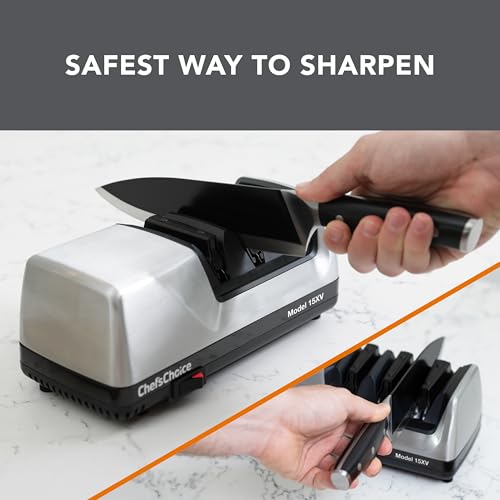
The best automatic knife sharpener is Chef’sChoice 15XV for fast, precise, and repeatable kitchen knife sharpening.
A dull knife makes simple prep feel slow and unsafe. I have seen cooks press hard, saw through food, and damage a good blade because the edge needs care. An electric knife sharpener can fix that problem in minutes, but not every model treats knives gently. The right choice should guide the blade well, sharpen at a steady angle, remove little metal, and suit your knife type. I compared five popular models by design, sharpening stages, ease of use, blade support, and value.
See the differences between my top picks at a glance.
| Sharpener | Stages | Best For | Key Feature | Knife Support | Value |
|---|---|---|---|---|---|
| Chef’sChoice 15XV | 3 | Premium kitchen use | Diamond abrasives and angle guides | Straight and serrated knives | High |
| Narcissus | 2 | Quick home sharpening | Scissors slot and dust box | Kitchen knives and scissors | Good |
| Presto EverSharp | 2 | Simple daily use | Compact electric design | Common kitchen knives | Good |
| TER Professional | 3 | Multi-stage sharpening | Diamond sharpening system | Kitchen knife use | Good |
| Leifod 3-Stage | 3 | Budget angle-guided use | 15-degree guide | Selected kitchen knives | Good |
Chef’sChoice 15XV Electric Knife Sharpener
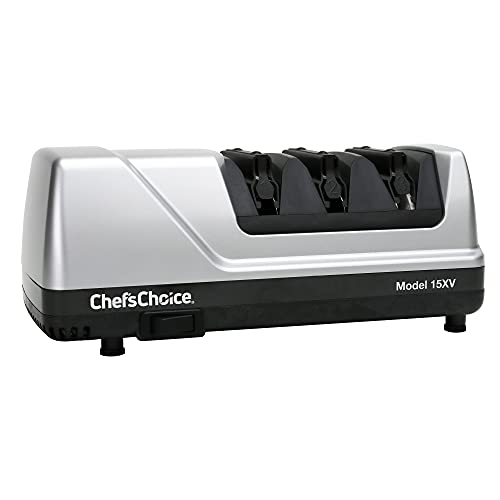
The Chef’sChoice 15XV EdgeSelect is the most complete sharpener in this group. It uses a three-stage process to shape, sharpen, and polish a knife edge. Its diamond abrasives and built-in angle guides help keep the blade steady during each pass. The design supports both straight-edge and serrated knives, which makes it useful for a mixed kitchen.
This model suits people who want more control than a basic two-stage sharpener can offer. The final stage helps create a smooth edge that feels clean when cutting paper, herbs, meat, and vegetables. It also works well for restoring a knife that has lost its shape, but I would still use light pressure and follow the product instructions. Its larger design costs more than simple electric sharpeners, yet the extra control can justify the price for serious home cooks.
Pros:
- Three-stage sharpening process
- Diamond abrasives for shaping and sharpening
- Built-in guides help maintain a steady angle
- Works with straight-edge and serrated knives
- Useful for both repair and routine edge care
- Produces a polished cutting edge in the final stage
- Strong choice for cooks with several knife types
Cons:
- Costs more than basic electric sharpeners
- Takes more counter space than compact models
- Users must still avoid pushing the blade down hard
What Amazon Buyers Are Saying
Amazon buyers often praise the clear guides, fast results, and strong improvement on dull kitchen knives. Many users like that the machine can handle more than one type of blade. Buyers also value the three-stage process because it feels more controlled than a single-slot sharpener. Some reviewers report that the machine restored knives they had nearly stopped using.
The main complaints tend to focus on price, size, and technique. A few buyers expect the machine to sharpen every knife with no learning curve, but correct passes and light pressure still matter. Some users also note that the sharpener can remove metal if they use it too often or press too hard. As with all Amazon review patterns, results can vary by knife steel, edge damage, and user method.
My Recommendation
I recommend the Chef’sChoice 15XV for cooks who want the best automatic knife sharpener with broad knife support and repeatable results. It is especially useful when a household owns quality chef’s knives, serrated knives, and older blades that need repair. It is not the cheapest option, but its guides and three-stage design offer strong long-term value. I would buy it for regular home use and careful knife maintenance.
| Category | Rating |
|---|---|
| Edge Control | 5/5 |
| Sharpening Performance | 5/5 |
| Knife Versatility | 4.5/5 |
| Ease of Use | 4.5/5 |
| Value for Money | 4.5/5 |
| Overall Rating | 4.7/5 |
Narcissus Two-Stage Electric Sharpener
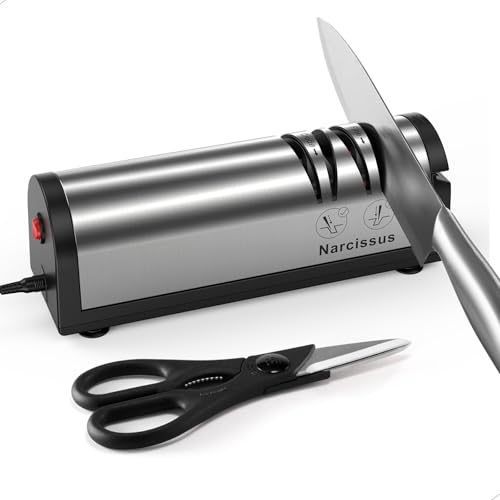
The Narcissus electric knife sharpener takes a simple two-stage approach. One stage focuses on sharpening, while the next helps polish the edge. It also includes a scissors slot and a metal dust collection box, so it offers more than a basic knife-only unit. The stainless steel and silver finish should look at home in many kitchens.
I see this model as a practical choice for people who want quick maintenance without a large machine. The dust box can help keep loose sharpening residue contained, although I would still wipe the unit after use. The scissors slot adds useful flexibility for homes that sharpen more than kitchen knives. Since it has two stages rather than three, it may suit routine touch-ups better than major edge repair.
Pros:
- Two-stage system is easy to understand
- Includes a dedicated scissors sharpening slot
- Metal dust collection box helps reduce loose debris
- Compact choice for many home kitchens
- Stainless steel exterior has a clean look
- Useful for routine knife maintenance
- Simple design can reduce setup time
Cons:
- Two stages provide less edge control than some three-stage models
- Knife and scissors compatibility should be checked before use
- May not suit heavily damaged or very high-end knives
What Amazon Buyers Are Saying
Amazon buyers commonly like the quick operation and the extra scissors slot. Several review patterns for this type of product center on convenience, especially for people who want a sharp edge without learning a manual stone or honing system. Users also tend to appreciate the collection box because it makes cleanup easier. The compact format appeals to buyers with limited counter space.
Some complaints relate to expectations and blade fit. A few users may find that certain knives do not sit comfortably in the guide or that the result depends on using the correct number of passes. Other buyers may want a finer final edge than a two-stage unit provides. I suggest reading the current listing details and checking your blade types before ordering, since fit and results can differ between knives.
My Recommendation
The Narcissus is worth considering if you want a reasonably simple electric sharpener with a scissors function. It is a better fit for everyday kitchen maintenance than for advanced knife restoration. The dust box and compact build add practical value. I would choose it for a budget-conscious home, but I would select the Chef’sChoice if edge precision and knife range matter more than price.
| Category | Rating |
|---|---|
| Routine Sharpening | 4/5 |
| Ease of Use | 4/5 |
| Extra Features | 4.5/5 |
| Knife Versatility | 3.5/5 |
| Value for Money | 4/5 |
| Overall Rating | 4/5 |
Presto EverSharp Electric Knife Sharpener
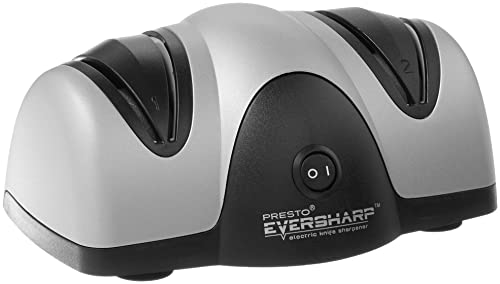
The Presto 08800 EverSharp is a compact two-stage electric knife sharpener made for basic home use. Its first stage sharpens the edge, and its second stage helps refine it. The small footprint makes it easy to store in a cabinet or leave on a kitchen counter. It is a familiar option for buyers who want an affordable automatic tool instead of a sharpening stone.
This sharpener works best when you use it for normal kitchen upkeep and follow a slow, steady motion. I would not treat it as a replacement for a professional service on a costly or badly damaged blade. It can offer a useful edge for common kitchen tasks when the knife fits the guide and the user avoids excess pressure. Its simple layout also makes it approachable for beginners who do not want many settings.
Pros:
- Compact size fits small kitchens
- Two-stage process is simple for beginners
- Designed for routine kitchen knife sharpening
- Usually costs less than advanced multi-stage models
- Easy to store when not in use
- Useful for restoring a mildly dull everyday knife
- Simple controls reduce the chance of a confusing setup
Cons:
- Limited compared with premium three-stage sharpeners
- May not provide the same control for specialty knives
- Users need to confirm the correct blade fit and angle
What Amazon Buyers Are Saying
Amazon buyers often mention the low price, small size, and ease of use. Many people buy it for common household knives and report that it improves cutting performance when used as directed. Buyers who want a fast solution also like that it does not require separate stones, oil, or angle practice. The product has remained popular because it addresses a basic need with a familiar format.
The less positive comments often involve the final edge, motor behavior, or difficulty with certain knives. Some users expect a near-professional finish from a budget two-stage machine, which may not match its intended role. Review experiences can also differ because knife steel and blade thickness vary widely. I would view it as a basic maintenance tool, not as a high-precision system for premium blades.
My Recommendation
The Presto EverSharp is a sensible buy for someone who wants a low-cost, compact electric sharpener for everyday knives. It offers a simple path to better cutting without a long learning period. I would recommend it for light to moderate home use and for buyers who value price. If you own expensive Japanese knives or need serrated knife support, check the specifications closely before buying.
| Category | Rating |
|---|---|
| Basic Edge Improvement | 4/5 |
| Ease of Use | 4/5 |
| Compact Design | 4.5/5 |
| Advanced Features | 3/5 |
| Budget Value | 4.5/5 |
| Overall Rating | 4/5 |
TER Professional 3-Stage Knife Sharpener

The TER Professional electric knife sharpener uses a three-stage diamond sharpening system. A staged process can help separate heavy sharpening from edge refining and polishing. The black body gives it a plain, modern look that should blend with most appliances. It targets home cooks who want more structure than a basic single-slot electric sharpener.
The main appeal here is the balance between multiple stages and a likely lower price than premium professional systems. I would use the rougher stage only when the knife needs real work, then use the finer stages for the final edge. That approach helps avoid unnecessary metal removal. Because listing details and long-term buyer data may change, I suggest checking the current Amazon page for supported blade types, angle information, and warranty terms before purchase.
Pros:
- Three-stage design supports a step-by-step process
- Diamond sharpening surfaces are suited to edge shaping
- Black finish looks simple and professional
- Separate stages can help with repair and polishing
- Useful option for cooks who want more than two stages
- May offer strong features at a moderate price
- Easy electric operation for regular home use
Cons:
- Current product details should be checked before buying
- Newer or less established models may have less long-term review history
- Incorrect pressure can still remove too much blade material
What Amazon Buyers Are Saying
For a product like the TER, buyers tend to focus on whether the three stages create a visible improvement and whether the unit feels easy to guide. Positive comments may center on fast sharpening, the staged layout, and the clean black design. Some users also like the idea of having a repair stage and a polishing stage in one machine. These are useful signs for buyers who want a fuller process at home.
Because customer feedback and listing information can change, I would not treat a small group of reviews as proof of long-term durability. Potential complaints may involve noise, blade fit, or confusion about which stage to use first. Buyers should also compare the current instructions with their knife types. A careful technique matters more than speed with any diamond electric sharpener.
My Recommendation
I would consider the TER Professional a promising choice for buyers who want a three-stage system without moving straight to the highest price tier. It makes the most sense for normal kitchen knives and users willing to read the instructions. I would buy it only after confirming current compatibility and warranty details. Its feature set is attractive, but the Chef’sChoice remains my safer premium pick because it has a longer track record.
| Category | Rating |
|---|---|
| Three-Stage Design | 4/5 |
| Sharpening Flexibility | 4/5 |
| Ease of Use | 4/5 |
| Long-Term Confidence | 3.5/5 |
| Feature Value | 4/5 |
| Overall Rating | 3.9/5 |
Leifod 3-Stage Electric Knife Sharpener

The Leifod electric knife sharpener uses a three-stage system and a 15-degree guide. That angle can appeal to users who want a thinner, sharper kitchen edge on compatible knives. The staged design gives the user a repair or shaping step, a sharpening step, and a finishing step. It offers a guided alternative to freehand sharpening, which can be difficult for new users.
A 15-degree guide needs careful use because not every knife has the same edge design. I would check the knife maker’s instructions before changing an existing edge to a narrower angle. This model may suit a budget-minded cook who wants guided sharpening and a three-stage layout. As with the TER, I recommend confirming the current listing, supported blade thickness, and user manual before ordering because newer product information can change.
Pros:
- Three-stage system offers a complete sharpening sequence
- 15-degree guide gives a clear angle reference
- Guided slots can help beginners sharpen more evenly
- Useful for routine kitchen edge care
- Electric operation saves hand effort
- May suit buyers seeking a lower-cost multi-stage model
- Separate finishing work can improve edge feel
Cons:
- 15 degrees may not suit every knife
- Compatibility should be checked for thick or unusual blades
- Newer product listings may offer limited long-term information
What Amazon Buyers Are Saying
Buyers who like guided sharpeners often value the clear angle concept and the fast, simple process. Positive feedback for this type of model usually highlights the three stages and the convenience of electric sharpening. Some home cooks may find it easier to repeat the same motion with a guide than with a handheld sharpener. The compact format can also appeal to people with modest kitchen storage.
Common concerns may include whether the 15-degree angle matches a buyer’s knives and how much pressure to use. Some customers may also want stronger instructions for different steels or blade shapes. I recommend looking for recent reviews that mention your exact knife style rather than relying only on the overall star score. That step helps reduce the chance of buying an angle that does not fit your needs.
My Recommendation
The Leifod is worth a look if you want a three-stage electric sharpener with a stated 15-degree guide. It may work well for compatible kitchen knives and users who prefer a clear angle aid. I would not choose it blindly for thick, serrated, or expensive specialty blades. For a budget purchase, it has useful features, but buyers should confirm fit and instructions first.
| Category | Rating |
|---|---|
| Angle Guidance | 4/5 |
| Stage Flexibility | 4/5 |
| Beginner Friendliness | 4/5 |
| Blade Compatibility | 3.5/5 |
| Budget Value | 4/5 |
| Overall Rating | 3.9/5 |
How to Choose the Best Automatic Knife Sharpener
Choosing the best automatic knife sharpener takes more than looking at the number of stages. A sharpener must match your knives, your skill level, and the amount of edge work you need. A good model should guide the blade, remove metal in a controlled way, and leave an edge that suits your cooking. I focus on three key areas before I recommend any electric sharpener.
1. Match the Sharpener to Your Knife Type
Start by checking your knives. Many home kitchens use straight-edge chef’s knives, paring knives, utility knives, and bread knives. Some electric sharpeners support only common straight blades. Others include a design for serrated knives, but the serrated slot may work in a different way from the standard slot.
Blade thickness also matters. A thin slicing knife may not fit the same guide as a thick outdoor or butcher knife. The knife’s existing bevel matters too. A bevel is the sloped part that forms the cutting edge. If your knife has a 15-degree edge, a 20-degree sharpener may change its shape. That change is not always bad, but you should make it on purpose.
Do not put a knife in an electric sharpener just because it fits the opening. Check the manual and product listing. Avoid using a sharpener on knives with special coatings unless the maker allows it. Also check whether the model accepts serrated knives, scissors, double-bevel knives, or single-bevel knives. These details can prevent damage and poor results.
2. Look at the Stages and Abrasive Material
A two-stage sharpener can work well for routine care. The first stage usually shapes or sharpens the edge. The second stage refines or polishes it. This setup keeps the process simple and often costs less. It can suit a home that uses standard knives and lets them become only mildly dull.
A three-stage sharpener gives you more control. One stage may repair a dull or uneven edge. Another may sharpen it. The final stage can smooth the edge and reduce the rough feel left by a coarse abrasive. I prefer a three-stage model when the household owns several knives or wants to restore older blades.
Diamond abrasives can cut hard steel and help shape an edge. Ceramic materials often serve a finer honing or polishing role. The material alone does not decide quality. Slot alignment, angle control, motor movement, and user technique matter too. Use the coarse stage only when needed. Repeated heavy passes can shorten the life of a knife.
3. Judge Safety, Control, and Total Value
A stable base is one of the most important features in an electric knife sharpener. The unit should stay in place while you pull the blade through the slot. A guide should support the knife without forcing it into a poor angle. Clear instructions also matter, especially for first-time users.
Look for simple controls and a body that feels steady. A dust box can make cleanup easier, but it does not remove the need to clean the sharpener. Unplug the unit before wiping it. Never place wet knives into an electric appliance. Dry the knife first, and keep fingers away from the edge during every pass.
Think about long-term value, not just the starting price. A low-cost model may be enough for a few everyday knives. A premium model can make more sense if it supports serrated blades, offers better guides, or handles regular use with less guesswork. Replacement parts, warranty coverage, instructions, and the company’s support also affect value.
How I Assess an Automatic Knife Sharpener
I do not judge a sharpener only by how sharp a knife feels after one pass. A good review should consider the whole process. I look at how easy it is to set up, how stable it feels, how clearly it guides the blade, and how much control the stages provide. I also consider whether the sharpener suits real home kitchens rather than only ideal test conditions.
For edge performance, I check whether the knife cuts common foods with less force. A sharp knife should move through an onion, tomato, carrot, or cooked meat with less slipping and sawing. I also check the edge on a sheet of paper, but that test alone does not prove long-term quality. A knife can cut paper and still have a weak or uneven edge.
I pay close attention to pressure. Electric sharpeners do the cutting work, so the user should not force the knife down. Excess pressure can remove too much steel and may create an uneven bevel. I prefer machines that make it easy to keep a light hand and a steady pull.
I also consider cleanup. Sharpening creates fine metal and abrasive dust. A collection box helps, but the work area still needs a wipe. A compact body helps storage, while a wider base may offer better stability. These small details become important when a cook uses the sharpener several times each month.
How to Use an Electric Knife Sharpener Correctly
Read the manual before the first use. The correct number of passes differs by product and blade condition. Place the sharpener on a dry, stable surface. Keep the cord away from water, and make sure the knife is clean and dry.
Hold the knife handle firmly. Start at the heel of the blade unless the manual says otherwise. Pull the knife toward you in one smooth motion. Do not push the knife forward and do not press down. Keep the blade moving at a steady speed so one section does not receive far more sharpening than another.
Use the coarse stage only for a dull, damaged, or reshaped edge. For a knife that still cuts but feels less keen, the fine stage may be enough. Follow the same number of passes on both sides when the knife uses a double bevel. A single-bevel knife needs special care and may not suit a standard automatic sharpener.
After sharpening, wipe the blade with a clean damp cloth and dry it. Some cooks wash the knife by hand to remove fine residue. Never test sharpness by running a finger along the edge. Use paper, a suitable food item, or a careful cutting test instead. Store the knife in a block, sheath, or safe drawer where the edge will not strike other tools.
Automatic Versus Manual Knife Sharpeners
An automatic knife sharpener saves time and helps guide the blade. That makes it useful for busy cooks and beginners. The motor handles the abrasive movement, while the guide helps keep the angle more consistent. A good electric model can restore several household knives with less practice than a whetstone requires.
A manual pull-through sharpener costs less in many cases and does not need power. It is easy to store and can work well for quick touch-ups. However, some manual models offer limited control and may encourage uneven pressure. A whetstone gives a skilled user excellent control, but it takes time to learn and practice.
Electric does not always mean better. A poor automatic sharpener can remove too much metal or fail to support a blade. The best automatic knife sharpener should fit your knife collection and your habits. If you want speed and guided use, electric is a strong option. If you own specialty knives or enjoy careful sharpening, a stone or professional service may be better.
Common Mistakes to Avoid
The first mistake is using too much force. The abrasive wheel or belt already supplies pressure. Pressing down can widen the bevel, scratch the blade, or remove more steel than needed. Let the sharpener guide the work.
The second mistake is using the coarse stage every time. Coarse abrasives repair and reshape edges. They are not meant for daily touch-ups. Use the finest suitable stage when the knife only needs a small improvement.
The third mistake is ignoring the angle. A 15-degree guide does not suit every knife. Western kitchen knives often use a different edge angle from many thinner Asian-style knives. The exact angle varies by maker and model, so check the instructions before sharpening.
The fourth mistake is sharpening a dirty or wet knife. Food oils can spread through the slot, and water does not belong near an electric motor. Clean and dry the blade first. Clean the sharpener according to its instructions after use.
The fifth mistake is expecting one machine to sharpen every tool. A knife sharpener may not handle scissors, ceramic blades, heavy cleavers, or serrated knives unless the product says it can. Use the correct slot and confirm compatibility. When in doubt, ask the knife maker or use a professional sharpening service.
Which Sharpener Is Best for Different Buyers?
For premium home kitchens: The Chef’sChoice 15XV is the strongest choice. It offers three stages, angle guides, diamond abrasives, and support for straight and serrated knives. Its price makes more sense when you own several quality blades.
For a budget home: The Presto EverSharp is a simple option. It focuses on basic electric sharpening and takes little space. Choose it when you want an affordable tool for common kitchen knives.
For scissors and quick upkeep: The Narcissus stands out because it includes a scissors slot and a dust collection box. It may suit a household that wants one compact appliance for more than knives.
For a three-stage design at a moderate price: The TER Professional is worth checking. Confirm current product details and compatibility before ordering, especially if your knives have unusual shapes or expensive steel.
For a 15-degree guide: The Leifod may fit buyers who want a clear angle reference. Check that your knives support that edge angle. Do not change a specialty blade without knowing its intended bevel.
Care and Maintenance Tips
Keep the sharpener on a dry surface and unplug it when you finish. Wipe the outside with a soft cloth. Do not pour water into the slots or place the appliance under a tap. If the product has a dust box, empty it as the manual directs.
Inspect the power cord from time to time. Stop using the sharpener if the cord, plug, or housing shows damage. Keep the unit away from children. Store it where the slots will not collect food scraps or moisture.
Do not sharpen the same knife again and again because the edge feels familiar. A knife needs sharpening when it loses cutting performance, not on a fixed daily schedule. Between sharpening sessions, a suitable honing tool may help realign a slightly bent edge. Honing does not replace sharpening, but it can reduce how often you need abrasive work.
Good knife care also protects the new edge. Use a wood, rubber, or quality composite cutting board instead of glass or stone. Avoid tossing sharp knives into a drawer with loose tools. Hand-wash quality knives and dry them soon after washing. These habits often matter as much as the sharpener itself.
Final Verdict: Which Should You Buy?
The Chef’sChoice 15XV is my top pick and the best automatic knife sharpener here. Its three stages, angle guides, diamond abrasives, and broad knife support make it the most complete choice.
For a lower price, choose Presto for basic use or Narcissus for scissors and quick upkeep. Always confirm blade compatibility and use light pressure.
FAQs Of best automatic knife sharpener
What is the best automatic knife sharpener for home use?
The Chef’sChoice 15XV is the best overall option in this review. It offers three stages, angle guides, and support for straight and serrated knives.
Are electric knife sharpeners safe for expensive knives?
They can be safe when the sharpener supports the knife and you follow its instructions. Use light pressure, avoid extra passes, and check the knife maker’s guidance first.
Is a two-stage or three-stage knife sharpener better?
A two-stage model suits basic upkeep. A three-stage model gives more control for shaping, sharpening, and polishing an edge.
Can an automatic knife sharpener sharpen serrated knives?
Some models can, but not all. Check the product details for a serrated slot before buying or using one on a bread knife.
How often should I use an electric knife sharpener?
Use it when the knife loses cutting performance. Avoid frequent coarse-stage sharpening because it removes blade metal.
1 thought on “Best Automatic Knife Sharpener: Easy Buying Guide”
Comments are closed.